
Prayers
Radhe Radhe
Last updated 26 July 2026
Radhe Radhe means "O Radha, O Radha". Radhe is the vocative form of her name, so the greeting is not a statement about her but a call to her. Braj says it instead of hello and goodbye, and it carries a whole theology: the name Radha holds two opposite meanings at once, she who worships Krishna and she whom Krishna worships, and both are correct.
Walk anywhere in Braj and you will hear it. Not hello, not goodbye, not good morning. Radhe Radhe. Shopkeepers say it, rickshaw drivers say it, children say it, and the old man sweeping the ghat steps says it to nobody in particular. It is painted on walls, on the trunks of trees and on the backs of trucks.
It is the shortest and most complete thing this tradition says.
What Radhe Radhe means
It means O Radha, O Radha.
The name is Radha. Radhe is the vocative, the form Sanskrit uses for addressing someone directly rather than talking about them. So the greeting is not a description or a claim. It is a call.
That distinction is worth holding onto, because it answers the question people ask most often. Say Radha when you speak about her. Say Radhe when you speak to her. A greeting is speech directed at her, which is why Braj says Radhe.
And when two people meet, neither of them tells the other anything at all. They call her name together, and go on their way.
The name holds two opposite meanings
Here is where it becomes remarkable, and where our lineage says something most explanations leave out.
Radha is a root word in Sanskrit language. Its meaning is aradhana (worship) and upasna (worship). The word Radha has two meanings and both are correct. One meaning of Radha is the one who prays and worships Shri Krishn. The other meaning is, the one Who is worshipped by Brahm Shri Krishn is Radha. So, we have two opposite meanings. She is called Radha because She worships Brahm Krishn, and She is called Radha because Brahm Krishn worships Her.
Jagadguru Shri Kripalu Ji Maharaj, Radhashtami lecture "Who is Shri Radha?"
Both halves have a text behind them.
She who worships comes from the Bhagavata Purana. When Krishna slips away from the rasa dance with one gopi, the others find her footprints and say anaya aradhitah, this one must have worshipped him perfectly. The Gaudiya acharyas derive her name from that word: "The name Radha is derived from the root word aradhana, which means worship. The personality who excels all in worshiping Krsna may therefore be called Radhika" (Chaitanya Charitamrita, Adi 4.87).
She whom he worships comes from the Brahma Vaivarta Purana, where Krishna himself says to her: O Kishori Ji, please forgive my mistakes and grace me.
Both are in scripture. Neither cancels the other. That is the name.
A third meaning: she who fulfils every desire
The Devi Bhagavata Purana gives another root, and this one is the plainest of all:
radhnoti sakalan kamams tasmad radheti kirtita
"The name Râdhâ is derived from 'Râdhnoti' or fulfills all desires. Hence Mûla Prakriti is termed Râdhâ."
Devi Bhagavata Purana 9.50.18, translated by Swami Vijnanananda
Kripalu Ji Maharaj gave the same meaning with a detail that is hard to forget: she is the one who fulfils all the desires of all the souls when they shed a few tears.
Why Braj calls her name rather than his
There is a story Braj tells about this. It is devotional tradition rather than a numbered verse, and it is the warmest answer anyone gives.
Radha taught her parrot to say Krishna, Krishna. The other parrots picked it up, then her sakhis, and soon the whole of Vrindavan was chanting Krishna's name, and nobody was chanting hers. Krishna grew sad, because the sound he loves best is her name. So Radha, without a moment's thought for how it would look, set about spreading her own name through Braj, purely so that he would be happy.
That is why the lanes say Radhe.
Our own lineage puts the same principle without the story. Kripalu Ji Maharaj: first you say Radha's name, then Krishna's. Nobody says Krishna Radha. It is Radha Krishna, Shyama Shyam, Radhe Govind. Her name goes first.
What our lineage teaches about this name
The teacher this site follows spent his life on this one word. Jagadguru Kripalu Parishat records the three things he gave everyone he met:
Shree Radha is the ultimate goal of every living being.
Shree Radha is the essence of all scriptures.
Shree Radha is the personification of the highest state of divine love known as mahabhava.
Jagadguru Kripalu Parishat
His Radha Govind Geet runs to 11,111 couplets, and it opens with the greeting itself:
Radhe Radhe Govind Govind Radhe Radha Krishna Naam Hai Govind Radhe
Radha Govind Geet, opening couplets
The instruction he gave for it is not a count. It is a continuity:
"During all your activities of daily life such as eating, drinking or walking, always keep chanting the sweet name of Shri Radha. Don't ever forget the name of Shri Radhe, not even for a fraction of a second."
Radha Govind Geet 6597
And in his last years he did it himself in the simplest possible way. He would rise at midnight, come out of his room for a walk, and call out "Radhe" across the assembled crowd, who would call it joyfully back. Often a new verse in praise of her name came out of him on the spot.
More about the teachers this site follows is on our lineage page.
The one condition
This is the part that is usually left off, and our lineage never leaves it off.
As per the teachings of Shri Maharaj Ji, while reciting the name of the Lord, two things are mandatory, remembrance of the Lord's form and love for the Lord. Without such loving remembrance and meditation on the form of God, one will derive no benefit even if you chant Radhe Radhe all your life.
Jagadguru Kripalu Parishat
Swami Mukundananda calls that remembrance roopdhyan, and says of it that without roopdhyan, kirtan is a beautiful body without breath. The name is not a machine. It is an address, and someone has to be meant by it.
And nobody is shut out of it
Worth saying plainly, because people ask whether they are allowed to.
Anyone can take any name of God and recite it freely, if by doing so his attachment and devotion to God is enhanced. It could be Radhe Govind, Hare Rama Hare Krishna or Radhe Shyam. The Supreme Lord is one and it is transgression to differentiate between any names of God, be it Rama or Shyam.
Jagadguru Kripalu Parishat
No initiation is needed. No qualification, no background, no permission. Braj greets whoever arrives.
The other greetings you will hear
| What you hear | What it means | Where |
|---|---|---|
| Radhe Radhe | O Radha, O Radha | The everyday greeting across Braj |
| Jai Shri Radhe | Glories to Radha | Often in temples |
| Radhe Shyam | Radha and the dark beautiful one | Common, and one of the chants our lineage recommends |
| Radhe Krishna | Their two names together | Widely used, and the core of the Nimbarka chant |
| Radhe Govind | Radha and Govind | Chanted at JKP centres on the morning parikrama |
| Jai Shri Krishna | Glories to Krishna | Widely used beyond Braj, especially in Gujarat |
| Hare Krishna | The maha mantra as greeting | The Gaudiya and ISKCON form |
Nobody in Braj will correct you for choosing one over another.
Where it came from is not recorded. No source names a century, a saint or a moment when Braj began greeting this way. All anyone can say is that Braj has kept it, and keeps it still.
How to chant it
Start small and constant rather than long and occasional. JKYog's guidance for beginners is to say it softly eleven times in the morning, then attach it to ordinary things: while the water boils, while locking the door, while starting the car. When something is difficult, one Radhe under the breath.
On a mala the method is the ordinary one: 108 beads and a Meru bead, held in the right hand between thumb and middle finger rather than the index finger, one Radhe Radhe per bead, and at the end of a round you turn back rather than crossing the Meru.
In kirtan it is sung rather than counted, and our lineage treats that as threefold devotion at once: chanting it, hearing it, and holding their form in mind while you do.
But the instruction underneath all of these is the one above: through eating, drinking and walking, and never forgotten for a fraction of a second.
Where to go next
The Hare Krishna maha mantra is the other great name-practice of this tradition, and the Radha Sahasranama gives a thousand of her names where this gives one. To meet her properly, start with who Radha is, and to stand where the lanes say her name loudest, Barsana is her own town.
Key takeaways
- Radhe is the vocative of Radha, so Radhe Radhe means O Radha, O Radha. It is a call, not a description.
- The name has two opposite meanings and the tradition holds both: she who worships Krishna, and she whom Krishna worships.
- The Devi Bhagavata Purana gives another root: radhnoti, she who fulfils every desire.
- It is the everyday greeting of Braj, said in place of hello and goodbye, and the reply is simply Radhe Radhe back.
- Our lineage teaches that the name bears fruit only when it is spoken with his form remembered and love in the heart.
Frequently asked questions
What does Radhe Radhe mean?
It means "O Radha, O Radha". Radhe is the vocative form of the name, the case Sanskrit uses for addressing someone directly, so the greeting is not a description of her but a call to her.
That is the whole beauty of it. Two people meeting in Braj do not tell each other anything. They call her name, together.
Why do people say Radhe Radhe twice?
For the same reason anyone calls a beloved name more than once. It is a call, and calling twice is warmer than calling once.
Devotees also hear the two halves of her nature in the repetition, the one who worships Krishna and the one Krishna worships, which is what the name itself holds.
What do you reply when someone says Radhe Radhe?
Radhe Radhe. The greeting is its own reply, and it is exchanged in both directions, in place of both hello and goodbye.
No tradition prescribes a different answer. Jai Shri Radhe and Radhe Shyam are equally at home, and in Braj nobody will mind which you choose.
Is it Radha or Radhe, which is correct?
Both, and they do different work. Radha is the name in its plain form, the way you would refer to her. Radhe is the vocative, the form for speaking to her.
So you say Radha when you speak about her, and Radhe when you speak to her. A greeting is speech directed at her, which is why Braj says Radhe.
Can anyone say Radhe Radhe?
Yes. There is no initiation, no qualification and no barrier of birth or background, and Braj greets everyone who arrives with it regardless of who they are.
Jagadguru Shri Kripalu Ji Maharaj put it plainly: anyone can take any name of God and recite it freely, if by doing so their love for God grows.
How many times should you chant Radha's name?
The teaching of our lineage is not a number but a continuity. Radha Govind Geet says to keep chanting her name through eating, drinking and walking, and never to forget it for a fraction of a second.
If you want somewhere to begin, JKYog suggests saying it softly eleven times in the morning and then attaching it to ordinary daily actions until it carries itself.
What happens when you chant Radhe Radhe?
The tradition holds that God resides in his names, so the name is not a label pointing at someone absent. Chanting brings the mind into direct contact with what the name carries.
With one condition, which our lineage never leaves out: the name must be spoken with his form remembered and love in the heart. Without that, the chanting bears nothing.
Sources
- The Supremacy of the Divine Name 'Radhe', Jagadguru Kripalu Parishat
- Who is Shri Radha? A Radhashtami lecture by Jagadguru Shri Kripalu Ji Maharaj
- God resides in his name, JKYog
- Radha Govind Geet, introduction and opening couplets, JKYog
- Devi Bhagavata Purana, Book 9 Chapter 50, translated by Swami Vijnanananda
- Chaitanya Charitamrita Adi 4.87, the name Radha from aradhana
- Chaitanya Charitamrita Madhya 8.100, with the purport on the derivation
- Radhe Radhe, the Braj Bhasha greeting
- Why everyone chants Radha Rani's name in Vrindavan, Braj Ras
Continue reading
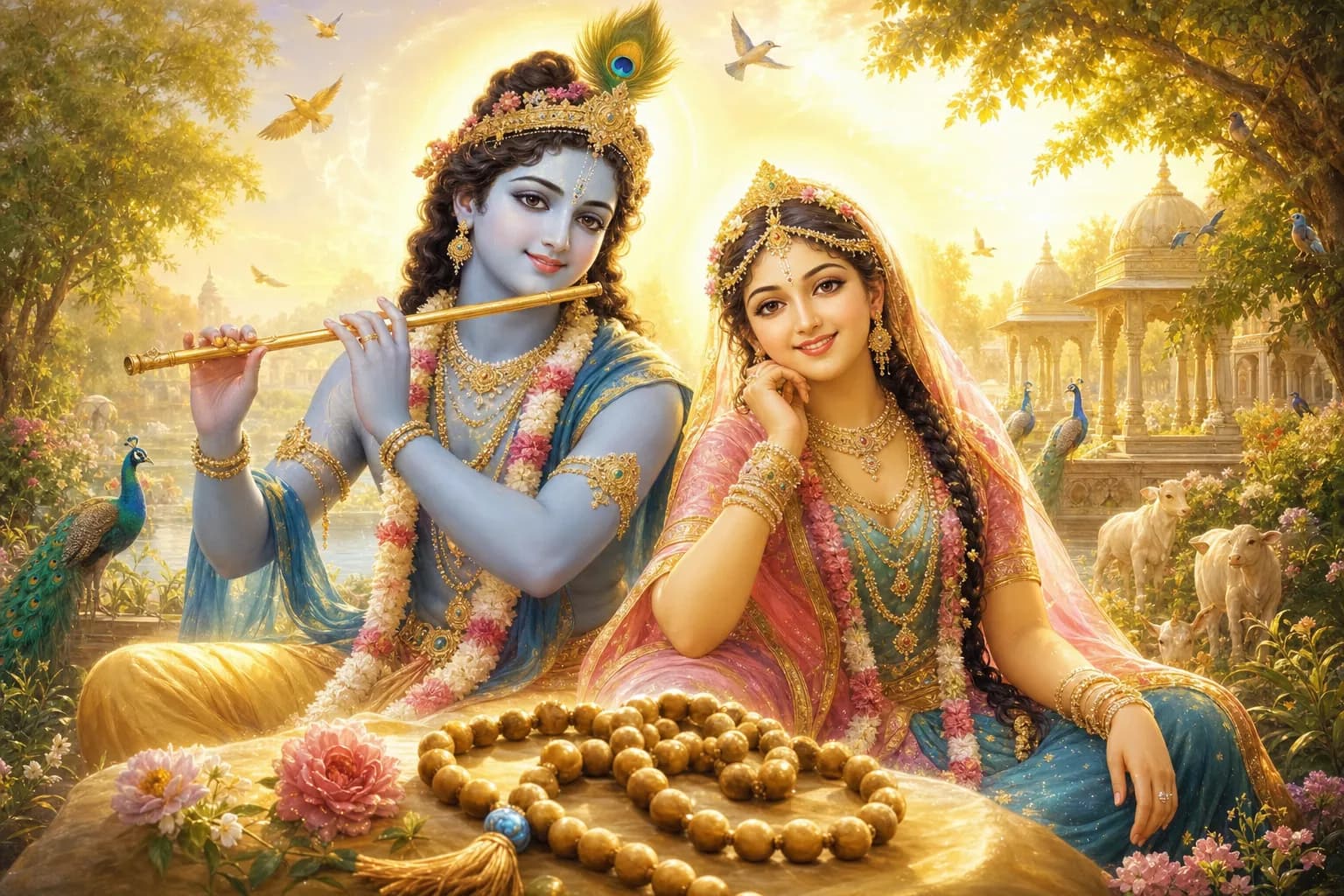
The Hare Krishna Maha Mantra
The Hare Krishna maha mantra explained: its 16 words, meaning, scriptural source in the Kali-Santarana Upanishad, and how to chant it.
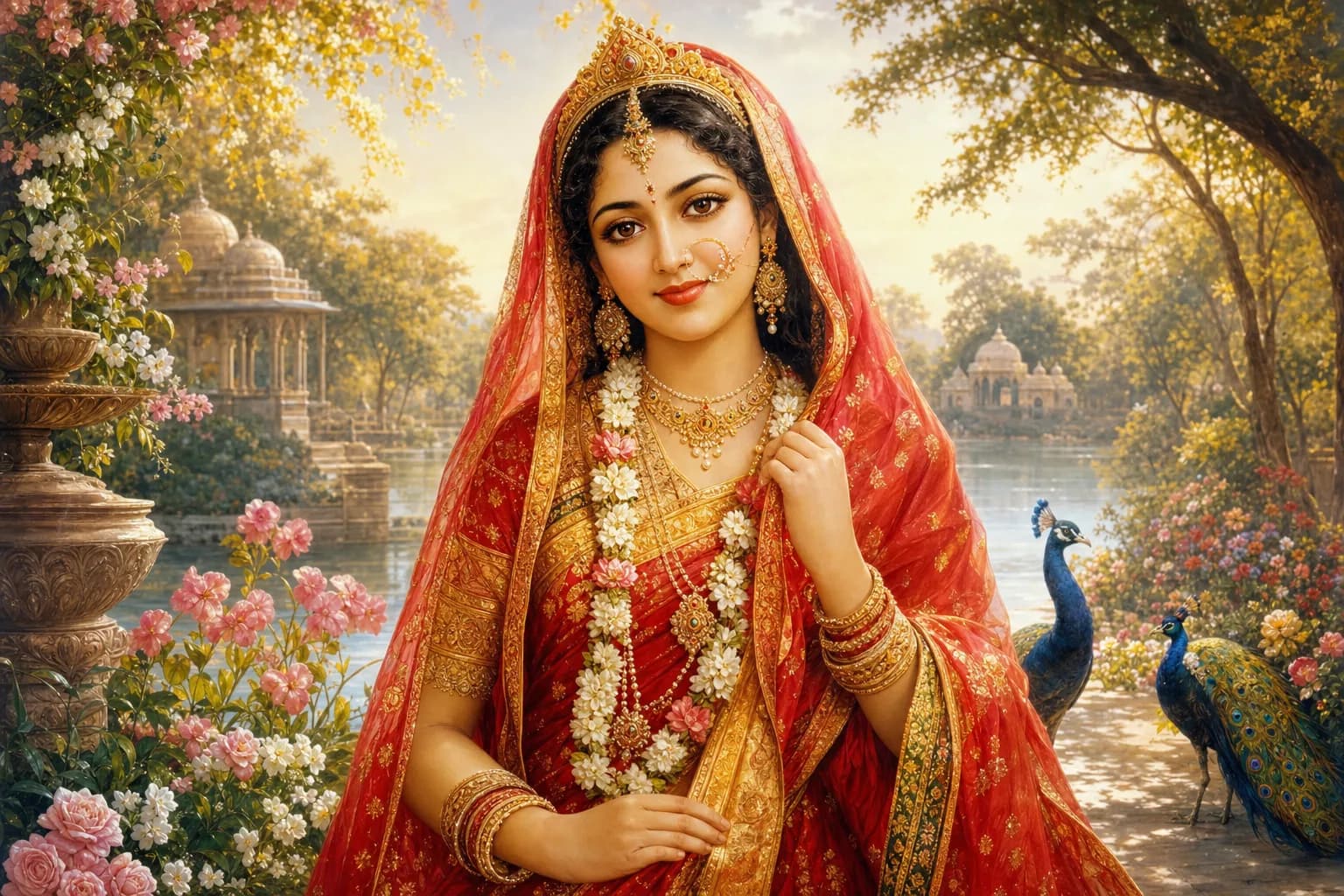
Who is Radha?
Who Radha is, the scriptures she appears in, and what each Vaishnava tradition says about Krishna's beloved, sourced and labelled.
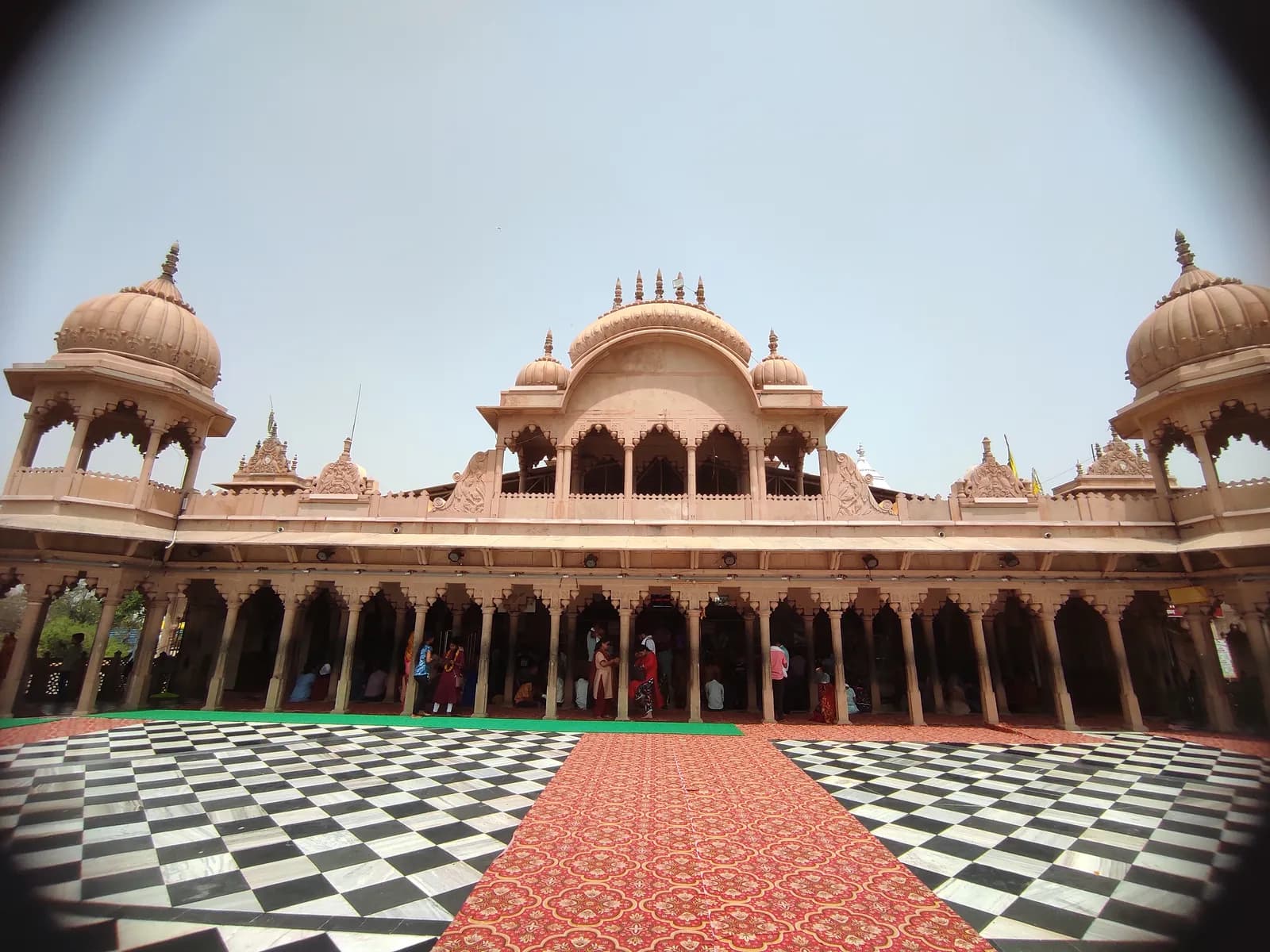
Barsana
Barsana, Radha's town in Braj: the Shriji temple on Bhanugarh hill, the Raval birthplace question, Lathmar Holi, Radhashtami, and how to visit.