
Questions
Questions about Radha Krishna
This is where we answer the questions people actually ask about Radha and Krishna, one page per question. Krishna is the cowherd God of Vrindavan and Radha is his eternal beloved and foremost devotee. Every answer here is traced to a named text, cited by chapter and verse, labelled by tradition where the traditions disagree, and honest about where scripture ends and later devotion begins.
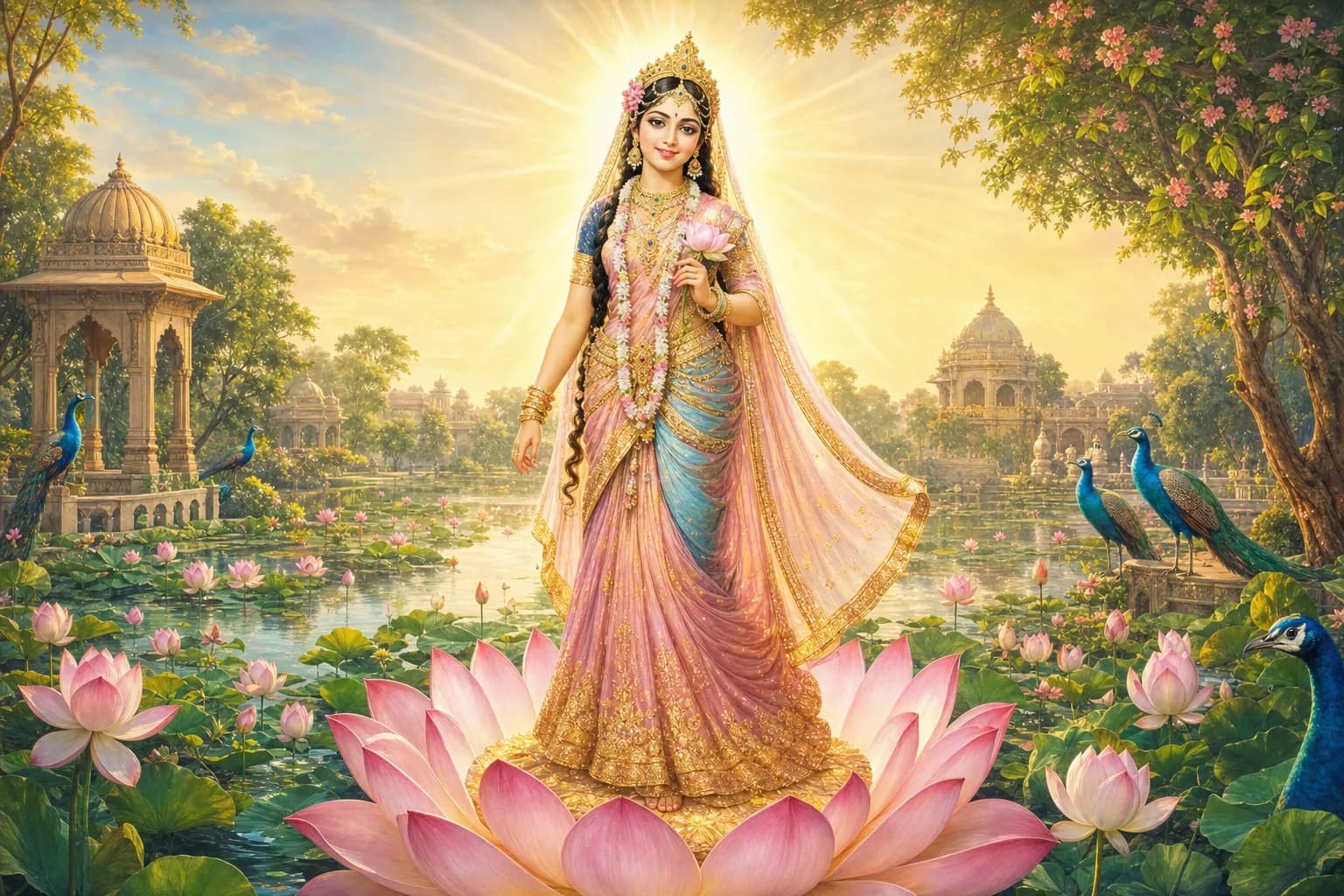
Is Radha an incarnation of Lakshmi?
Popular tradition calls Radha an incarnation of Lakshmi, but the older scriptures and main Vaishnava schools call her Krishna's own hladini shakti.
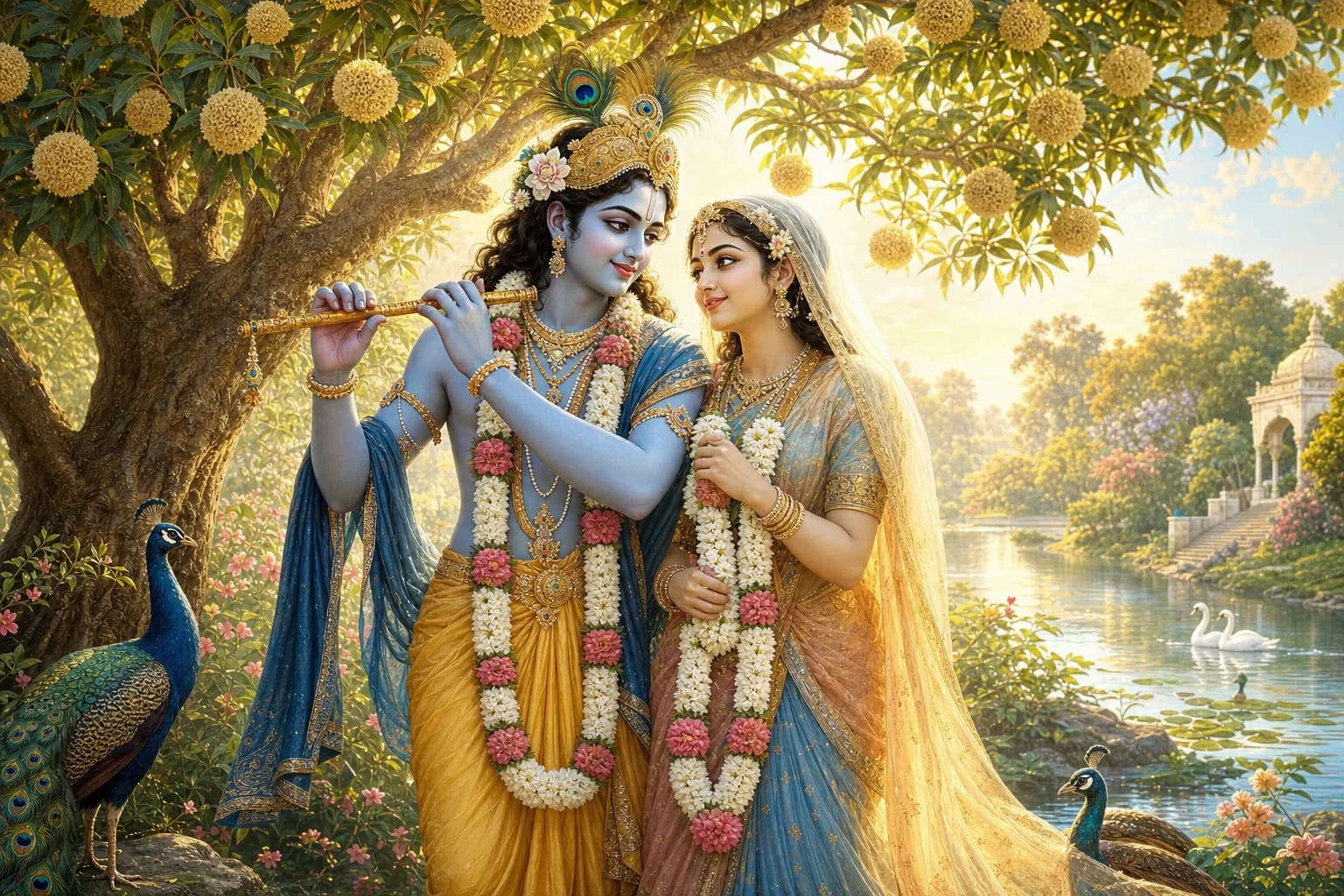
Why did Krishna not marry Radha?
The scriptures answer differently. What each text and tradition actually says about a Radha Krishna marriage, sourced and labelled.
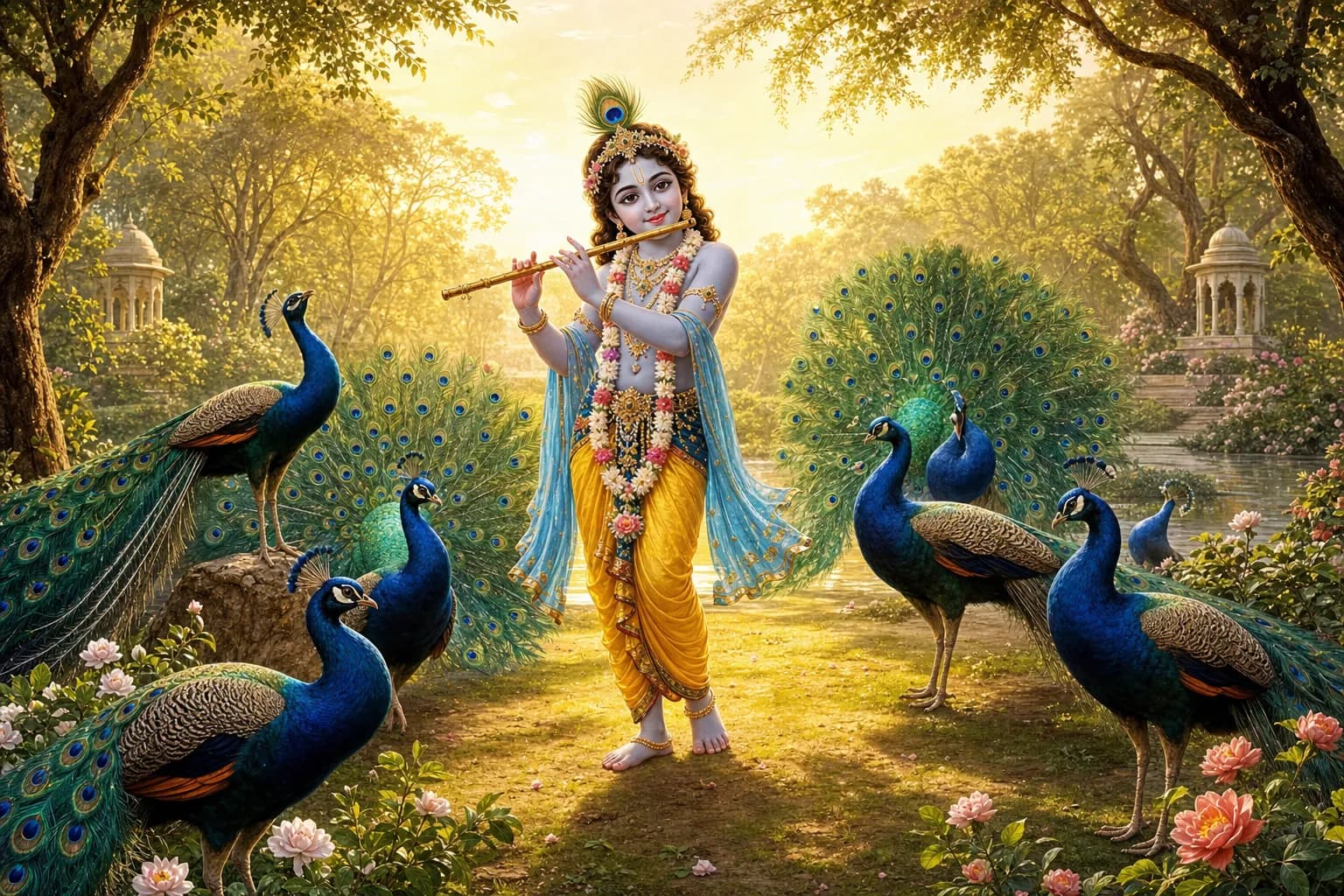
Why does Krishna wear a peacock feather?
Scripture, the Braj legend of the dancing peacocks, and what the feather really means. Sourced, tradition by tradition.
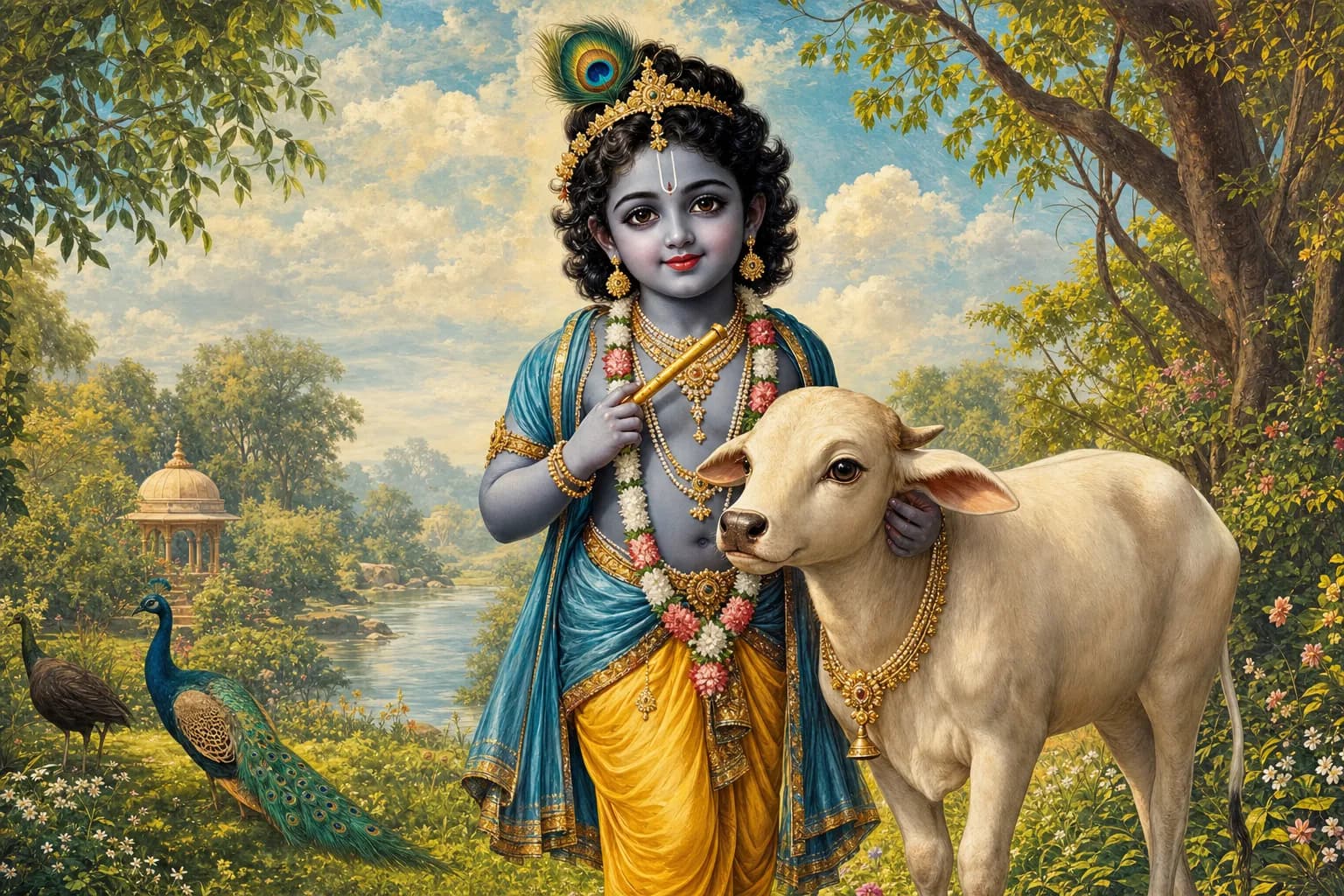
Why is Krishna blue?
Krishna is not literally blue. Scripture calls his complexion shyama, the dark blue-black of a rain cloud. Here is what the texts actually say.
This is where we answer the questions people actually ask about Radha and Krishna, one page per question. Krishna is the cowherd God of Vrindavan and Radha is his eternal beloved and foremost devotee. Every answer here is traced to a named text, cited by chapter and verse, labelled by tradition where the traditions disagree, and honest about where scripture ends and later devotion begins.
Most of these questions look simple and are not. That is the whole reason this section exists.
Key takeaways
- Almost every hard question here traces back to one fact: the Bhagavata holds her unnamed, and the texts that name her come later, which is why the schools read her differently.
- The texts that do name her are Jayadeva's Gita Govinda (12th century), the Brahma Vaivarta Purana and the Garga Samhita, with an early mention in the Prakrit Gatha Saptashati.
- The same question gets different answers in different sampradayas. Gaudiya, Nimbarka, Radha Vallabh and Pushtimarg each hold their own reading, and each page tells you which school is speaking.
- The most asked: why Krishna did not marry Radha, who Radha is, whether she is Lakshmi, why Krishna is blue, and why he wears a peacock feather.
- Where a popular answer rests on later devotion rather than on a numbered verse, the page tells you which it is.
Why does the same question get different answers?
Because this material sits in layers, and different schools stand on different layers.
The oldest and most authoritative account of Krishna's life, the Bhagavata Purana, tells the whole story and holds Radha unnamed throughout. The Gaudiya acharyas read that as concealment rather than absence, the text veiling what is most intimate to it, and they find her in a single verse, 10.30.28, where the gopis realise that one among them had worshipped Krishna perfectly, since he slipped away from the rest to be alone with her. The word there is aradhita, worshipped, and her name is heard inside it, concealed rather than spoken.
Her named portrait arrives later. Jayadeva's Gita Govinda, a Sanskrit poem of the 12th century, makes her the heroine and fixes her in the imagination of every century after. The Brahma Vaivarta Purana and the Garga Samhita then give her a birth, a family and a theology. Older still, one of the earliest surviving mentions of her name sits in the Prakrit anthology Gatha Saptashati.
So when someone asks whether Radha and Krishna were married, the honest first move is a question back. According to which text?
Why Krishna did not marry Radha is the cleanest example. The Garga Samhita describes a wedding in the Bhandiravan forest with Brahma officiating. The Nimbarka tradition holds them eternally wed. Gaudiya Vaishnavas teach that their love was deliberately kept outside marriage and is higher for it. The Bhagavata Purana tells the Vrindavan years without a wedding in them. All four are real positions held by real schools. Flattening them into one confident sentence is how the internet gets this wrong.
What do people ask most?
These are the questions with the most search demand and the longest argument threads behind them, each with its own page.
| Question | The short answer | Full answer |
|---|---|---|
| Why did Krishna not marry Radha? | The texts split four ways, from a divine wedding in the Garga Samhita to a love deliberately kept beyond marriage in Gaudiya theology. The Bhagavata tells the Vrindavan years without a wedding in them. | Read the page |
| Why is Krishna blue? | He is not, exactly. Scripture calls him shyama, dark like a rain-heavy cloud. Blue is the artistic convention painters use for that dark hue. | Read the page |
| Is Radha an incarnation of Lakshmi? | Popularly yes, but the older texts and the major schools call her Krishna's own hladini shakti, and treat Rukmini as the Lakshmi of his life. | Read the page |
| Why does Krishna wear a peacock feather? | Scripture describes the feather without giving a reason for it. The best loved explanation is a Braj legend about peacocks dancing to his flute. | Read the page |
Where should I start if I am new to this?
Start with the people, not the controversies.
Who is Radha sets out every text she appears in and what each tradition teaches about her, which makes the rest of this section much easier to follow. What their love symbolizes explains why a love story became the central image of bhakti. The Radha Krishna hub holds both.
After that, read the story before the debate. The birth of Radharani and the rest of the stories give you the events themselves, and a lot of questions dissolve once you know what actually happens in the texts.
If you want practice rather than study, the mantras section has the Hare Krishna maha-mantra with meaning and pronunciation. The festivals section tells you when Radha and Krishna are celebrated and how, and temples and Braj covers the places the stories happened in, which you can still walk today.
What you can expect from an answer here
Every answer on this page names its scripture by chapter and verse, so you can open the text and read it for yourself.
Where the schools differ, you will see whose reading you are getting. Gaudiya, Nimbarka, Vallabha, Radha Vallabh and Madhva teachers read the same events differently, and that difference is part of the answer rather than something to tidy away.
You will also see the difference between a Purana and a much loved retelling. Some of the most beautiful Radha Krishna stories come from later devotional literature or from the oral tradition of Braj. That takes nothing away from them. It simply tells you what kind of source you are holding.
And where the texts keep a silence, the page names it as silence rather than filling it. The traditions that worship Radha and Krishna hold their lila to be eternal and ongoing, so the questions worth asking here are about what their love is and what it teaches, rather than about an ending scripture never gives them.
Frequently asked questions
Is Radha mentioned in any Hindu scripture?
Yes, though in different places than most people look first. She is named in Jayadeva's Gita Govinda in the 12th century, and given a full theology in the Brahma Vaivarta Purana and the Garga Samhita. One of the oldest surviving mentions of her name sits in the Prakrit anthology Gatha Saptashati. The Bhagavata Purana, the main scriptural life of Krishna, holds her unnamed.
Commentators also read her into Bhagavata Purana 10.30.28, the verse about the one gopi who had worshipped Krishna perfectly, hearing her name concealed inside the word aradhita, worshipped.
Are Radha and Rukmini the same person?
No. Rukmini is the princess of Vidarbha who becomes Krishna's chief queen in Dwarka, and her letter, her elopement and her marriage are told at length in the Bhagavata Purana, Canto 10, chapters 52 to 54. Radha belongs to Vrindavan and to Krishna's youth, and that Purana holds her unnamed.
Popular writing sometimes merges them, and Gaudiya theology relates them by calling Radha Krishna's hladini shakti (Chaitanya Charitamrita, Adi-lila 4.95-96), while every named text keeps the two as two.
Can you worship Krishna without Radha?
Yes, and whole traditions do. At Udupi in Karnataka the Madhva line worships him as Balakrishna alone. Guruvayur in Kerala worships him as Guruvayurappan. At Puri he is worshipped as Jagannath alongside his brother Balabhadra and sister Subhadra.
Worshipping the two together is the mark of the Braj-centred schools, Nimbarka, Gaudiya, Radha Vallabh and Pushtimarg, where Radha is inseparable from Krishna. Neither approach cancels the other.
Why do people say Radhe Radhe, and why does Radha's name come first?
Radhe is the vocative form of Radha, so Radhe Radhe literally means O Radha, O Radha. It is the everyday greeting of the Braj region, painted on house walls and tree trunks around Vrindavan and Barsana, and Jai Shri Radhe is the temple variant.
Her name goes first for a theological reason. In these schools the way to Krishna runs through his devotee, so you reach the Lord by calling his beloved.
Was Radha older than Krishna?
The traditions that develop Radha most fully treat her as eternal rather than older or younger. The one age the named texts give is Krishna's. The Bhagavata Purana 10.45.3 says he lived eleven years in Nanda's cowherd settlement before leaving for Mathura, and Vishvanatha Chakravarti Thakura's commentary puts his departure at ten years and seven months.
The age gaps quoted online, five years or eleven months, come from popular retelling rather than from a verse.