
Festivals
Festivals of Radha Krishna
The festivals of Radha and Krishna follow the Hindu lunar calendar and centre on Braj. Janmashtami marks Krishna's birth at midnight in Bhadrapada, Radhashtami marks Radha's appearance fifteen days later, and Holi fills Braj with colour in Phalguna. Sharad Purnima, Govardhan Puja, Gopashtami and Jhulan Yatra fill out the rest of the year. The dates move because they follow tithis, not fixed calendar days.
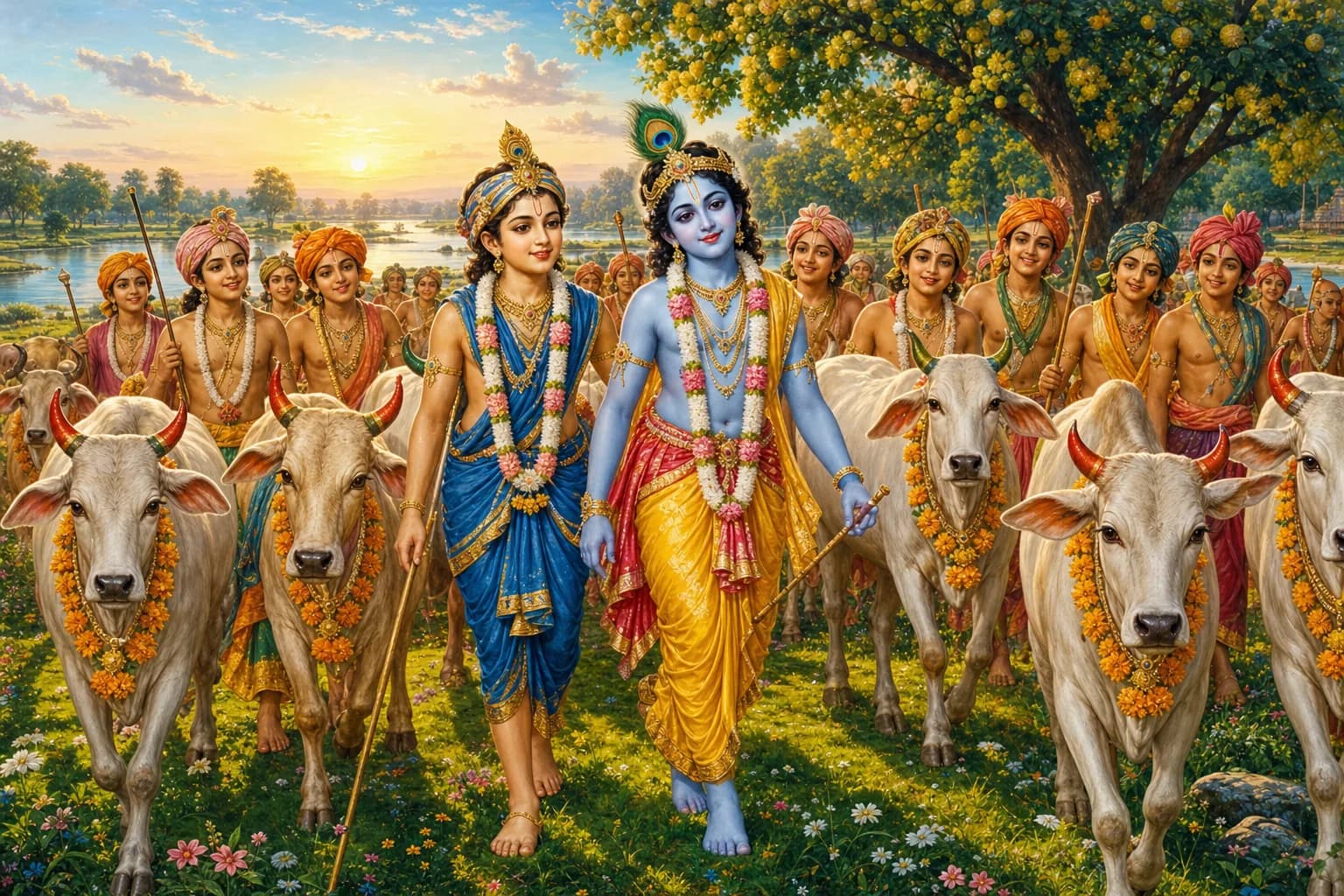
Gopashtami
Gopashtami, the day Krishna was first given charge of the cows. The 2026 date, the verse in Bhagavata Purana 10.15.1, why Radharani's lotus feet are visible, and how the cows are worshipped.
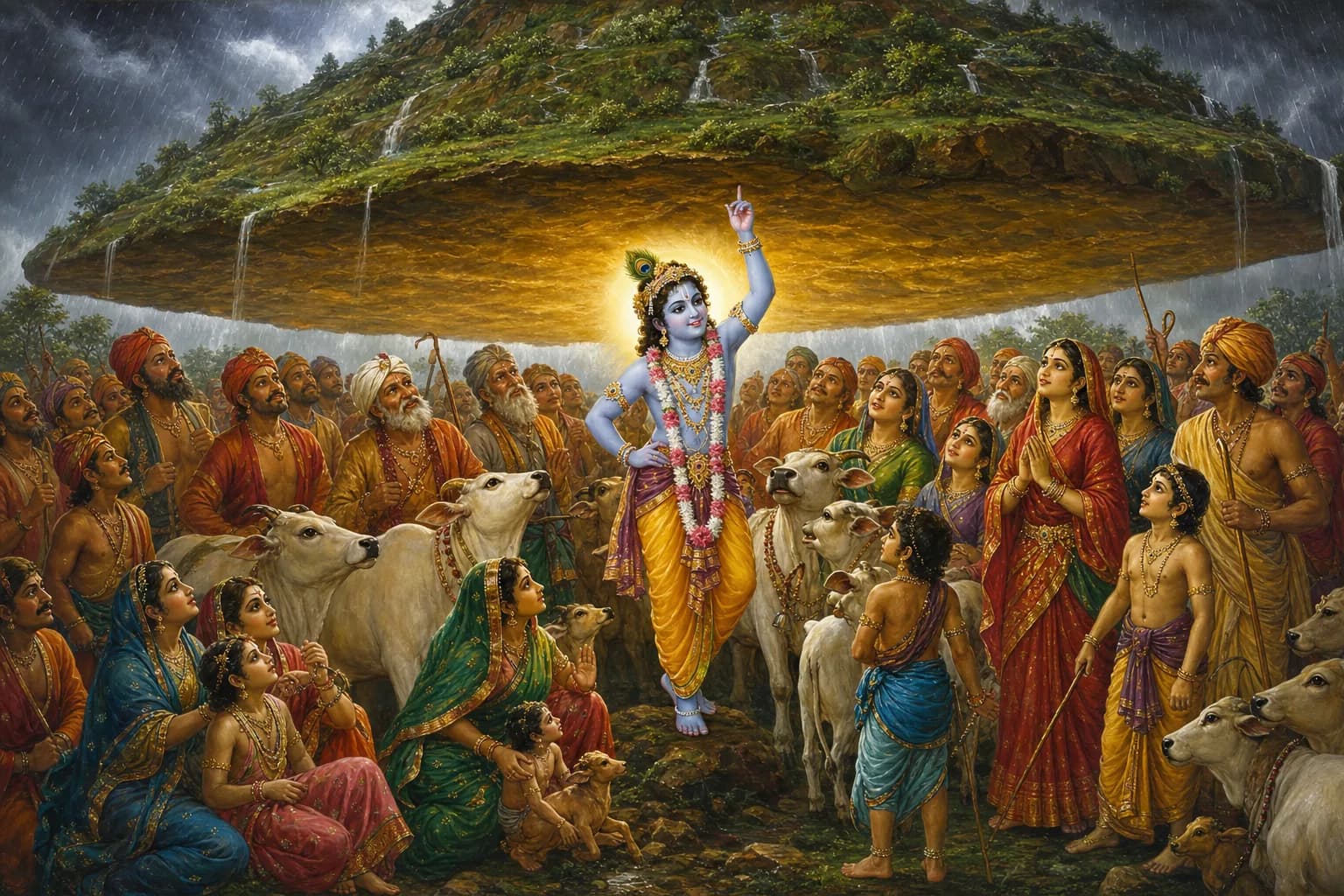
Govardhan Puja and Annakut
Govardhan Puja and Annakut, the day Krishna lifted the hill and Braj learned who to thank. The 2026 date, what Bhagavata Purana 10.24 to 10.27 says, the 21 km parikrama, and how to keep it at home.
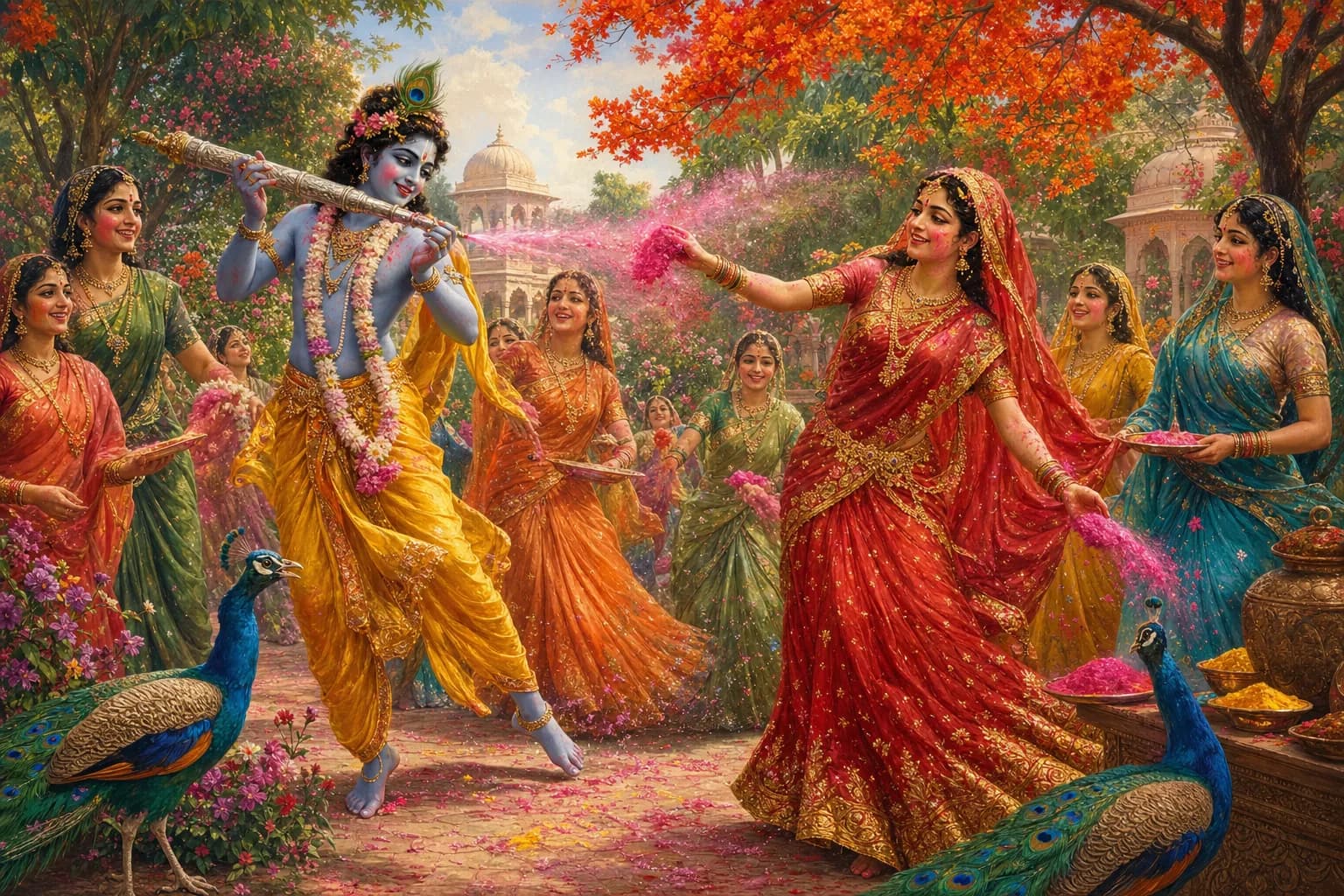
Holi
Holi, the bonfire of Holika Dahan and the colour of Rangwali Holi. The 2027 and 2028 dates with the Holika Dahan muhurat, the Narada Purana verses that name the day, and the Braj Holi of Radha and Krishna.
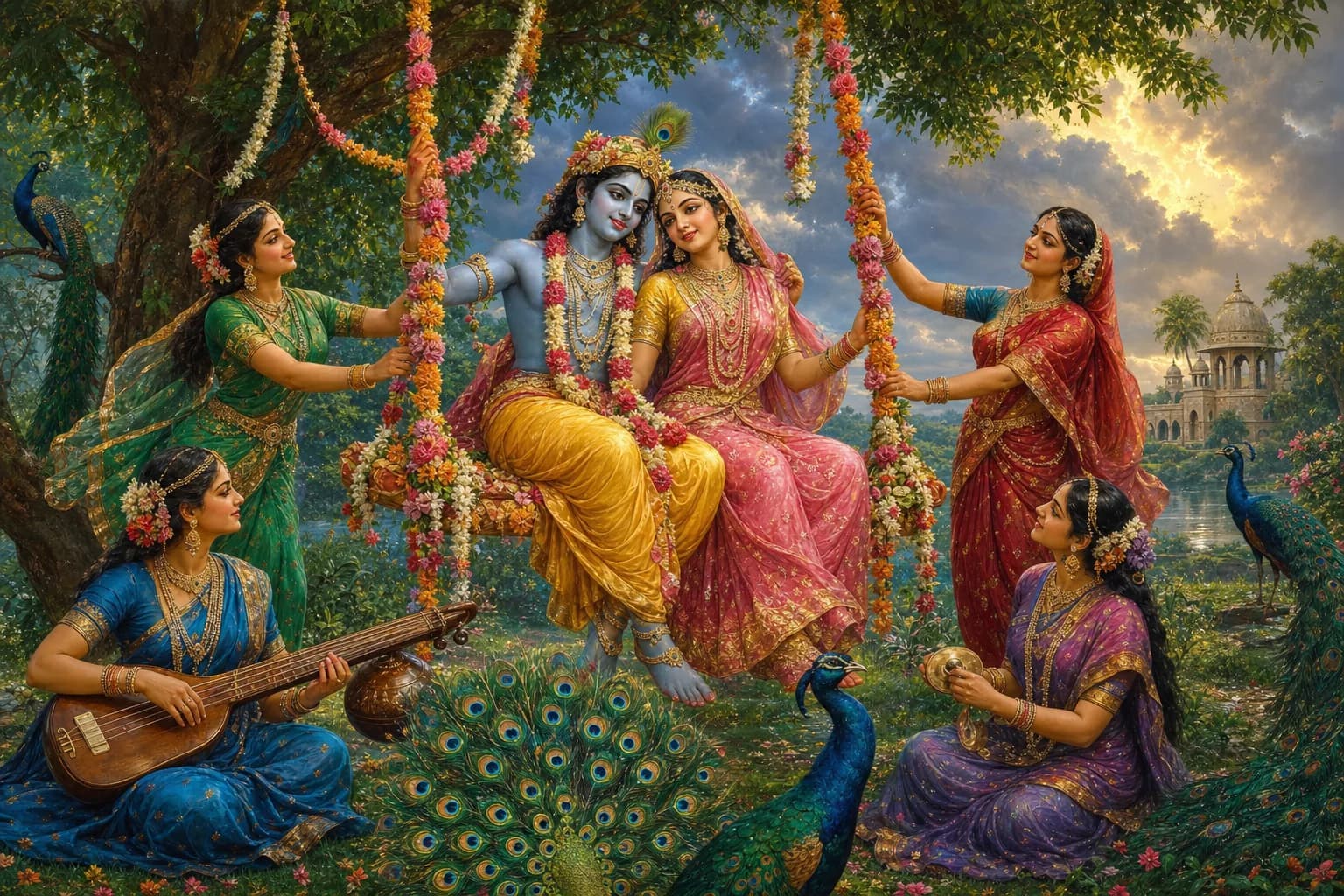
Jhulan Yatra
Jhulan Yatra, the swing festival of Shravana, when Radha and Krishna are seated on flower swings through the monsoon. The 2026 dates, what Braj does, and how to keep it at home.
Krishna Janmashtami
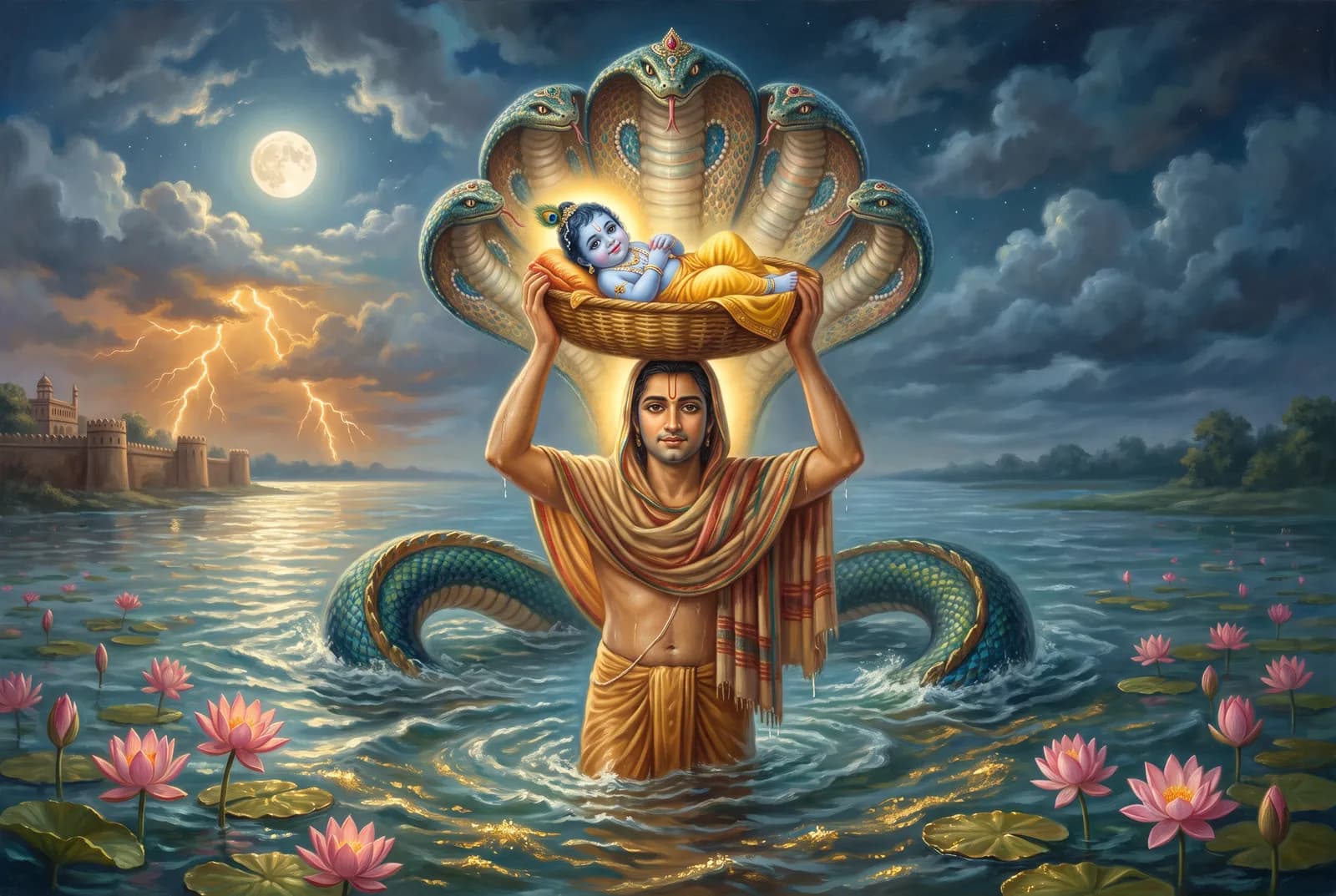
Krishna Janmashtami explained: the Bhagavata account of the birth, why it is kept at midnight, the tithi, the fast, Dahi Handi and Braj.
Lathmar Holi
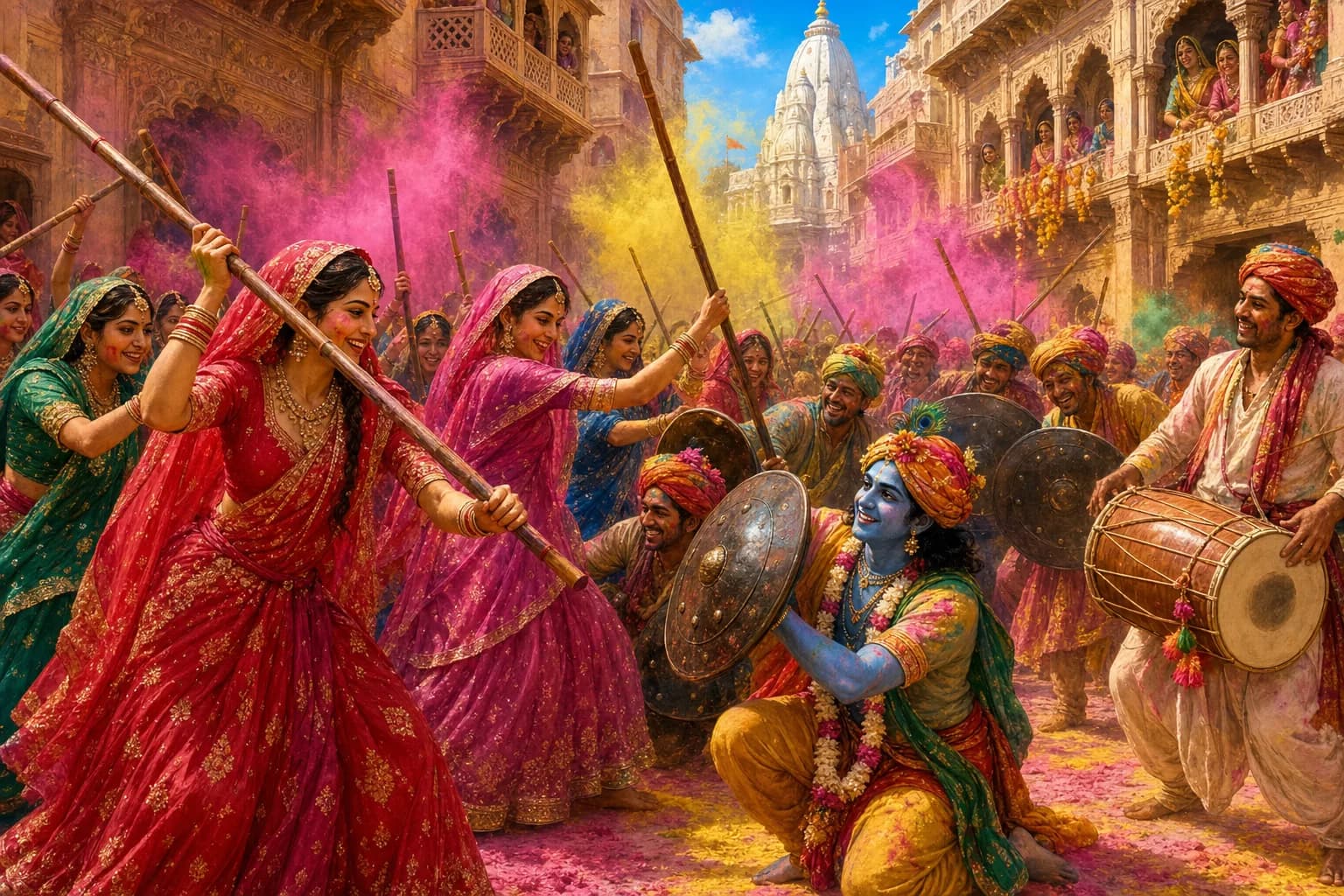
Lathmar Holi at Barsana and Nandgaon: the 2027 and 2028 dates, the Garga Samhita passage the play grows out of, what actually happens on the day, and how to go without getting in the way.
Nandotsav
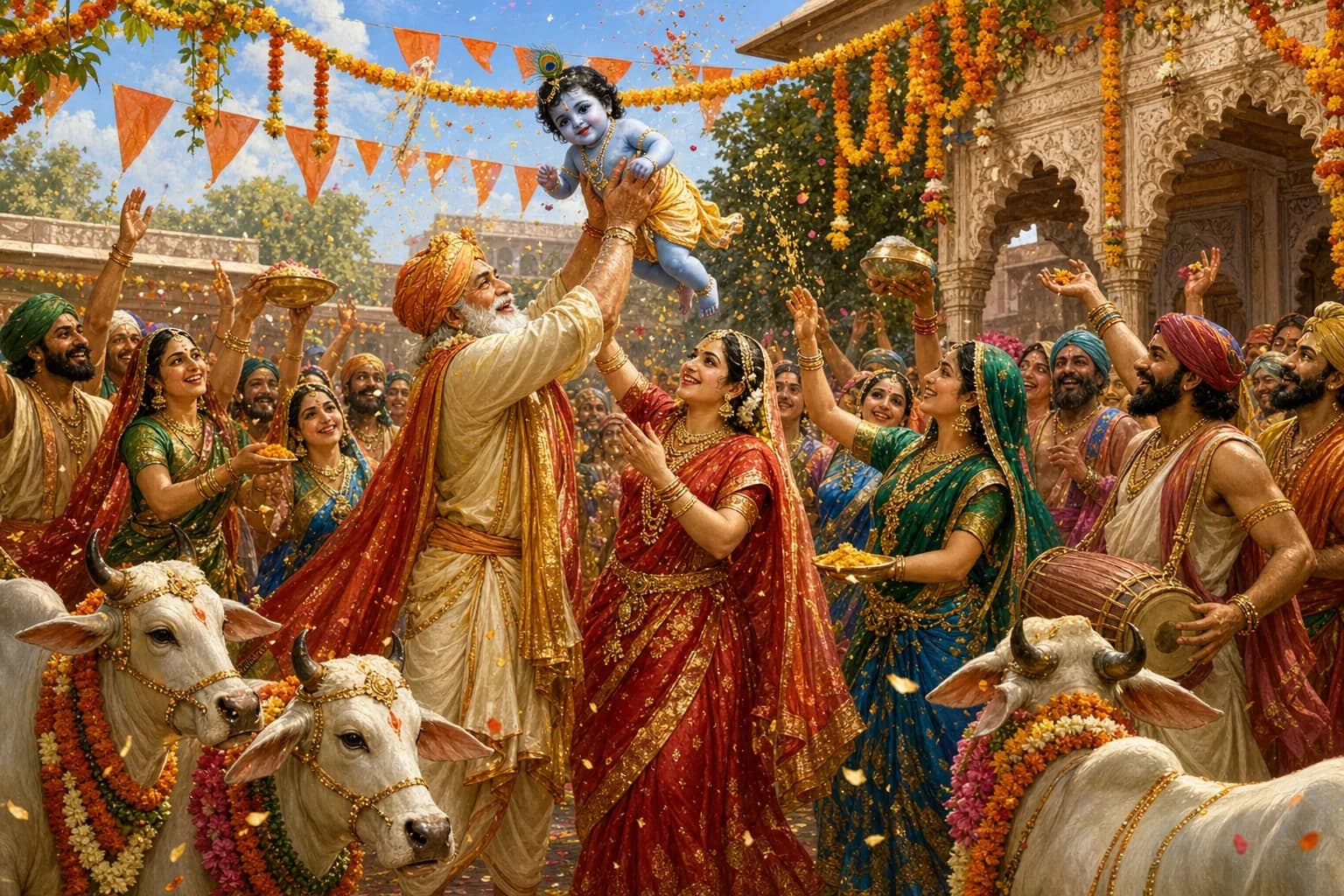
Nandotsav, the celebration in Nanda Baba's house the morning after Krishna's birth. The 2026 date, what Bhagavata Purana 10.5 narrates, and how Gokul and Nandgaon keep it.
Radhashtami
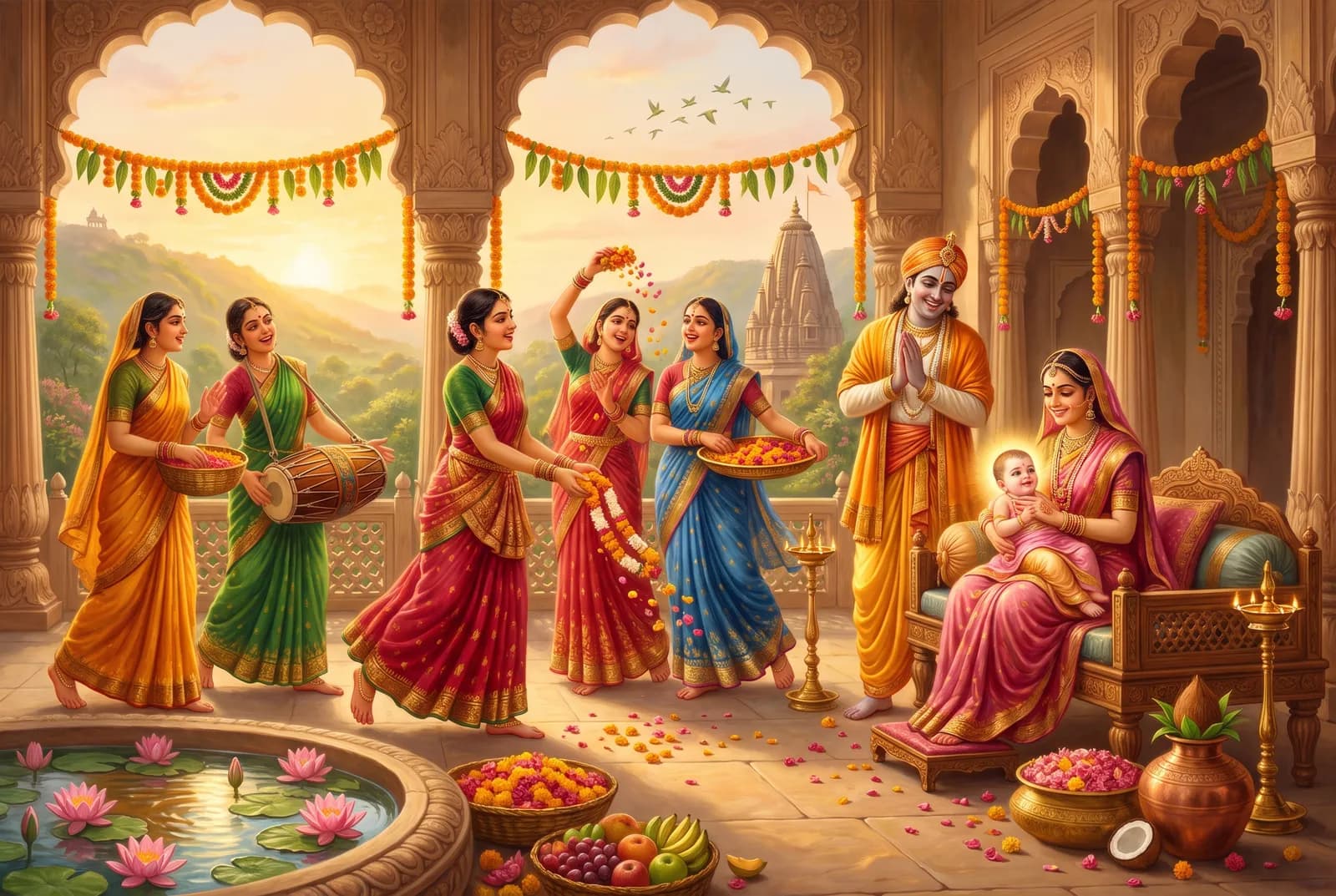
Radhashtami is Radharani's appearance day, Bhadrapada shukla ashtami. The 2026 date, what scripture records, and how Barsana keeps it.
Sharad Purnima
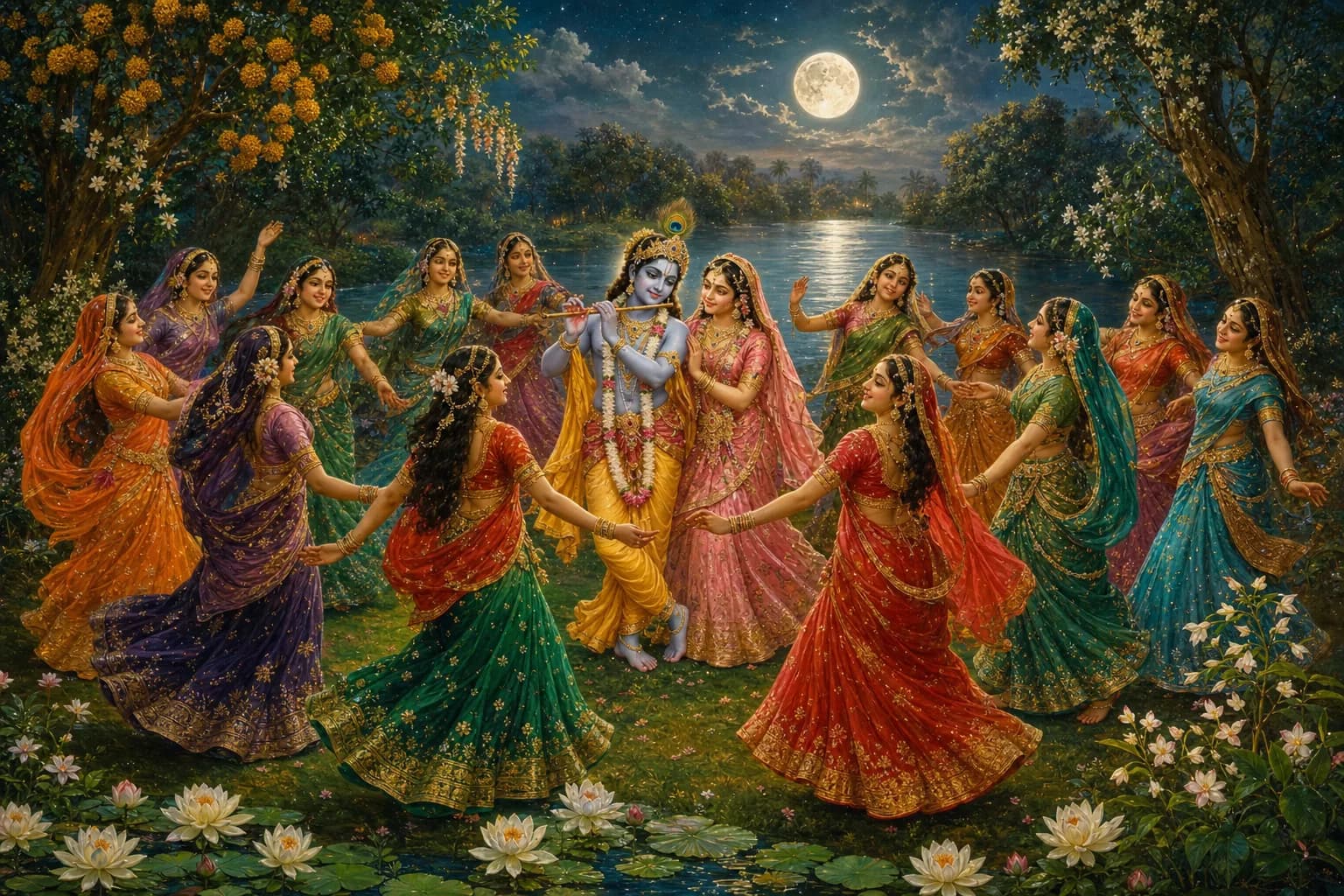
Sharad Purnima, the autumn full moon and the night of the maha raas. The date for 2026, what the Bhagavata Purana says, why Braj keeps it, and the kheer left out in the moonlight.
Vasant Panchami
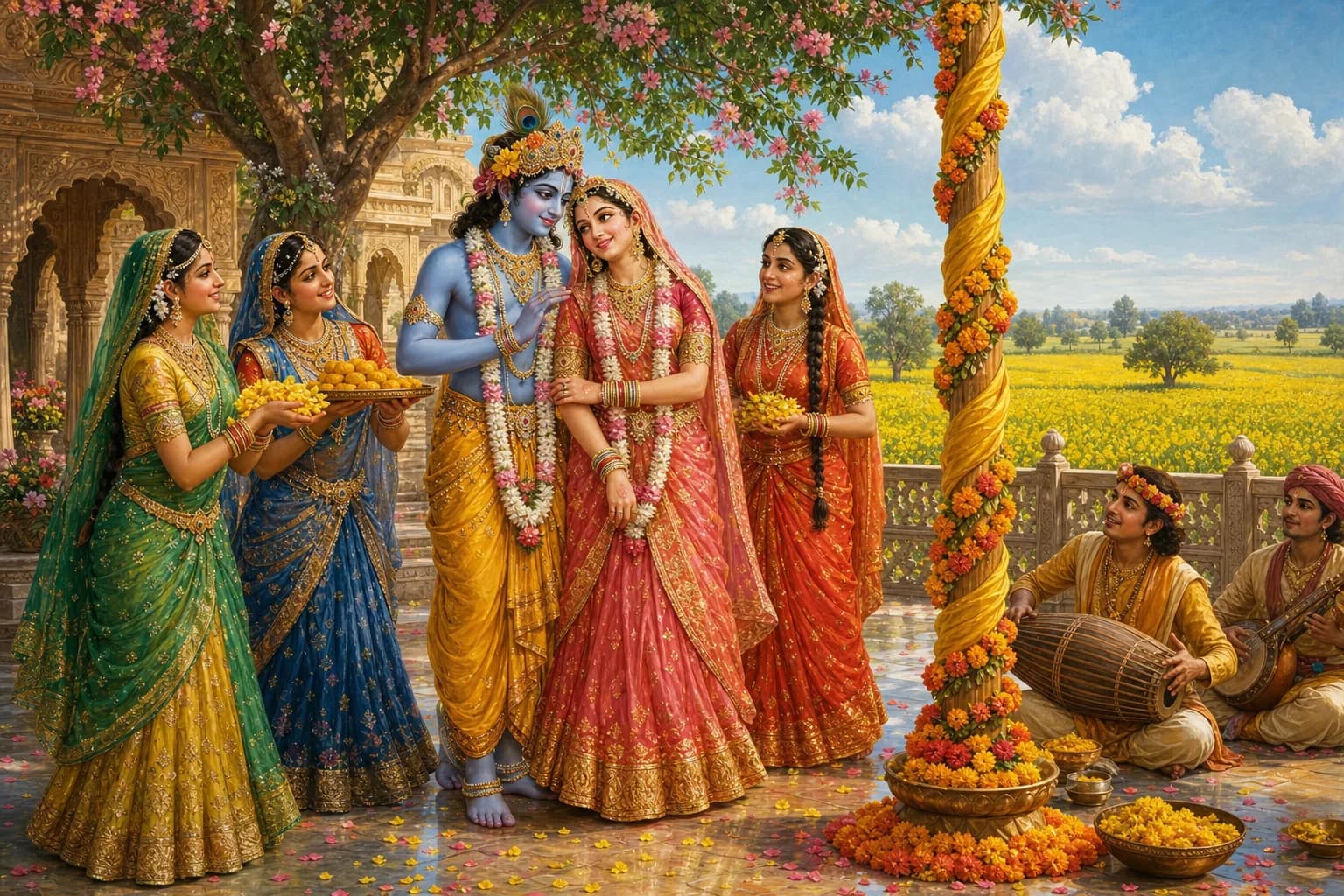
Vasant Panchami, the first day of spring and the day Braj begins its forty days of Holi. The 2027 and 2028 dates, why the day is yellow, and what happens at Barsana, Nandgaon and Vrindavan.
The festivals of Radha and Krishna follow the Hindu lunar calendar and centre on Braj. Janmashtami marks Krishna's birth at midnight in Bhadrapada, Radhashtami marks Radha's appearance fifteen days later, and Holi fills Braj with colour in Phalguna. Sharad Purnima, Govardhan Puja, Gopashtami and Jhulan Yatra fill out the rest of the year.
One thing to get straight early. None of these dates are fixed. They follow tithis, the lunar days of the Hindu calendar, so each one moves against the Gregorian calendar every year. Janmashtami can land in mid August or in early September. Always check a panchang for your own city, because the tithi begins and ends at a clock time, not at midnight.
Key takeaways
- Janmashtami falls on Bhadrapada krishna paksha ashtami and is kept at midnight. In 2026 it is 4 September, and it sits on the Government of India gazetted holiday list.
- Radhashtami falls on Bhadrapada shukla paksha ashtami, exactly fifteen days later. In 2026 it is 19 September, and Barsana keeps it best.
- Braj stretches Holi over roughly forty days, from Vasant Panchami to the Phalguna full moon, with Lathmar Holi at Barsana and then Nandgaon.
- Sharad Purnima, the Ashwin full moon, is kept in Braj as Raas Purnima, the night of the maha raas told in Bhagavata Purana 10.29 to 10.33.
- Govardhan Puja and Gopashtami come in Kartik, and Jhulan Yatra puts Radha and Krishna on flower swings through Shravana.
What are the main Radha Krishna festivals?
Nine days carry the pair through the year. Some are national, most are strongest in Braj.
| Festival | Hindu date | Usually falls | What is celebrated |
|---|---|---|---|
| Vasant Panchami | Magha shukla panchami | Jan to Feb | Spring, and the opening of Braj's long Holi season |
| Lathmar Holi | Phalguna shukla navami and the day after | Feb to Mar | Radha's women of Barsana driving off Krishna's men from Nandgaon |
| Holika Dahan and Rangwali Holi | Phalguna purnima and the next day | Feb to Mar | The bonfire, then the colour play of Krishna with Radha and the gopis |
| Jhulan Yatra | Shravana, Hariyali Teej to purnima | Jul to Aug | Radha and Krishna seated on decorated swings through the monsoon |
| Krishna Janmashtami | Bhadrapada krishna paksha ashtami | Aug to Sep | Krishna's birth in Kansa's prison at Mathura, kept at midnight |
| Nandotsav | Bhadrapada navami, the day after | Aug to Sep | Nanda Baba's celebration of the birth, at Gokul and Nandgaon |
| Radhashtami | Bhadrapada shukla paksha ashtami | Aug to Sep | Radha's appearance, kept above all at Barsana |
| Sharad Purnima | Ashwin purnima | Sep to Oct | The maha raas night, called Raas Purnima in Braj |
| Govardhan Puja and Annakut | Kartik shukla pratipada | Oct to Nov | Krishna lifting Govardhan hill, answered with a mountain of food |
| Gopashtami | Kartik shukla ashtami | Oct to Nov | The day Krishna first took the cows out to graze |
Why is Radhashtami exactly fifteen days after Janmashtami?
Because both are an ashtami, the eighth lunar day, in the same month of Bhadrapada. Janmashtami takes the eighth day of the waning fortnight, Radhashtami the eighth day of the waxing fortnight. A fortnight apart, every year, without exception.
In 2026 that puts Janmashtami on 4 September and Radhashtami on 19 September.
Janmashtami is kept at midnight, because Krishna is said to have been born at midnight in Kansa's prison. The birth is narrated in Bhagavata Purana 10.3. Radhashtami is usually kept at midday instead, and Barsana, the hill town most tied to Radha, is where it is largest. Her appearance is told in the Garga Samhita and the Brahma Vaivarta Purana, the Puranas that name her. The birth of Srimati Radharani lays out what each text actually says.
How is Holi celebrated in Braj?
Not in one day. Braj stretches it over roughly forty days, starting at Vasant Panchami and ending at the Phalguna full moon, with a different town taking a different day.
The famous one is Lathmar Holi. Men from Nandgaon, Krishna's village, come to Barsana, Radha's town. The women of Barsana meet them with colour and with lathis, sticks, and the men take it behind leather shields. It is played in good humour by both sides. The next day the direction reverses and the men of Barsana go to Nandgaon. Barsana also keeps Laddu Holi just before, where sweets are thrown instead of colour.
After that the colour moves through Vrindavan and Mathura on Rangbhari Ekadashi in the bright fortnight of Phalguna, then to Holika Dahan and Rangwali Holi on the full moon night and the day after. If you plan a trip, the temples and Braj section covers where each of these happens.
Which festivals come from which scripture?
Most of them are anchored in the tenth canto of the Bhagavata Purana, though the Radha festivals lean on later texts.
Sharad Purnima keeps the night of the maha raas, the circle dance described across Bhagavata Purana 10.29 to 10.33, the five chapters called the rasa panchadhyayi. Govardhan Puja keeps the lila of 10.24 and 10.25, where Krishna talks Braj out of a sacrifice to Indra and then lifts the hill on one finger for seven days.
Radhashtami rests on the texts that name her. Her story is given in the Garga Samhita, the Brahma Vaivarta Purana and the later Gaudiya, Nimbarka, Vallabha and Radhavallabha traditions, while the Bhagavata holds her unnamed. That is worth knowing rather than glossing over, and who Radha is works through it properly.
How do devotees keep these days at home?
Fasting, a puja at the right hour, and chanting. On Janmashtami most people take no grains through the day, do the abhishek and puja at Nishita Kaal around midnight, then break the fast at the parana time their panchang gives. On Radhashtami many fast until noon.
The rest is names. Radha Ashtami is the day the Radha Sahasranama, her thousand names, is most chanted, and the Hare Krishna maha mantra carries every one of these festivals. The full set sits in prayers and mantras.
Where should I go next on this site?
For the couple these days are about, start at Radha Krishna.
For the narratives behind the festivals, stories has Radha's birth for Radhashtami and the day Krishna dressed as a gopi for the Braj lilas.
If you arrived with a doubt rather than a date, questions answers the common ones with sources, including why Krishna did not marry Radha.
Frequently asked questions
Why is Radhashtami celebrated just after Krishna Janmashtami?
Because the two tithis sit fifteen days apart in the same lunar month. Janmashtami is the eighth day of the dark fortnight of Bhadrapada and Radhashtami is the eighth day of the bright fortnight of the same month, so Radha's day always follows Krishna's by a fortnight.
Devotional tradition reads the order as fitting: Krishna appears first, and Radha appears soon after so that the first thing she ever sees is him.
How do I fast on Janmashtami if I have never fasted before?
Keep it simple and safe. Most devotees eat no grains or lentils through the day, take fruit, milk and water, and do the main puja at Nishita Kaal, the midnight window when Krishna is said to have been born. The fast is broken at parana time, which your local panchang gives, usually after the ashtami tithi and Rohini nakshatra have both passed.
A nirjala fast without water is optional and not expected of beginners. Devotion matters more than severity here.
Why do women hit men with sticks at Barsana's Holi?
It replays a Braj legend. Krishna of Nandgaon came to Barsana to put colour on Radha and her friends, and the women of Barsana drove him and his companions out with sticks.
Every year the men of Nandgaon go to Barsana and are met by the women with colour and lathis, in good humour, while the men shield themselves. The next day the men of Barsana go to Nandgaon and it happens in reverse.
What is the difference between Janmashtami, Gokulashtami and Krishna Jayanti?
They are the same festival under different regional names. Gokulashtami, Krishna Jayanti, Krishnashtami, Ashtami Rohini and Satam Atham all name Krishna's appearance day.
The one real difference is which day it is kept on. The Smarta reckoning takes the day when ashtami tithi is present at midnight, while the Vaishnava reckoning weighs Rohini nakshatra as well, so in some years the two fall on consecutive days.
Why is Radhashtami not celebrated everywhere?
Because it is a Braj and Vaishnava observance rather than a national one. Janmashtami is a gazetted public holiday in India, so it is kept almost everywhere.
Radhashtami is kept above all in Barsana, Vrindavan and Mathura, and in Gaudiya, Nimbarka, Vallabha and Radhavallabha temples worldwide. The day belongs to the schools that give Radha a distinct theological position.