
Temples
Temples & Braj
Braj is the region around Mathura in Uttar Pradesh, spilling into eastern Rajasthan and southern Haryana, where Krishna is said to have been born and to have spent his childhood with Radha. Its towns and temples, Vrindavan, Mathura, Barsana, Nandgaon, Govardhan and Gokul, form the physical map of those pastimes, and pilgrims have walked that map on foot for centuries.
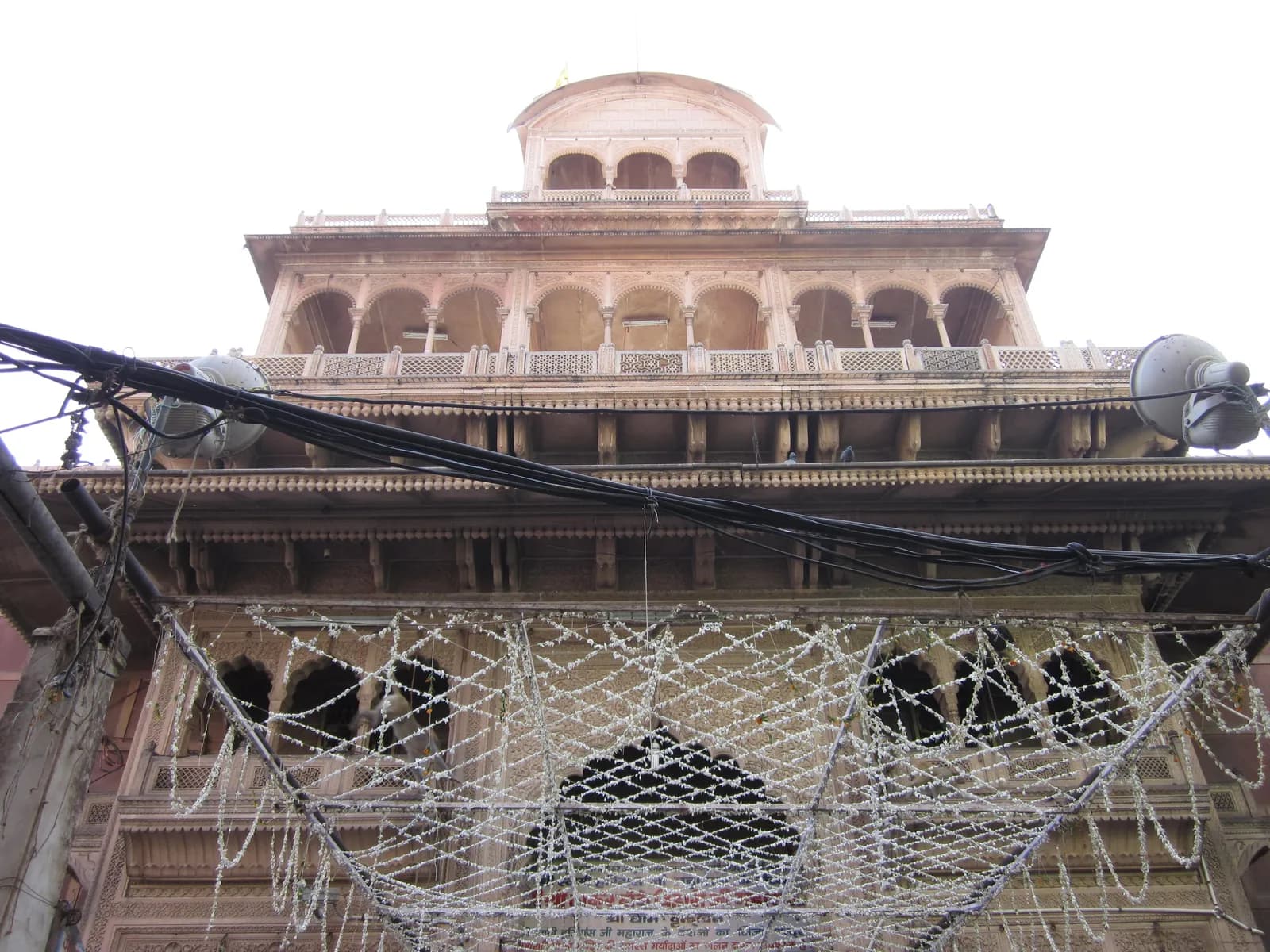
Banke Bihari Temple, Vrindavan
Banke Bihari Temple, Vrindavan: the deity Swami Haridas found at Nidhivan, why the curtain keeps closing, plus timings, festivals and how to plan a visit.
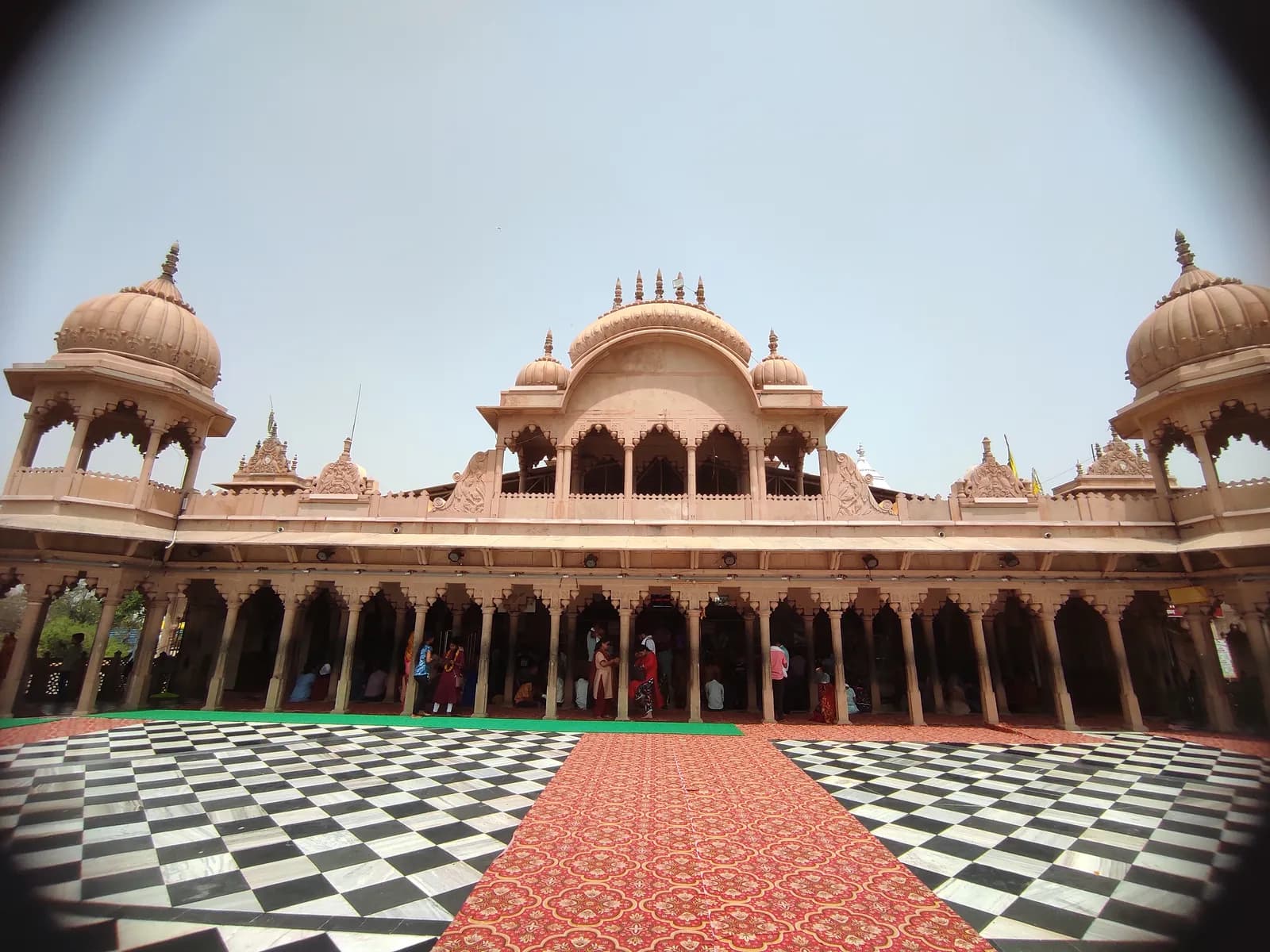
Barsana
Barsana, Radha's town in Braj: the Shriji temple on Bhanugarh hill, the Raval birthplace question, Lathmar Holi, Radhashtami, and how to visit.
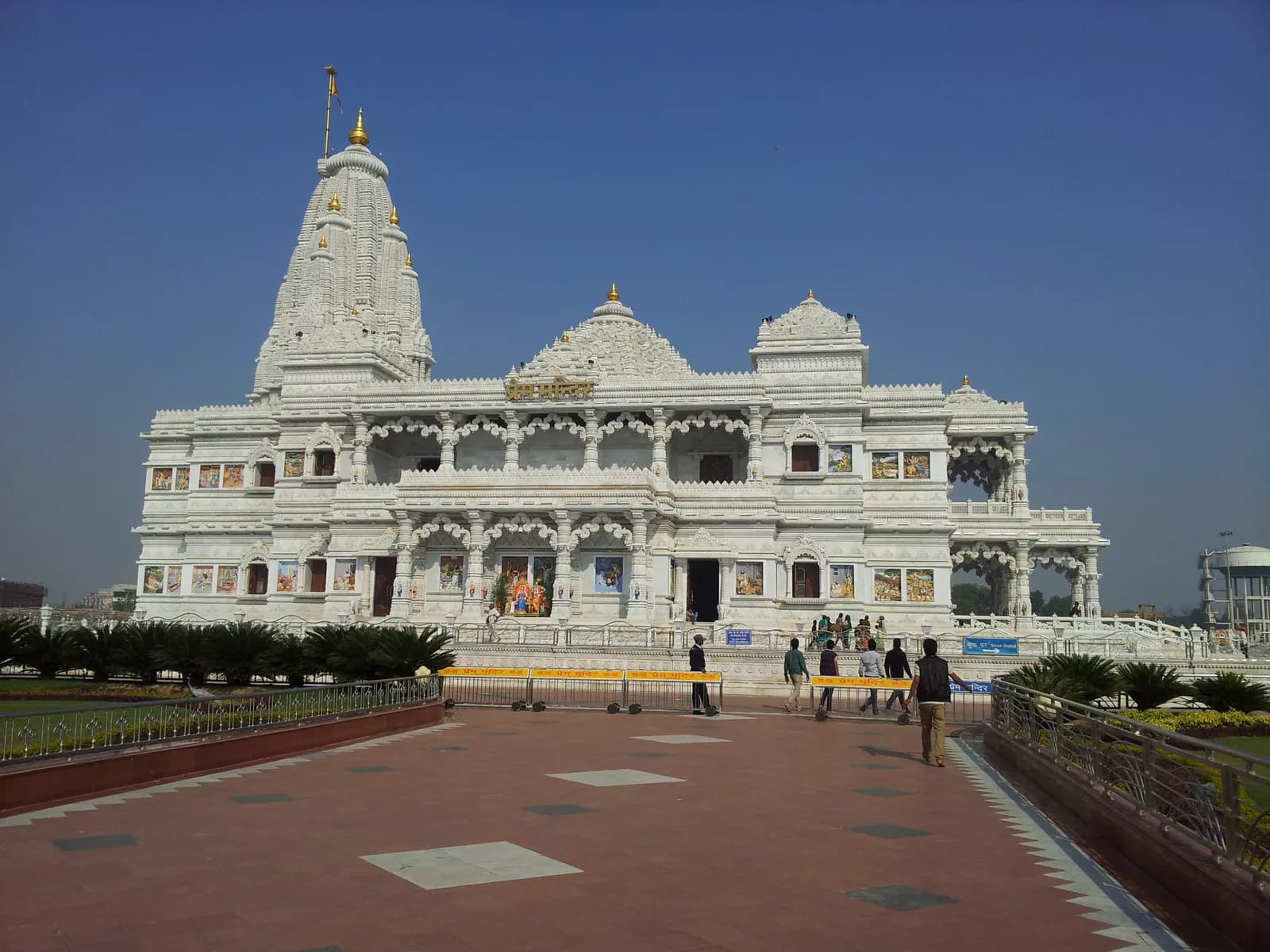
Vrindavan
Vrindavan, the town of Krishna's childhood: its temples, the Yamuna ghats, the 10 km parikrama, when to go, and what first-time visitors get wrong.
Braj is the region around Mathura in Uttar Pradesh, spilling into eastern Rajasthan and southern Haryana, where Krishna is said to have been born and to have spent his childhood with Radha. Its towns and temples, Vrindavan, Mathura, Barsana, Nandgaon, Govardhan and Gokul, form the physical map of those pastimes. Pilgrims have walked that map on foot for centuries.
This is the hub for that ground. It orients you to the places, the temples, and the walks, and the pages underneath go deeper on each.
Key takeaways
- Braj, or Braj Bhoomi, is a cultural region rather than a state. It covers Mathura district and its neighbours in Uttar Pradesh and reaches into eastern Rajasthan and southern Haryana.
- Vrindavan holds the Sapta Devalaya, seven historic temples founded in the 1500s and 1600s, including Radha Raman (1542) and Govind Dev (1590).
- Banke Bihari is the most visited temple in Vrindavan. The deity was revealed to Swami Haridas at Nidhivan, and the present building dates from 1862.
- The Govardhan parikrama is about 21 km and takes most people five to seven hours. Radha Kund and Shyam Kund sit on the route.
- October to March is the comfortable season. Most Braj temples close for a few hours in the middle of the day while the deities rest.
What is Braj, and where exactly is it?
Braj comes from the Sanskrit vraja, a word for a cattle pasture or a herders' settlement. That plain meaning fits the stories: this is cowherd country, and Krishna grows up in it as a cowherd boy.
Braj was never a fixed political state. It is a cultural region, held together by its language (Braj Bhasha), its music, its food, and above all its temples. Most of it sits in and around Mathura district in western Uttar Pradesh, and it reaches into the eastern edge of Rajasthan and the southern edge of Haryana. For the theology behind the geography, start with who Radha is and what their love symbolizes.
Which places in Braj matter, and what is each known for?
Every village in Braj carries a story. These are the ones almost every pilgrim visits.
| Place | What happened here | What people come for |
|---|---|---|
| Mathura | The traditional birthplace of Krishna | Krishna Janmabhoomi complex, Dwarkadhish temple, Vishram Ghat |
| Vrindavan | The forest of Krishna's youth and the Raas Lila | Banke Bihari, the seven historic Goswami temples, Nidhivan, Keshi Ghat |
| Gokul and Mahavan | Krishna's infancy in the house of Nanda and Yashoda | Raman Reti, the Yamuna bank, the infancy pastimes |
| Barsana | The town most bound to Radha | The Shriji (Ladli Ji) temple on Bhanugarh hill, Lathmar Holi |
| Nandgaon | The village of Nanda Maharaj, where Krishna lived as a boy | Nand Bhavan on Nandishwar hill |
| Govardhan | Krishna lifted the hill to shelter Braj from Indra's storm | The 21 km parikrama, Manasi Ganga, Radha Kund and Shyam Kund |
The Govardhan story is told in the Bhagavata Purana, Canto 10: chapter 24 has Krishna persuading Braj to worship the hill instead of Indra, and chapter 25 has him lifting it on one hand for seven days while the whole village shelters underneath. Devotees do not treat Govardhan as scenery. The hill is worshipped as Krishna himself, which is why people walk around it rather than climb it.
Which are the seven historic temples of Vrindavan?
Vrindavan has thousands of temples. Seven of them, the Sapta Devalaya, are the historic core. They were founded by the Six Goswamis of Vrindavan and their successors, the scholars Chaitanya Mahaprabhu sent to recover the lost sites of Braj in the 16th century, and by the patrons who built for them.
| Temple | Founded | Why it matters |
|---|---|---|
| Radha Raman | 1542, Gopala Bhatta Goswami | The deity self-manifested from a shaligram shila. No separate Radha murti; she is held to be present within him |
| Radha Damodar | 1542, Jiva Goswami, at Seva Kunj | Deity manifested by Rupa Goswami. Holds a Govardhan shila said to bear Chaitanya's thumbprint |
| Madan Mohan | 16th century, worship established by Sanatana Goswami | The oldest of the group, on a rise above the Yamuna |
| Govind Dev | 1590, built by Raja Man Singh I of Amer | Red sandstone, originally seven storeys; the upper floors fell around 1670. Protected by the ASI |
| Gopinath | 16th century, Madhu Pandit Goswami | Deity rediscovered at Vamshivat on the Yamuna bank by Paramananda Bhattacharya |
| Radha Shyamsundar | 16th century, Shyamananda Prabhu | Gaudiya tradition holds the deity was given to him by Radha herself |
| Gokulananda | Vishwanath Chakravarti | Stands at the bhajan place of Lokanath Goswami, near several Goswami samadhis |
These founders and dates come from Gaudiya Vaishnava tradition and temple records. Other sampradayas tell parts of the story differently.
Three temples draw bigger crowds today and are not part of the seven. Banke Bihari is the busiest: the deity was revealed to the musician saint Swami Haridas at Nidhivan, and the present temple was built in 1862 when the Goswamis moved the deity there, though 1864 appears in some accounts. Prem Mandir, in white marble, was founded by Jagadguru Kripalu Ji Maharaj, begun in 2001 and completed in February 2012. Krishna Balaram Mandir, ISKCON's temple, opened in 1975.
What is a parikrama, and which ones do people walk?
A parikrama is a circumambulation, a walk around something holy with it kept on your right. In Braj it is the main devotional act, more so than any single darshan.
Three are common. The Govardhan parikrama runs about 21 km around the hill and takes five to seven hours; plenty of people do it barefoot, starting before sunrise. The Vrindavan parikrama circles the town and fits in a morning. The 84 kos, or chaurasi kos, yatra circles the whole of Braj, a route commonly given as roughly 250 km, walked over weeks with village halts and often timed to Chaturmas.
None of them need a booking or a guide. They need shoes you can lose, water, and time.
When should you go, and what should you expect?
October to March is the comfortable window. The biggest festivals cluster in and around it: Janmashtami in August or September, Radhashtami about a fortnight later, Kartik through October and November, and Braj ki Holi in March, which begins in Barsana with Lathmar Holi and runs for more than a week. Our festivals hub tracks what falls when.
Expect the temples to shut in the middle of the day. Most open early for mangala aarti, close around midday for a few hours while the deities are bathed, dressed and rested, then reopen in the late afternoon until evening aarti. This catches out almost every first-time visitor. Build the day around it: temples in the morning, ghats and gardens and prasad in the afternoon, aarti in the evening. Dress modestly, expect long queues at Banke Bihari, and keep your phone away where photography is barred.
Where to go next
The land makes more sense once you know the stories set in it. Read the birth of Radharani, which is why Barsana matters, and when Krishna dressed as a gopi. Work through the honest questions people ask, like why Krishna did not marry Radha. Carry a prayer with you: the Hare Krishna maha mantra is the one you hear most on the parikrama path, and there are more in prayers and mantras. If you are starting from the beginning, the Radha Krishna hub is the front door.
Sources
- Braj (region, extent and pilgrimage circuits), Wikipedia
- Bhagavata Purana, Canto 10, chapters 24-25, Bhaktivedanta Vedabase
- Shri Radharaman Temple, official site
- Govind Deva temple, 1590 CE, UCLA Library Digital Collections
- Sapta Devalaya circuit and its seven temples, Vrindavan Today
- Radha Damodar Mandir, District Mathura, Government of Uttar Pradesh
- Radha Gopinath Mandir, District Mathura, Government of Uttar Pradesh
- Shri Banke Bihari Mandir, official temple site
- Prem Mandir, Vrindavan, Wikipedia
Frequently asked questions
Are Mathura and Vrindavan the same place?
No. They are two separate towns about 10 to 15 km apart by road, both inside the Braj region.
Mathura is the traditional birthplace of Krishna and holds the Krishna Janmabhoomi complex and Dwarkadhish temple. Vrindavan is the forest town of his childhood pastimes with Radha and the gopis, and it holds Banke Bihari, Radha Raman, Govind Dev and most of the historic temples. Many people visit both in one day.
Which are the seven main temples of Vrindavan?
The seven are known as the Sapta Devalaya: Govind Dev, Madan Mohan, Gopinath, Radha Raman, Radha Damodar, Radha Shyamsundar and Gokulananda.
They were founded in the 16th and 17th centuries by the Six Goswamis of Vrindavan and their successors in the Gaudiya Vaishnava line. Uttar Pradesh is building a walking route to connect them. Banke Bihari, Prem Mandir and the ISKCON temple are famous but are not part of this seven.
How long is the Govardhan parikrama?
About 21 km around Govardhan Hill, which takes most walkers five to seven hours at an unhurried pace. Many people walk it barefoot, and many start before dawn.
Radha Kund, Shyam Kund and Manasi Ganga sit on or beside the route. E-rickshaws run the circuit for anyone who cannot walk it.
Why is the curtain drawn again and again at Banke Bihari temple?
The temple does not give continuous darshan. A curtain is pulled across the deity every few minutes and then opened again.
The tradition holds that Bihariji's gaze is so captivating that unbroken darshan would overwhelm the devotee, and that the deity might follow a devotee home, so the curtain protects both. There are no bells or conches rung during darshan either. Devotees call each brief opening a jhanki.
What is the best time to visit Braj, and why are the temples shut in the afternoon?
October to March is the comfortable season, with pleasant days and the big festivals of Diwali, Holi and Radhashtami falling inside or near it.
Most Braj temples open early, close somewhere around midday for a few hours, and reopen in the late afternoon until evening aarti. That gap is when the deities are dressed, fed and rested. Plan darshan for the morning and evening slots, and use the afternoon for ghats, gardens, prasad and rest.