
Festivals
Lathmar Holi
Last updated 26 July 2026
The short answer
Lathmar Holi is the Holi of Barsana and Nandgaon, in which men from Krishna's village walk to Radha's town to put colour on the women, and the women meet them with gulal and with long bamboo lathis while the men take it behind leather shields. It is played entirely in fun. In 2027 Barsana keeps it on Wednesday 17 March and Nandgaon the next day, Thursday 18 March.
When Lathmar Holi falls
Next: Wednesday, 17 March 2027
Key takeaways
- Barsana plays it on Phalguna shukla navami, Nandgaon on the day after, so the two towns take turns.
- In 2027 that is Wednesday 17 March at Barsana and Thursday 18 March at Nandgaon. In 2028 it is Sunday 5 and Monday 6 March.
- Laddu Holi comes first at Barsana, on Tuesday 16 March 2027, when sweets are thrown instead of colour.
- Garga Samhita 4.12 is the earliest text that puts Radha and Krishna together at Holi. The lathi itself is Braj tradition, not scripture.
- Nobody is meant to be hurt. The men do not strike back, they shield, and the whole thing is set to samaj gayan and drums.
Once a year, two villages eight kilometres apart argue with each other in colour, and the whole of India comes to watch.
Lathmar Holi is the Holi of Barsana and Nandgaon. Men from Nandgaon, Krishna's village, walk to Barsana, Radha's town, to put colour on the women there. The women meet them with gulal and with long bamboo lathis, and the men take it behind round leather shields, singing. The next day the direction reverses.
When Lathmar Holi falls
| Day | 2027 | 2028 |
|---|---|---|
| Laddu Holi, Barsana | Tuesday 16 March | Saturday 4 March |
| Lathmar Holi, Barsana | Wednesday 17 March | Sunday 5 March |
| Lathmar Holi, Nandgaon | Thursday 18 March | Monday 6 March |
Barsana's day is Phalguna shukla navami, Nandgaon's the day after. Both fall in the bright fortnight, ahead of Holika Dahan and Rangwali Holi on the full moon.
How far ahead moves. In 2028 there are six days between Barsana's Lathmar and the Holi the rest of India keeps, which is the usual sort of gap. In 2027 there are five, because Phalguna shukla dashami is a kshaya tithi that year: it begins and ends between two sunrises and so is skipped from the calendar altogether. Nandgaon still plays on 18 March, as the day after Barsana, but a panchang for that date will show ekadashi rather than dashami. Count from the panchang for the year you are travelling rather than back from Holi.
What the scripture says
The Holi of Radha and Krishna has a text behind it, and it is not the Bhagavata Purana. It is the Garga Samhita, the Sanskrit life of Krishna that the Braj traditions lean on for the Radha lilas.
Its fourth khanda, chapter twelve, describes Krishna arriving in the forest to play colour with Radha and her sakhis, and one line in it is the seed of the whole Barsana and Nandgaon exchange:
"He has come to Your forest."
Garga Samhita 4.12.7
That is the germ of it. He is from somewhere else. He has come here, to her side of Braj, uninvited and grinning, and the women of that forest have something to say about it.
The lathi is not in the text. It belongs to Braj itself, to the two villages and the way they have chosen to tell the story on each other for generations. That is worth saying plainly rather than dressing a village custom in a verse it does not have. What Braj added is not less than scripture here; it is scripture lived out by people who believe they are standing in the place it happened.
What actually happens on the day
The morning belongs to the temple. At Barsana the Shriji temple, on Bhanugarh hill above the town, does its worship first, and the day starts there with darshan and with samaj gayan, the antiphonal Braj singing that carries the whole festival.
Then the men arrive.
- The hurriyare, the men of Nandgaon, come in groups through the afternoon, in white or in colour, drumming.
- They sing teasing verses at the women of Barsana, the hurriyarin, who answer them back in verse. The songs are the point as much as the sticks are.
- The women take up the lathis. The men raise their shields and take it, and keep singing.
- No man strikes back. A man who is caught without his shield is not beaten but teased, sometimes dressed in a sari and made to dance.
- Gulal goes up in clouds the whole time, and thandai and sweets go round.
The next day at Nandgaon the men of Barsana walk over and the women of Nandgaon are waiting, and it happens again in reverse.
Laddu Holi comes first, at Barsana, the day before. An invitation from Nandgaon is formally accepted, and the answer is given by throwing thousands of laddus over the crowd in the temple courtyard. It is one of the happiest hours in Braj, and it is far less crowded than the day after.
Why two villages and not one
Because the geography is the story.
Barsana rises on a hill and is kept as the town of Vrishabhanu and Kirti, and of their daughter. Nandgaon is kept as the village Nanda Baba moved to from Gokul, where Krishna spent his boyhood. Between them lie the groves and the ponds that the Braj lilas are set in.
Every year the two towns replay the distance between them and then close it. That is the whole of it. He comes over, they send him back, and both sides sing about it for two days.
Going to see it
It is one of the great sights in India and it is genuinely crowded, so plan for that.
Get there early. The lanes below the hill fill by midday and the approach is on foot. Reach Barsana in the morning, take darshan at the Shriji temple while it is still possible, and find your place.
Wear what you will discard, cover your hair with a cloth, and use natural gulal. Wrap your phone or camera in plastic; a lens will not survive an afternoon of dry colour.
Stay in Vrindavan or Mathura rather than in the villages, and go out for the day. Both are about an hour away by road, and Nandgaon and Barsana have little accommodation of their own.
Leave the play to the people whose play it is. Watch, get coloured, sing along if you know the tune, and let the singers and the palanquins pass.
Where this sits in the Braj Holi season
Lathmar Holi is one stretch of a much longer festival. Braj begins Holi at Vasant Panchami in Magha, when the pole goes up and the singing starts, and does not stop for about forty days.
After Barsana and Nandgaon, colour moves through Vrindavan and Mathura, and then to Holika Dahan and Rangwali Holi on the Phalguna full moon and the day after, which is the Holi the rest of India keeps.
For the town itself and how to visit it through the year, see Barsana. For the whole cycle, see the festivals of Radha Krishna.
Frequently asked questions
Why is Barsana's Holi called Lathmar Holi?
Because of the lathi, the long bamboo stick the women of Barsana carry. Men come from Nandgaon to put colour on them, and they are met with gulal and with lathis while they hold up round leather shields.
The name is descriptive, not violent. Lath mar simply means struck with a stick, and the whole exchange is played as teasing between two villages that have teased each other for centuries.
When is Lathmar Holi in 2027?
Barsana keeps it on Wednesday 17 March 2027, on Phalguna shukla navami, and Nandgaon on Thursday 18 March. Laddu Holi comes first at Barsana on Tuesday 16 March. In 2028 the three days are Saturday 4, Sunday 5 and Monday 6 March.
The play at Barsana usually gathers from the early afternoon and runs into the evening, after the morning worship at the Shriji temple on the hill.
Where is Lathmar Holi celebrated?
In two villages about eight kilometres apart in the Mathura district of Uttar Pradesh: Barsana, which Braj keeps as Radharani's town, and Nandgaon, kept as the village of Nanda Baba where Krishna grew up.
Barsana hosts the first day, Nandgaon the second. Both are an easy drive from Vrindavan and Mathura, and both are packed on the day.
Are the sticks real, and does anyone get hurt?
The lathis are real bamboo and the shields are real leather, and the striking is deliberately aimed at the shield rather than at the man.
The men do not strike back. That is the one rule everybody keeps. They shield, they duck, they sing, and if a man is caught he is teased and dressed in a sari rather than hit.
Which comes first, Lathmar Holi or the Holi with colours?
Lathmar Holi comes first. It falls in the bright fortnight of Phalguna, several days before Holika Dahan and Rangwali Holi, which fall on the full moon and the day after.
How many days before is not fixed, because both follow tithis. In 2028 it is six days. In 2027 it is five, because Phalguna shukla dashami is skipped from the calendar that year.
Is Lathmar Holi in any scripture?
The Holi of Radha and Krishna is. Garga Samhita 4.12 describes Krishna coming to play colour with Radha and the sakhis in the groves, and that is the earliest text to put the two of them at a Holi.
The lathi belongs to Braj rather than to a Sanskrit text. It is the village's own way of telling the story, kept alive by the two towns themselves for as long as anyone can trace.
Can visitors take part?
You can watch, and you will be coloured whether or not you plan to be. You should not pick up a lathi. The play belongs to the women of Barsana and the men of the Nandgaon hurriyare, and it is theirs to keep.
Go in clothes you will throw away, keep a cloth over your camera, carry water, and let the samaj gayan singers and the palanquins through.
Sources
Continue reading
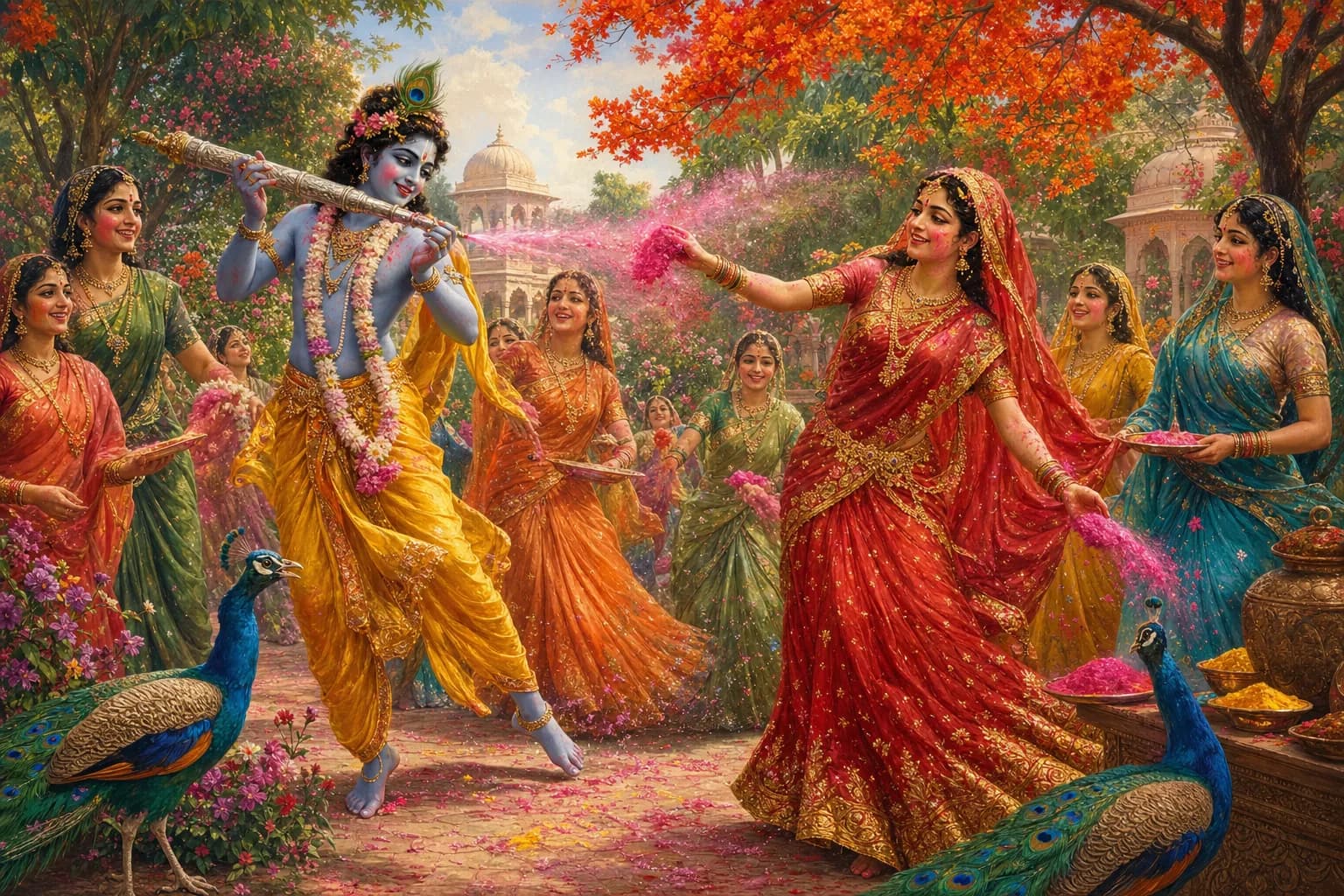
Holi
Holi, the bonfire of Holika Dahan and the colour of Rangwali Holi. The 2027 and 2028 dates with the Holika Dahan muhurat, the Narada Purana verses that name the day, and the Braj Holi of Radha and Krishna.
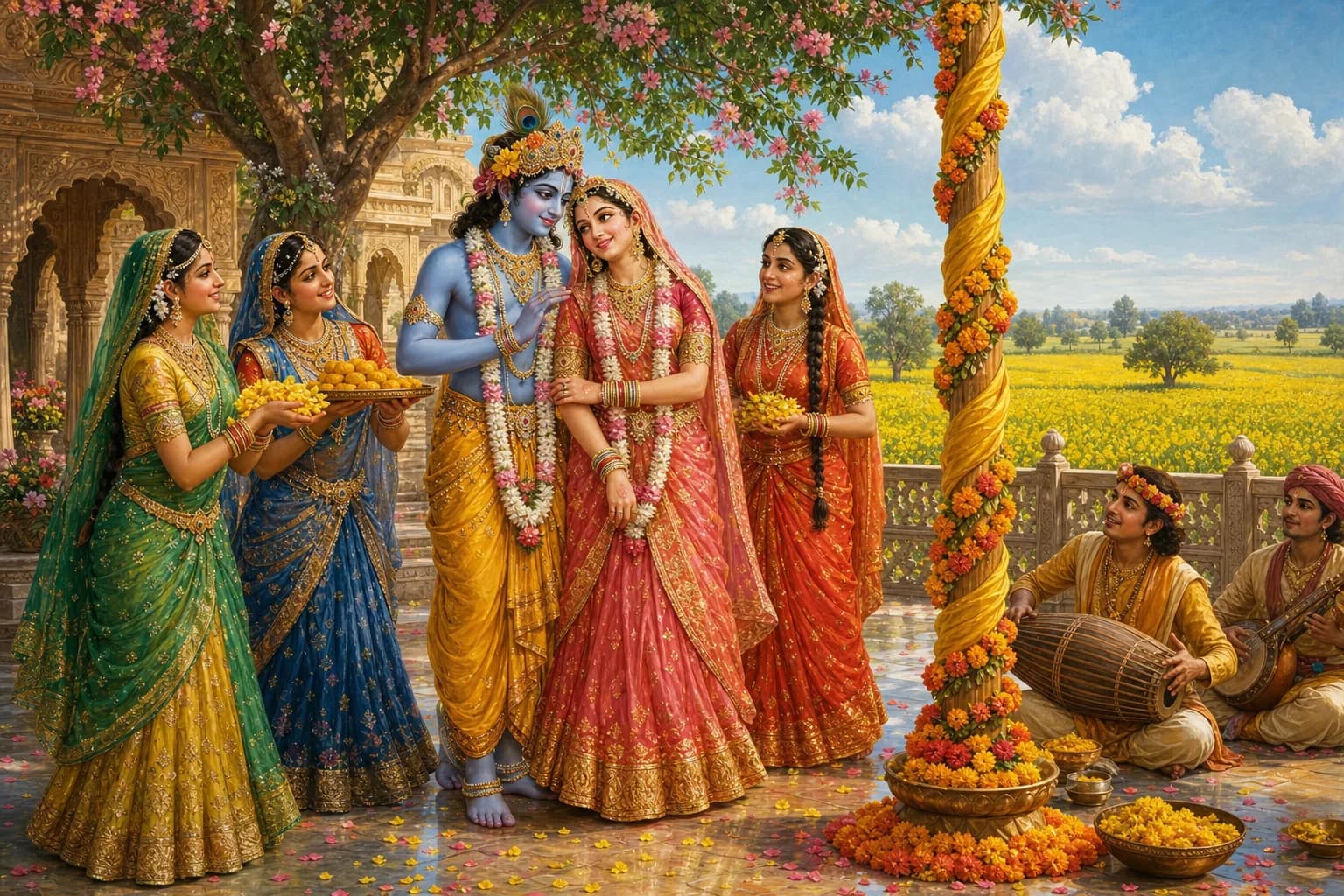
Vasant Panchami
Vasant Panchami, the first day of spring and the day Braj begins its forty days of Holi. The 2027 and 2028 dates, why the day is yellow, and what happens at Barsana, Nandgaon and Vrindavan.
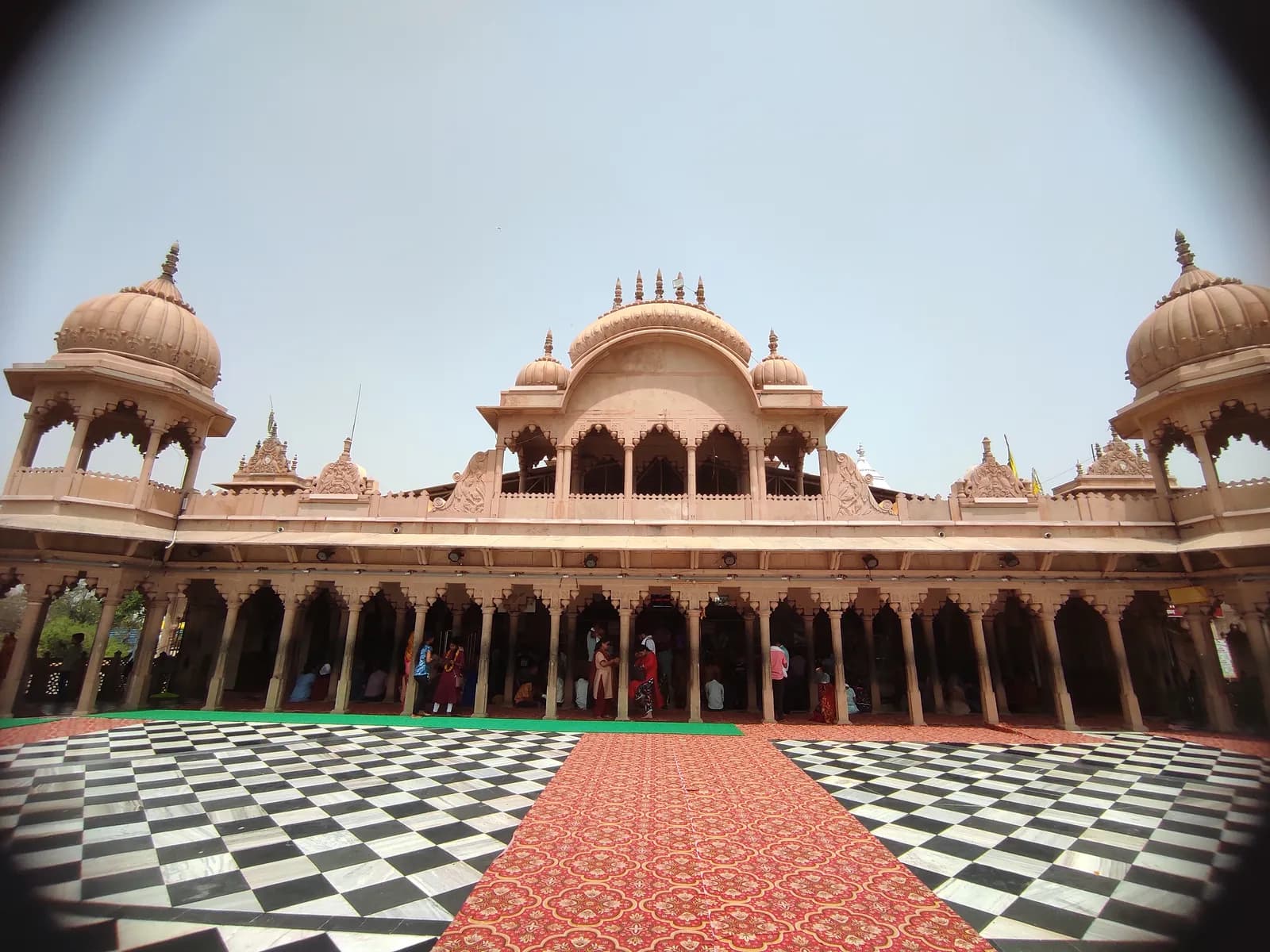
Barsana
Barsana, Radha's town in Braj: the Shriji temple on Bhanugarh hill, the Raval birthplace question, Lathmar Holi, Radhashtami, and how to visit.