
Festivals
Gopashtami
Last updated 26 July 2026
The short answer
Gopashtami is the day Krishna was entrusted with the cows, having until then been allowed to tend only the calves. It falls on Kartik shukla ashtami, and in 2026 that is Tuesday 17 November. The Bhagavata Purana gives the event at 10.15.1 and the Padma Purana names the day. Braj keeps it by worshipping the cows: bathing, garlanding, tilaking and feeding them, and walking with the herd.
When Gopashtami falls
Next: Tuesday, 17 November 2026
Key takeaways
- Gopashtami marks the day Krishna became a gopa, a cowherd, having until then been a vatsapa, a keeper of calves.
- In 2026 it falls on Tuesday 17 November, seven days after Govardhan Puja.
- Bhagavata Purana 10.15.1 gives the event, and the Padma Purana's Kartika-mahatmya names the day itself.
- Many Vrindavan temples show Radharani's lotus feet on this day, the one day of the year, because she is dressed as a cowherd.
- The observance is go-puja and go-seva: bathing, tilaking, garlanding and feeding the cows, then walking with them.
There is a day in Kartik that belongs entirely to the cows, and to a boy who wanted to walk out with them.
Gopashtami is the day Krishna stopped being a vatsapa, a keeper of calves, and became a gopa, a cowherd. Until then he had been considered too small for the herd and was given the calves to mind. On this day Nanda Maharaj handed him the cows.
When Gopashtami falls
| Year | Date |
|---|---|
| 2026 | Tuesday 17 November |
| 2027 | Saturday 6 November |
Kartik shukla ashtami, seven days after Govardhan Puja. Both the general reckoning and the Vaishnava calendar agree in both years, and no fixed puja muhurat is published, because this one is kept across the whole day rather than at a moment.
What the scriptures say
The event is in the Bhagavata Purana, at the opening of chapter 15:
"When Lord Rāma and Lord Kṛṣṇa attained the age of paugaṇḍa [six to ten] while living in Vṛndāvana, the cowherd men allowed Them to take up the task of tending the cows. Engaging thus in the company of Their friends, the two boys rendered the land of Vṛndāvana most auspicious by imprinting upon it the marks of Their lotus feet."
Bhagavata Purana 10.15.1
And the day itself is named in the Padma Purana's Kartika-mahatmya, quoted in the purport to that verse:
śuklāṣṭamī kārttike tu smṛtā gopāṣṭamī budhaiḥ
"The eighth lunar day of the bright fortnight of the month of Kārttika is known by authorities as Gopāṣṭamī. From that day, Lord Vāsudeva served as a cowherd, whereas previously He had tended the calves."
Padma Purana, Kartika-mahatmya
That is an unusually clean pair. The Bhagavata gives the event; the Padma Purana gives the day.
One detail from the purport that Braj has never let go of. The word padaih, footprints, is there because he blessed the earth by walking it barefoot, and the girls of Vrindavan spent the day anxious about his soft feet on the thorny forest floor. Yashoda worried too. It is the whole tenderness of the festival in a single word.
Radharani's lotus feet
The most loved thing about this day in Vrindavan happens in the temples.
On Gopashtami, Radharani goes out with the herd too, and she goes dressed as a gwala, a cowherd boy: dhoti, kurta, a turban, a rope in her hand. Because she is dressed that way rather than in her usual full dress, her feet are uncovered.
So on this one day of the year, many temples in Vrindavan give darshan of her lotus feet. On every other day they are covered. Devotees travel for it.
Worth keeping straight, because the two get confused: the famous once-a-year charan darshan at the Shri Ji temple in Barsana is on Radhashtami, not on Gopashtami. The Gopashtami feet darshan is a Vrindavan and Gaudiya temple practice.
How the cows are worshipped
The observance is go-puja and go-seva together, and it follows a shape that has not changed much.
- Bathe and clean the cows and calves early, before sunrise.
- Tilak on the forehead with roli, kumkum and haldi. Some paint the horns.
- Garland and dress them with flowers and cloth, nothing that will trouble them.
- Offer aarti with a ghee lamp, incense and flowers, with bhajan and kirtan in the goshala.
- Feed them green fodder and grass, then jaggery, fruit, gram and sweets.
- Wash the cow's feet and walk around her, a parikrama.
- Walk with the herd a little way, as Krishna did that first morning.
- Take the dust of the hooves and wear it as tilak.
When the cows come home in the evening a lighter puja is done to receive them.
The part that lasts beyond the day is go-dana: cleaning the goshala, brushing the cows, and giving toward fodder and veterinary care. ISKCON Vrindavan lets devotees sponsor go puja for a single cow or calf, or donate grass, jaggery and bran. That is the version of this festival that keeps working in February.
Where Braj keeps it
Nandgaon is the heart of it, kept as the place Krishna first took the herd out, with a gau-charan lila and a procession through the village.
Vrindavan decorates its goshalas with flowers and rangoli, and the temples do go-puja with aarti and parikrama around the cows, with katha on Krishna as Gopala. Mathura, Barsana, Govardhan and Shrinathji at Nathdwara all keep the day.
Keeping it at home
Not everyone has a cow, and the day still works.
Go to a goshala, take fresh grass and jaggery with you, and feed the cows by hand. If there is a cow in your street, wash her, tilak her, garland her, feed her. Bathe your Laddu Gopal and dress him as a cowherd if you have that poshak. Give something toward a goshala's fodder for the year.
And read Bhagavata Purana 10.15, which is where the morning belongs.
Where this sits in the Radha Krishna year
Gopashtami comes a week after Govardhan Puja in the month of Kartik, the month Braj holds dearest. Before them, Sharad Purnima closes the monsoon in October. For the whole cycle, see the festivals of Radha Krishna.
Frequently asked questions
Why is Gopashtami celebrated?
It marks the day Krishna was promoted. Until then he had been allowed to look after the calves only, being too small for the herd. On this day Nanda Maharaj gave him charge of the cows themselves.
It is the day he first walked out to the pasture as a cowherd, which is the form in which Braj has loved him ever since.
When is Gopashtami in 2026?
Tuesday 17 November 2026, on Kartik shukla ashtami, seven days after Govardhan Puja. Both the general and Vaishnava reckonings agree.
In 2027 it falls on Saturday 6 November. There is no fixed puja muhurat; it is kept through the day.
What is the story behind Gopashtami?
Krishna wanted the cows, and he was still small. The Bhagavata says that when he and Balarama reached pauganda age, between six and ten, the cowherd men agreed to let them take up the herd.
The purport adds a detail Braj has never forgotten: he walked out barefoot, and the girls of Vrindavan were anxious the whole day about his soft feet on the thorny forest floor.
Why are Radharani's feet visible on Gopashtami?
Because she is dressed as a cowherd boy, in dhoti, kurta and turban with a rope in her hand, to go out with the herd. In that dress her feet are not covered.
Many temples in Vrindavan, and now worldwide, give darshan of her lotus feet on this one day of the year. On every other day they are covered.
What should you feed cows on Gopashtami?
Green fodder and fresh grass first, then jaggery, fruit, gram and sweets, and panchamrit where it is offered. Many goshalas prepare aloo puri, sooji halwa and kheer for the day.
Feeding is only part of it. Bathing them, brushing them, and giving toward their fodder and care through the year is the seva the day is really for.
Is Govardhan Puja the same as Gopashtami?
No, though they sit a week apart in the same month and both honour the cows. Govardhan Puja is Kartik shukla pratipada, the day after Diwali, and remembers Krishna lifting the hill.
Gopashtami is Kartik shukla ashtami and remembers him first taking the cows out to graze.
Sources
- Gopashtami date and tithi, Drik Panchang
- Vaishnava calendar 2026 to 2027, ISKCON Bangalore
- Bhagavata Purana 10.15.1, with the Padma Purana verse in the purport
- Bhagavata Purana 10.15.1, Sanskrit and translation
- Gopashtami, ISKCON Vrindavan
- Why Srimati Radharani gives darshan of her lotus feet on Gopashtami, ISKCON News
- Gopashtami go-puja and go-seva, ISKCON Raichur
- Gopashtami in Vrindavan and Braj, Tirtha Yatra
Continue reading
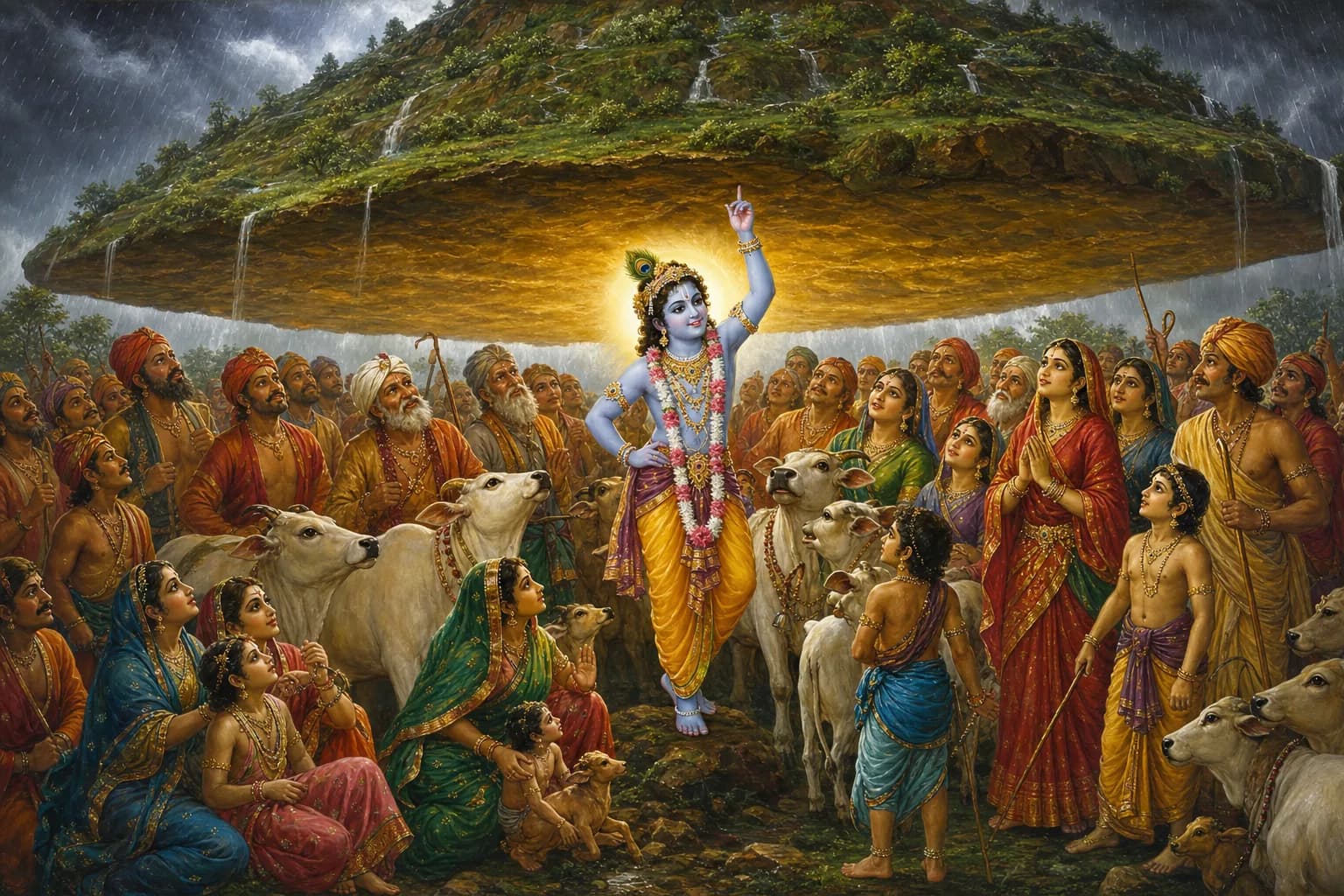
Govardhan Puja and Annakut
Govardhan Puja and Annakut, the day Krishna lifted the hill and Braj learned who to thank. The 2026 date, what Bhagavata Purana 10.24 to 10.27 says, the 21 km parikrama, and how to keep it at home.
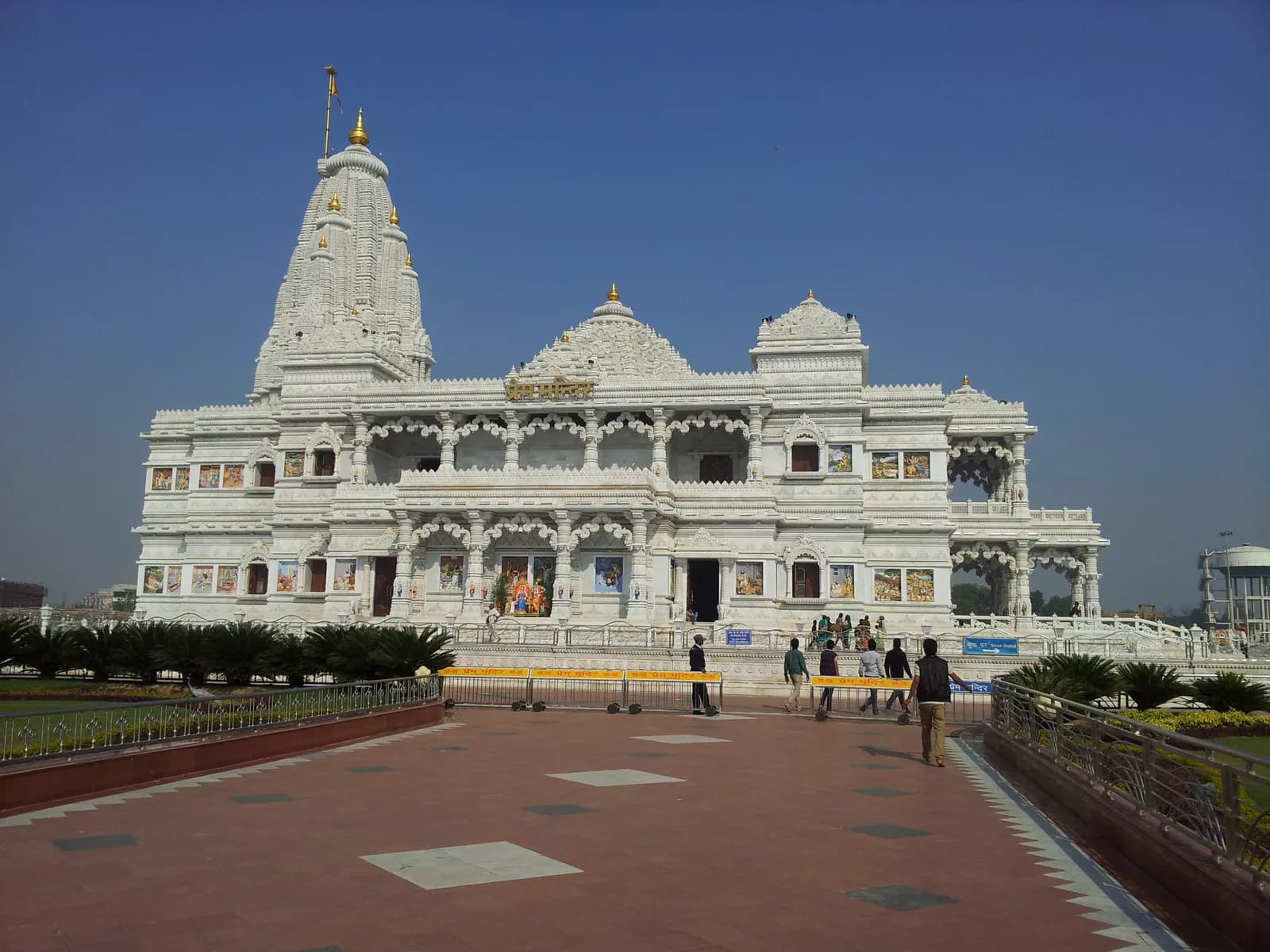
Vrindavan
Vrindavan, the town of Krishna's childhood: its temples, the Yamuna ghats, the 10 km parikrama, when to go, and what first-time visitors get wrong.
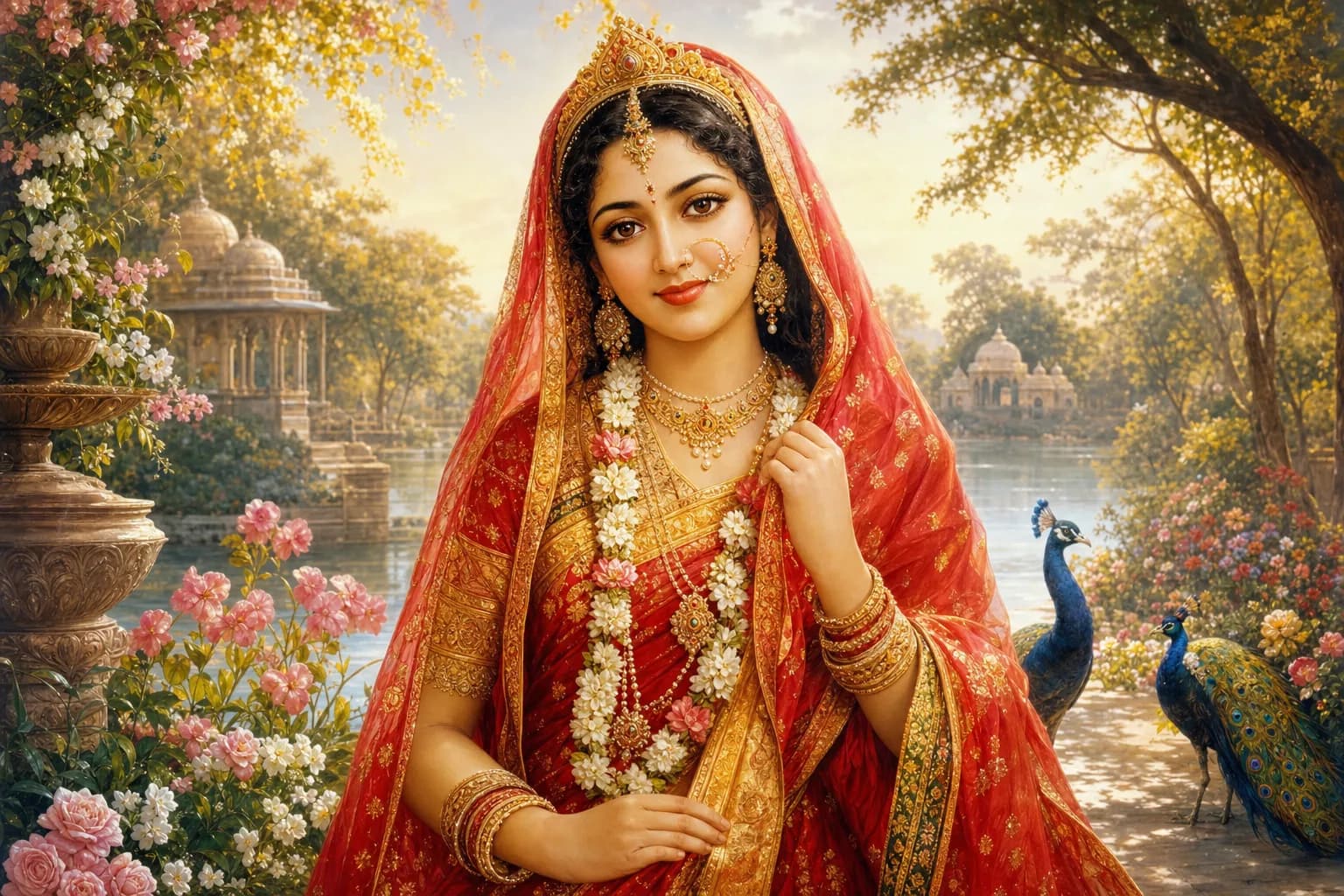
Who is Radha?
Who Radha is, the scriptures she appears in, and what each Vaishnava tradition says about Krishna's beloved, sourced and labelled.