
Festivals
Radhashtami
Last updated 25 July 2026
The short answer
Radhashtami is the appearance day of Srimati Radharani, kept on Bhadrapada shukla ashtami, the eighth day of the bright fortnight of Bhadrapada. It falls exactly fifteen days after Krishna Janmashtami. In 2026 it is Saturday 19 September. Barsana, the hill town of her father Vrishabhanu, keeps it most grandly, with a mahabhishek at the Ladli Ji temple and a fast held until midday.
When Radhashtami falls
Next: Saturday, 19 September 2026
Key takeaways
- Radhashtami falls on Bhadrapada shukla ashtami, always fifteen days after Krishna Janmashtami, because the two are the eighth day of opposite fortnights in the same lunar month.
- In 2026 it falls on Saturday 19 September. The date moves every year, because the Hindu calendar is lunisolar.
- The Bhagavata speaks of Radha without naming her, at 10.30.28. Her appearance is narrated in the Garga Samhita and the Brahma Vaivarta Purana.
- Two towns claim her birth. Raval near Gokul worships her as the infant Ladliji, Barsana worships her as the young Kishoriji. Braj tradition holds both.
- Barsana begins the day with mangla aarti at 4 am and a mahabhishek at the Ladli Ji temple. Most devotees fast until the madhyahna window at midday.
Radhashtami is the appearance day of Srimati Radharani. It falls on Bhadrapada shukla ashtami, the eighth day of the bright fortnight of Bhadrapada, exactly fifteen days after Krishna Janmashtami. In 2026 that is Saturday 19 September. The largest celebration anywhere is at Barsana, and the day there starts with mangla aarti at four in the morning.
This is the most important day in the year for anyone who comes to Radha first. It is also the quieter of the two Bhadrapada festivals. Janmashtami is a gazetted public holiday across India. Radhashtami is a Braj day and a Vaishnava day, kept with full intensity wherever Radha holds a distinct theological position, and quieter elsewhere.
Why does Radhashtami fall fifteen days after Janmashtami?
Because both days are an ashtami, the eighth lunar day, and they sit in opposite fortnights of the same month.
Bhadrapada, like every Hindu lunar month, is split into a waning fortnight and a waxing fortnight of fifteen tithis each. Janmashtami takes the eighth day of the waning half. Radhashtami takes the eighth day of the waxing half. The gap is structural, so it never varies. In 2026 that is 4 September and then 19 September.
The two days are kept as mirrors of each other.
| Krishna Janmashtami | Radhashtami | |
|---|---|---|
| Tithi | Bhadrapada krishna paksha ashtami | Bhadrapada shukla paksha ashtami |
| 2026 date | Friday 4 September | Saturday 19 September |
| Hour of observance | Midnight, Nishita Kaal | Midday, madhyahna |
| Where the birth is placed | Kansa's prison at Mathura | Braj, at Raval or Barsana |
| Scriptural source | Bhagavata Purana 10.3 | Garga Samhita, Brahma Vaivarta Purana |
| Status in India | Gazetted public holiday | Regional and sampradaya observance |
| Fast | Usually full day, broken after midnight puja | Usually half day, broken after midday puja |
Devotional tradition reads the sequence as deliberate. Krishna appears first, and Radha appears a fortnight later, so that the first thing she ever opens her eyes on is him. The birth of Srimati Radharani tells that scene as each text gives it.
What is the significance of Radhashtami?
Every other festival in the Braj year approaches Radha through Krishna. This one comes to her directly.
In the Vaishnava schools that keep the day, Radha is his hladini shakti, the pleasure potency of his own being. She is the capacity for love inside him, standing outside him in a form that can love him back, rather than a devotee who arrived at him from elsewhere. Krishna attracts everything that exists, and she is the one who attracts Krishna. That is the whole claim, and Radhashtami is the day it is celebrated on its own terms.
The practical consequence is that the day is kept as bhakti's own birthday. Devotees ask on Radhashtami for the thing Radha is held to embody rather than for anything she might arrange with Krishna, which is why the observance leans on chanting her names, hearing her pastimes and doing seva rather than on petition.
It also explains who keeps it and who does not. Radhashtami is central for the Gaudiya, Nimbarka, Vallabha, Radhavallabha and Haridasi sampradayas, all of which give Radha a distinct theological position. Where she is held as one devotee among many, the calendar carries no separate day for her.
Which scriptures record Radha's appearance?
Two Puranas tell it, and the great Krishna text holds her without speaking her name.
That silence is worth sitting with rather than skipping, and the Gaudiya acharyas read it as concealment rather than absence, the text veiling what is most intimate to it. Canto 10 gives the whole Vrindavan childhood and the five chapters of the rasa dance, and at 10.30.28 the gopis speak of one gopi whom Krishna has led away alone, saying she must have perfectly worshipped him. The verb is aradhita. Gaudiya commentators hear the name Radha inside that word, concealed rather than spoken.
The account of her appearance, with a father, a mother and a day, comes from the Puranas that name her.
| Text | What it gives | How to read it |
|---|---|---|
| Bhagavata Purana (Canto 10) | One gopi singled out at 10.30.28, held unnamed | The oldest and most authoritative Krishna scripture. The festival day comes from the texts that follow it |
| Garga Samhita, Canto 1, Chapter 8 | The narrative of her birth in Braj, as the daughter received by King Vrishabhanu | A named Vaishnava text, later than the Bhagavata, and the tradition's main source for the birth |
| Brahma Vaivarta Purana, Krishna Janma Khanda | Her origin in Goloka, manifesting from Krishna's own left side, and the curse that sends her to earth | Later Puranic material, explaining why she descends rather than narrating a birth |
| Padma Purana | Cited in the tradition as the authority for the Radha Ashtami vrat itself, placing her appearance on the eighth of the bright fortnight of Bhadrapada | Later Puranic material. Editions and citations differ over which khanda the passage sits in |
So the position is this. The day is old, continuous and deeply held in Braj, and it rests on the devotional literature that names her rather than on the Bhagavata Purana. Saying so takes nothing away from it. Who Radha is works through her theological position school by school, and is Radha an incarnation of Lakshmi handles the identification that many of these texts make.
Was Radha born at Raval or at Barsana?
Two towns claim her, and Braj has never chosen between them.
Raval is a village on the north bank of the Yamuna in Mahavan tehsil, about 13 km from Mathura city and 7 km from Gokul. It holds the Shri Radha Rani Janam Sthal temple, and there she is worshipped as Ladliji, the darling daughter, in her infant form. Barsana, 43 km from Mathura on the other side of the region, worships her as Kishoriji, the young girl.
That difference in form is the clue to how Braj holds both claims at once. The account most devotees accept is that she was born at Raval and grew up at Barsana after Vrishabhanu settled his household there. Each town then keeps the age of her that belongs to it.
The disagreement is not between a scripture and a legend. It is between two living local traditions, each with a temple, a lineage of service and its own form of the deity. Radhashtami is kept at both. Barsana is where it is largest, and Barsana is what most people mean when they say her birthplace.
How is Radhashtami kept at Barsana?
Barsana is built up a hill, and the Ladli Ji temple sits at the top of it, above the forest of Gahvar van, reached by a long climb of stone steps. Braj gives the hill two names, Bhanugarh after Vrishabhanu and Brahmanchal. The shrine is red and yellow sandstone in the manner of a Rajput palace, and the deity there was manifested and named Ladli, the beloved daughter, by Goswami Narayan Bhatt, the Braj acharya, roughly four and a half centuries ago.
The festival day runs like this.
- Mangla aarti at 4 am. The main celebration opens in the sanctum before dawn, after days of badhai singing leading up to it.
- The deity comes out to the jagmohan. Ladli Ji is brought from the inner sanctum into the assembly hall so the abhishek can be done in view of the assembled devotees.
- The mahabhishek. A ceremonial bathing with panchamrit, the five nectars of milk, ghee, honey, sugar and yoghurt. By long custom the sevaits of the temple first go to the Brajacharya Peeth and invite the senior acharya of the Narayan Bhatt lineage to begin the bathing with the mantra, after which the sevaits continue it. When that invitation was skipped in 2025, it was reported across Braj as a break in tradition, which tells you how seriously the sequence is held.
- New clothes and ornaments. She is dressed afresh for the day. One year the temple presented her in saffron with ornaments reported at eighty lakh rupees.
- Samaj gayan through the day. The traditional collective temple singing of Braj, alongside continuous darshan and prasad distribution.
Go expecting crowds. Devotees arrive in enormous numbers, the stone stairs up the hill are the pinch point, and the Mathura district administration runs a dedicated crowd and security plan for the day. Overcrowding inside the temple has caused people to faint in recent years. If you can, arrive very early, and treat the climb as part of the darshan. Barsana covers the town and the temple in full.
Vrindavan keeps the day too, and the Radha Vallabh temple there stretches the celebration across nine days. If you are planning a Braj trip around the festival, Vrindavan and Banke Bihari are the other two stops nobody skips.
How do devotees keep Radhashtami at home?
The shape of the day is a half day fast, worship at midday, and her names.
Most devotees bathe early, keep no grains, lentils or salt through the morning, and take only fruit, milk and water. The main puja is done in the madhyahna window at midday, since that is where tradition places her appearance, at noon under Anuradha nakshatra. Bathe the deity or the image with panchamrit, dress her in something new, offer flowers and a bhog of kheer, makhan and mishri, and do the aarti. The fast is broken after that.
Gaudiya Vaishnavas keep this half day fast as the standard. Some observe the full day, occasionally without water. Nothing in the tradition asks a beginner for severity, and a fast held until noon with the puja done properly is a complete observance.
Then the names. Radhashtami is the day the Radha Sahasranama, her thousand names, is most chanted, and the Hare Krishna maha mantra carries the day as it carries every other. Reading her story aloud counts as much as anything else you do.
Why is Radhashtami the one day her feet are visible?
In the temples that keep her, Radharani's feet stay covered through the year. On Radhashtami, and on this day alone, devotees are given darshan of her lotus feet.
It is a small piece of temple practice and it explains a great deal about the mood of the festival. The day belongs to her rather than to her nearness to Krishna. It is the one day in the calendar built entirely around her, when the tradition uncovers what it otherwise keeps hidden, and the queues at Barsana form for exactly that.
Where to go next
For the couple this day belongs to, start at Radha Krishna, and for what their love is taken to mean, what their love symbolizes.
For the story behind the festival, the birth of Srimati Radharani lays out the Garga Samhita and Brahma Vaivarta accounts side by side.
For the rest of the year in Braj, festivals has the full calendar, and why Krishna did not marry Radha is the question most people arrive at next.
Frequently asked questions
What is the date of Radha Ashtami in 2026?
Saturday 19 September 2026. The ashtami tithi begins around 1:00 pm on 18 September and ends around 3:26 pm on 19 September, and the madhyahna window used for the main worship runs roughly 11:00 am to 1:30 pm.
Those clock times are calculated for Ujjain and shift by up to half an hour across India, so check a panchang set to your own city. The following year, 2027, it falls on Wednesday 8 September.
Why is Radha Ashtami celebrated after Janmashtami?
Because both days are an ashtami, the eighth lunar day, in the same month of Bhadrapada, and they sit in opposite fortnights. Janmashtami takes the eighth day of the waning fortnight, Radhashtami the eighth day of the waxing fortnight, so Radha's day trails Krishna's by exactly fifteen days every single year.
Devotional tradition reads the order as fitting rather than accidental: Krishna appears first, and Radha appears soon after, so that the first thing she ever opens her eyes on is him.
Where was Radha Rani actually born, Raval or Barsana?
Both towns claim her, and Braj has never settled it. Raval, a village on the north bank of the Yamuna about 13 km from Mathura and 7 km from Gokul, holds the Radha Rani Janam Sthal temple and worships her in her infant form as Ladliji.
Barsana worships her as Kishoriji, the young girl, at the Ladli Ji temple on Bhanugarh hill.
The reconciliation most Braj devotees accept is that she was born at Raval and grew up at Barsana after Vrishabhanu moved there. Barsana is where the festival is largest.
What do you eat during the Radha Ashtami fast, and when do you break it?
The common practice is a half day fast. Devotees take no grains, lentils or salt through the morning, keeping to fruit, milk, water and phalahar food, and break the fast after the midday puja once the madhyahna window has passed. Gaudiya Vaishnavas keep this half day fast as the standard, and some observe the full day, occasionally without water.
Nothing in the tradition asks a beginner for severity. Keeping the fast until noon, doing the puja, and reading about Radharani is a complete observance.
Can you sleep during the day on Radha Ashtami?
No scripture forbids it. Daytime sleep is discouraged on most vrat days by general fasting convention rather than by a rule specific to Radhashtami, on the reasoning that a fast day is meant to be spent in chanting, reading and seva.
The one timing that genuinely matters is the madhyahna window at midday, since that is when tradition places her appearance and when the main puja and abhishek are performed. Plan the day so nothing displaces that.
Which nakshatra was Radha born in?
Tradition places her appearance at noon under Anuradha nakshatra, on Bhadrapada shukla ashtami. That is why the madhyahna muhurta at midday is the prescribed worship window for the day, and it is the exact mirror of Janmashtami, where Krishna's birth is placed at midnight and the puja is done at Nishita Kaal.
The nakshatra is carried in the tradition rather than fixed by a numbered verse, and panchangs list the tithi and the madhyahna window rather than a birth chart.
What is the difference between Janmashtami and Radhashtami?
Janmashtami marks Krishna's birth in Kansa's prison at Mathura and is kept at midnight. It is a gazetted holiday in India and is observed almost everywhere.
Radhashtami marks Radha's appearance in Braj and is kept at midday, fifteen days later. It is a Braj and Vaishnava observance rather than a national one, largest at Barsana, Vrindavan and Mathura and in Gaudiya, Nimbarka, Vallabha, Radhavallabha and Haridasi temples. Krishna's birth is narrated in the Bhagavata Purana, and Radha's appearance in the Garga Samhita and the Brahma Vaivarta Purana.
How is Radha Ashtami celebrated in Barsana?
The day at the Ladli Ji temple on Bhanugarh hill opens with mangla aarti at 4 am. The deity is brought from the inner sanctum out to the jagmohan, the assembly hall, for the mahabhishek, a ceremonial bathing with panchamrit, the mixture of milk, ghee, honey, sugar and yoghurt.
She is then dressed in new clothes and ornaments, and samaj gayan, the traditional Braj temple singing, carries through the day.
Crowds on the stone stairs up the hill are heavy enough that Mathura police run a separate crowd plan for the festival.
Sources
- Radhashtami (Bhadrapada shukla ashtami, Anuradha nakshatra at noon, Barsana)
- Radha Ashtami 2026 date and tithi timings, Prokerala
- Radha Ashtami 2026, madhyahna window and ashtami tithi, Rudraksha Ratna
- Radha Ashtami 2027 date and tithi (Wednesday 8 September), Drik Panchang
- Rawal, Uttar Pradesh: Radha Rani Janam Sthal, Ladliji and Kishoriji
- Shri Radha Rani Mandir, Barsana, District Mathura, Government of Uttar Pradesh
- The Radhashtami mahabhishek and the Brajacharya Peeth lineage at Ladli Ji Mandir, Vrindavan Today
- Security measures stepped up in Barsana for Radhashtami (mangla aarti at 4 am), Vrindavan Today
- Barsana's Ladli ji and Goswami Shri Narayan Bhatt, Vrindavan Today
- Garga Samhita 1.8, Description of Shri Radhika's Birth
- Brahma Vaivarta Purana, Krishna Janma Khanda (English translation)
- Bhagavata Purana 10.30 (the unnamed gopi, anayaradhito nunam, 10.30.28)
- Srimati Radharani's Appearance, Krishna.com
Continue reading
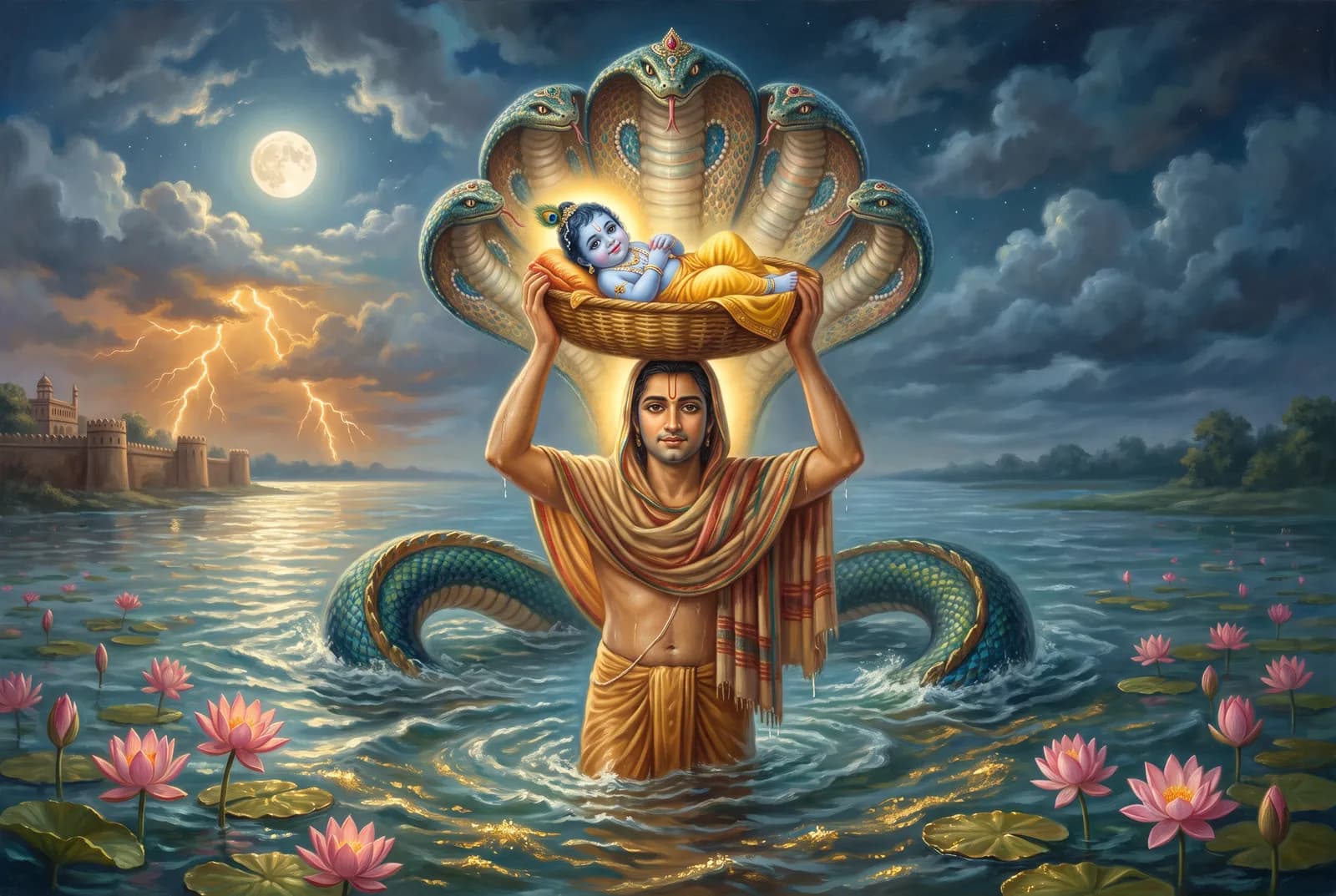
Krishna Janmashtami
Krishna Janmashtami explained: the Bhagavata account of the birth, why it is kept at midnight, the tithi, the fast, Dahi Handi and Braj.
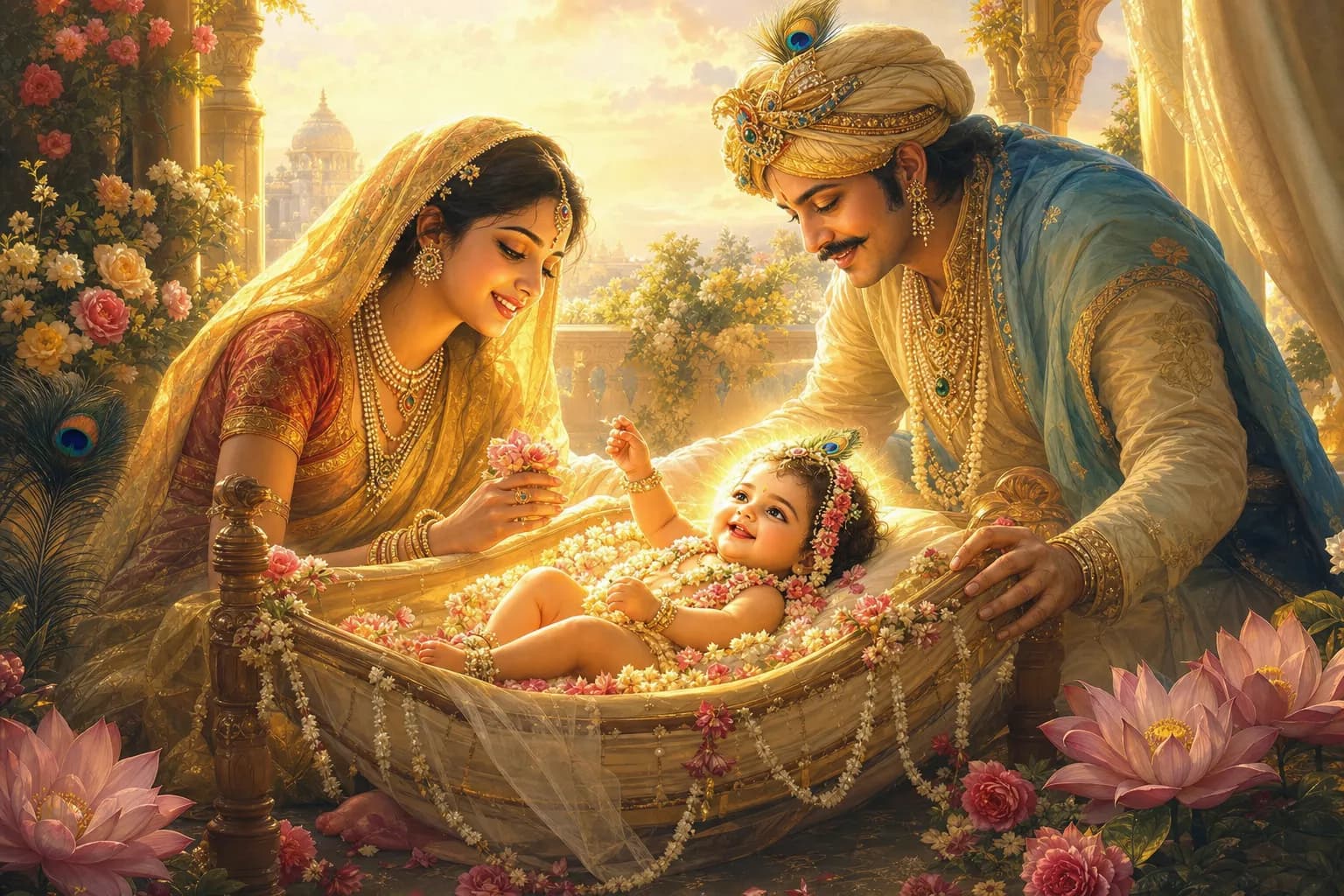
The Birth of Srimati Radharani
How Srimati Radharani was born, told scripture by scripture: the Garga Samhita, the Brahma Vaivarta Purana, her parents, the lotus, and Radhashtami.
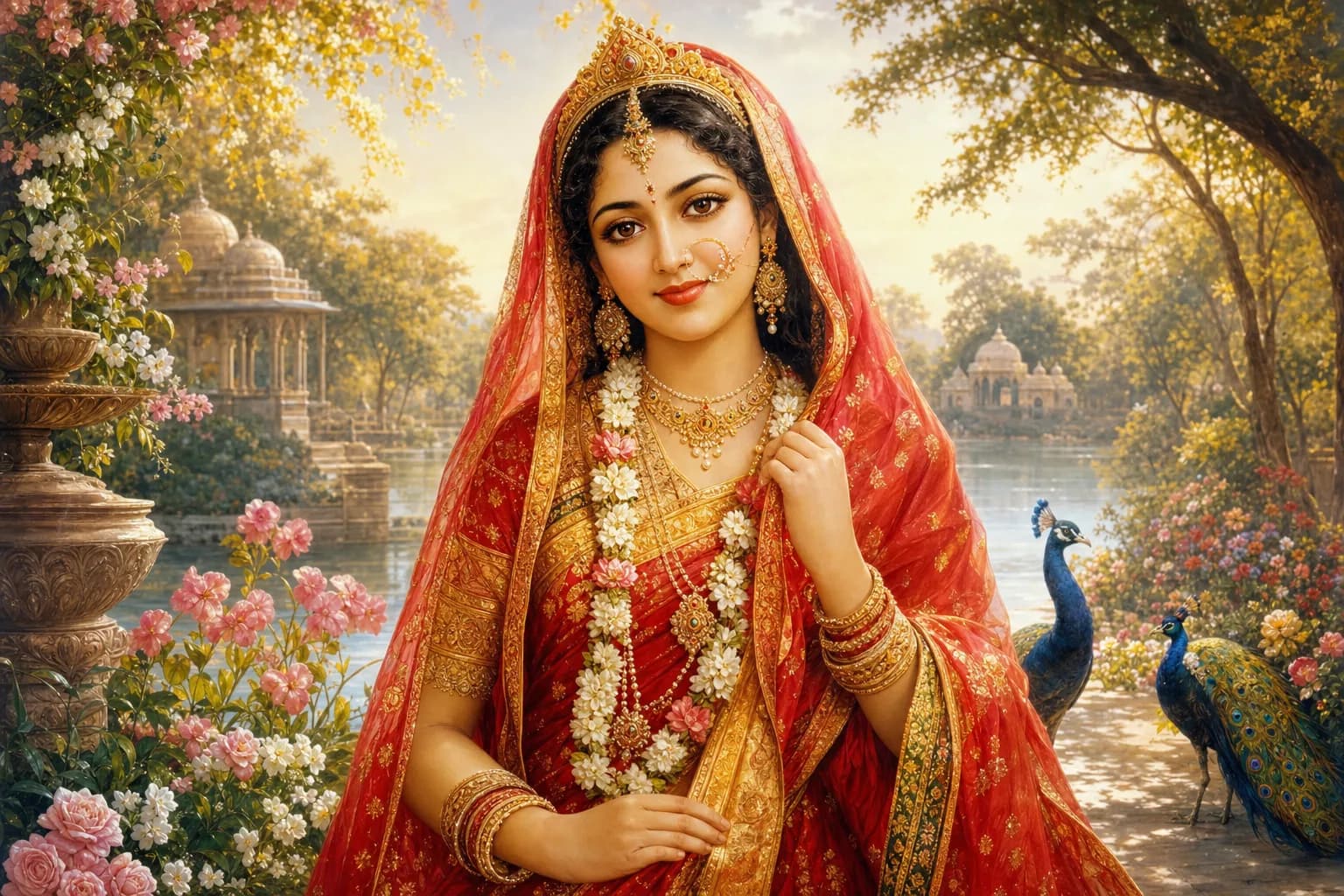
Who is Radha?
Who Radha is, the scriptures she appears in, and what each Vaishnava tradition says about Krishna's beloved, sourced and labelled.