
Radha Krishna
What Does Radha Krishna's Love Symbolize?
Last updated 25 July 2026
The short answer
Radha and Krishna's love symbolizes the union of the soul and God. Krishna is the Supreme Lord and Radha is the perfected devotee, so their bond is read as the ideal of pure, selfless devotion, not worldly romance. Gaudiya teaching calls Radha the hladini shakti, Krishna's own bliss, which is why devotees worship the two as one.
Key takeaways
- Radha and Krishna together stand for the soul (jiva) reaching for God (Brahman), the highest ideal of bhakti.
- The Bhagavata Purana conceals Radha in the favored gopi of verse 10.30.28, where the word aradhita (worshipped) holds the seed of her name.
- Chaitanya Charitamrita (Adi 4.55) calls Radha the hladini shakti, Krishna's own love and bliss taking a separate form, so the two are one identity in two bodies.
- The Nimbarka Sampradaya was among the earliest to worship the couple, reading their love as the eternal bond of the devoted soul with God.
- Their separation (viraha) matters as much as their union: longing itself is treated as the purest form of love.
Radha and Krishna's love symbolizes the union of the soul and God. Krishna is the Supreme Lord and Radha is the perfected devotee, so their bond is read as the ideal of pure, selfless devotion, not worldly romance. Gaudiya teaching calls Radha the hladini shakti, Krishna's own bliss, which is why devotees worship Radha Krishna as one.
This is the one place where the popular answer and the scriptural answer drift apart. The greeting-card version says their love symbolizes romance that never got its happy ending. The tradition says something larger and stranger: it uses a love story to describe what devotion to God actually feels like.
Is Radha the soul and Krishna the Supreme God?
Yes. The oldest and most widely shared reading is that Krishna is God and Radha is the soul that loves him without condition. Their romance is the human language a devotional tradition uses to describe the relationship between the individual soul (jiva) and the Supreme (Brahman). Radha is not a side character in Krishna's story. She is the model of how to love him.
This is why the couple, and not Krishna alone, sits at the centre of so much worship. Krishna shows what God is. Radha shows what a perfect devotee is. Put them together and you have the whole of bhakti in one image.
The Nimbarka Sampradaya, one of the earliest traditions to worship the two together (dating to around the 12th century), builds its entire philosophy on this. Its doctrine of Dvaitadvaita, difference-and-non-difference, holds that the soul is at once distinct from God and inseparable from him. Radha and Krishna are that idea made visible: two forms, one love.
What does each scripture say about their love?
Here is where the sourcing matters, because the answer genuinely changes from text to text. Radha is veiled in the Bhagavata and stands named at the centre of the poetry and Puranas that follow, so her presence deepens across the centuries rather than staying flat.
| Source | What it says about their love | Type |
|---|---|---|
| Bhagavata Purana 10.29-33 (Rasa Lila) | Krishna dances with all the gopis; one is singled out as most beloved in verse 10.30.28, present but veiled rather than named. | Explicitly in scripture |
| Gita Govinda (Jayadeva, 12th c.) | The first major work to name Radha and put her at the centre. Sings both their union and their separation. | Later devotional literature |
| Brahma Vaivarta Purana | Develops Radha fully as Krishna's eternal consort and his hladini, or bliss, power. | Later devotional literature |
| Nimbarka Sampradaya | Among the earliest to worship the couple; reads their love as the soul's bond with God. | Taught within a tradition |
| Chaitanya Charitamrita, Adi-lila 4.55 and 4.96 | Radha is Krishna's own love transformed, one identity in two bodies; the two are non-different. | Taught within a tradition |
One detail is worth pausing on, because almost no one who quotes this story knows it. In the Bhagavata Purana, the older gopis notice that one girl has clearly pleased Krishna more than the rest, and they say of her, anayaradhito nunam bhagavan harir isvarah: "certainly this one has perfectly worshipped the Lord" (10.30.28). The verb there is aradhita, worshipped. The tradition reads that very word as the hidden root of the name Radha, the one who worships most perfectly. The text veils her name and sets its seed inside the verb that describes her. Centuries later the Chaitanya Charitamrita quotes this exact verse (Adi 4.88) to say plainly: that gopi is Radha.
Why is Radha the hladini shakti, Krishna's own bliss?
Because, in Gaudiya Vaishnava teaching, Radha is not separate from Krishna at all. She is his own capacity for joy, personified. It is the sharpest answer the tradition gives to what their love means, and it is not what you would expect from a love story.
The founding verse is Chaitanya Charitamrita, Adi-lila 4.55: radha krsna-pranaya-vikrtir hladini saktir asmad. Radha is the transformation of Krishna's love, his hladini shakti, his pleasure potency. The verse continues that the two are one in identity yet took separate bodies so that love could happen at all. A few lines later (Adi 4.96) it states it flatly: Radha is the complete energy, Krishna the complete possessor of energy, and there is no difference between them.
Read that way, their love symbolizes something almost philosophical. God's own delight steps outside of him, takes a form, and loves him back. The romance is real, and it is also God enjoying God.
Is their love romantic or spiritual?
Both, and the tradition refuses to split them. It calls this madhurya bhava, the "sweet mood," where the soul relates to God the way a lover relates to a beloved. The romance is not a decoration on top of the spirituality. It is the spirituality, because the intensity of romantic love is the closest human feeling to what total devotion is supposed to be.
The most surprising part is that separation counts more than union. After Krishna leaves Vrindavan for Mathura and Dwarka, Radha's longing for him, called viraha, becomes the emotional core of the whole tradition. Jayadeva's Gita Govinda pours itself into that ache. A heart that burns for God in his absence is treated as more devoted than one that only enjoys his presence. That is why the Radha Krishna story has no tidy reunion on earth. The unfinished longing is the point.
You can hear the same idea in the Hare Krishna maha mantra, where "Hare" is understood by many as a call to Radha herself, the energy that carries the devotee to Krishna.
Was the Radha Krishna love story real?
This is one of the most asked questions about them, and the answer depends on what you mean by real. As spiritual truth, the traditions that worship the couple hold their love to be eternal and more real than the passing world, a relationship going on forever in the divine realm of Goloka. In that reading their lila is ongoing rather than an event fixed to a date.
As documented history, the trail is different. The Bhagavata Purana speaks of Radha without naming her, and she comes into full view by name in later texts, most famously the Gita Govinda in the 12th century, which is why scholars describe her as a figure whose devotional importance grew over time. Both things can be said without contradiction, and holding both is truer than picking one. You can follow how the stories developed, including the birth of Radharani, across the tradition.
Whatever its history, the meaning has stayed constant for a thousand years. Radha and Krishna's love is the picture a whole civilization has used to say what it feels like to love God completely. To meet her on her own terms first, start with who Radha is.
Frequently asked questions
Can you worship Krishna without Radha?
You can, and many traditions do. But in the Nimbarka, Gaudiya and Radhavallabha traditions Radha and Krishna are worshipped together, because Radha is seen as Krishna's own energy and the perfect model of how to love him.
In these schools the mantra Hare Krishna itself is read by many as calling on Radha (Hara) and Krishna together.
Why did Krishna love Radha so much if he later married Rukmini?
Devotional tradition reads the two relationships differently. Radha represents unconditional love given with nothing held back and nothing asked in return, so she is treated as Krishna's dearest even without marriage.
Rukmini, whom Krishna marries in Dwarka, belongs to his royal life. Radha belongs to Vrindavan, which the tradition holds as the higher, purely devotional realm.
What is viraha, and why is Radha's separation from Krishna celebrated?
Viraha is love-in-separation. After Krishna leaves Vrindavan, Radha's longing for him becomes the emotional heart of the tradition.
Poets like Jayadeva in the Gita Govinda treat this ache as the highest form of love, because a heart that remembers God constantly in his absence is considered more devoted than one that only enjoys his presence.
Which scripture should I read to understand Radha and Krishna's love?
Start with the Bhagavata Purana, Canto 10, chapters 29 to 33 (the Rasa Lila), then read Jayadeva's Gita Govinda, the first great poem to place Radha at the centre.
For the philosophy of why they are one, read the opening chapters of the Chaitanya Charitamrita. The Brahma Vaivarta Purana develops Radha's story in the most detail.
Is Radha the same as Lakshmi?
It depends on the tradition. Some texts and the popular birth story treat Radha as a form of Lakshmi, Vishnu's consort, descending with Krishna.
Gaudiya Vaishnavism disagrees: it holds Radha to be Krishna's own internal pleasure potency (hladini shakti), higher than and distinct from Lakshmi. Both readings agree she is Krishna's eternal feminine counterpart.
Sources
Continue reading
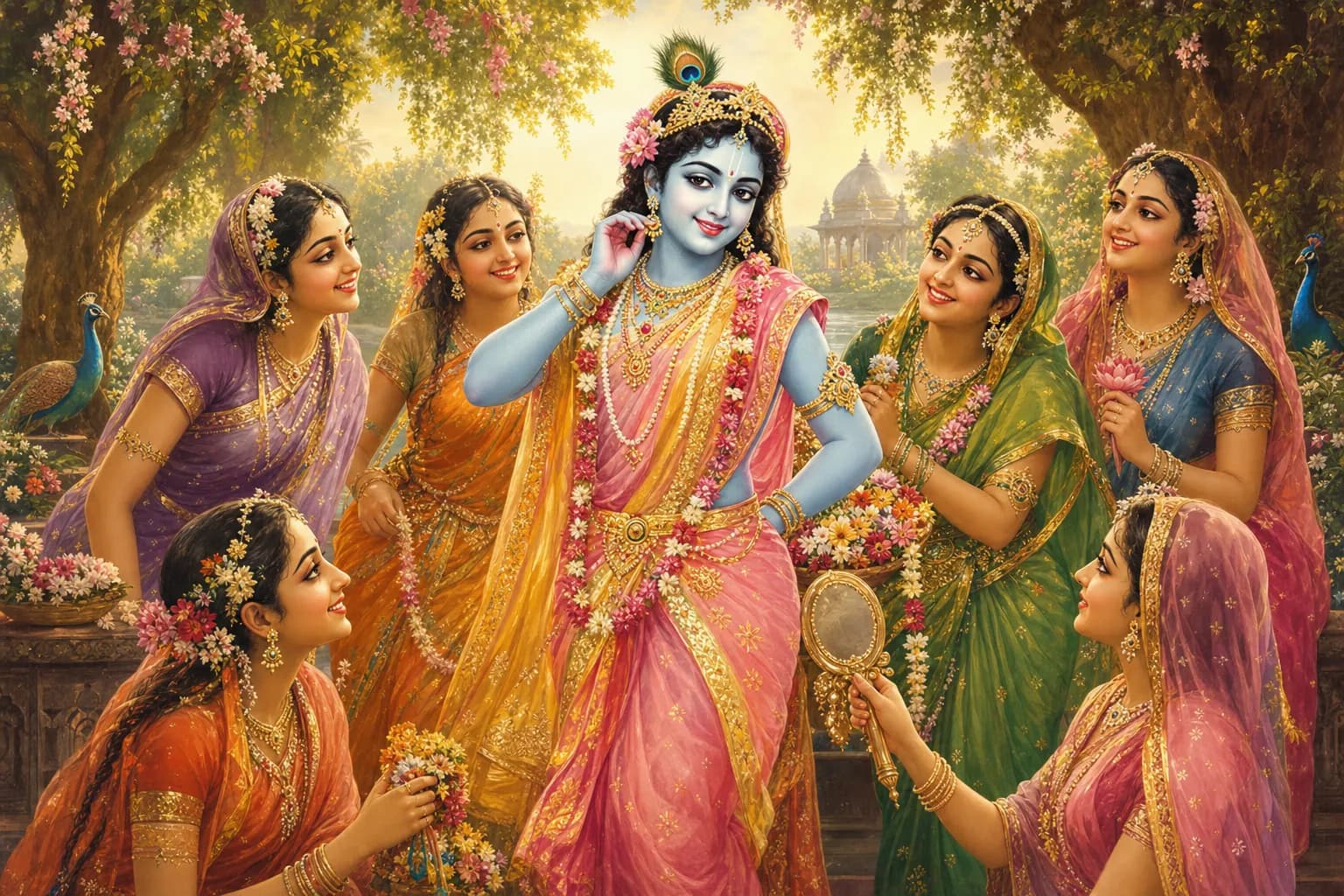
When Krishna Dressed as a Gopi
Why Krishna disguised himself as a gopi to end Radha's maan, where the story comes from, and how it differs from two other gopi tales.
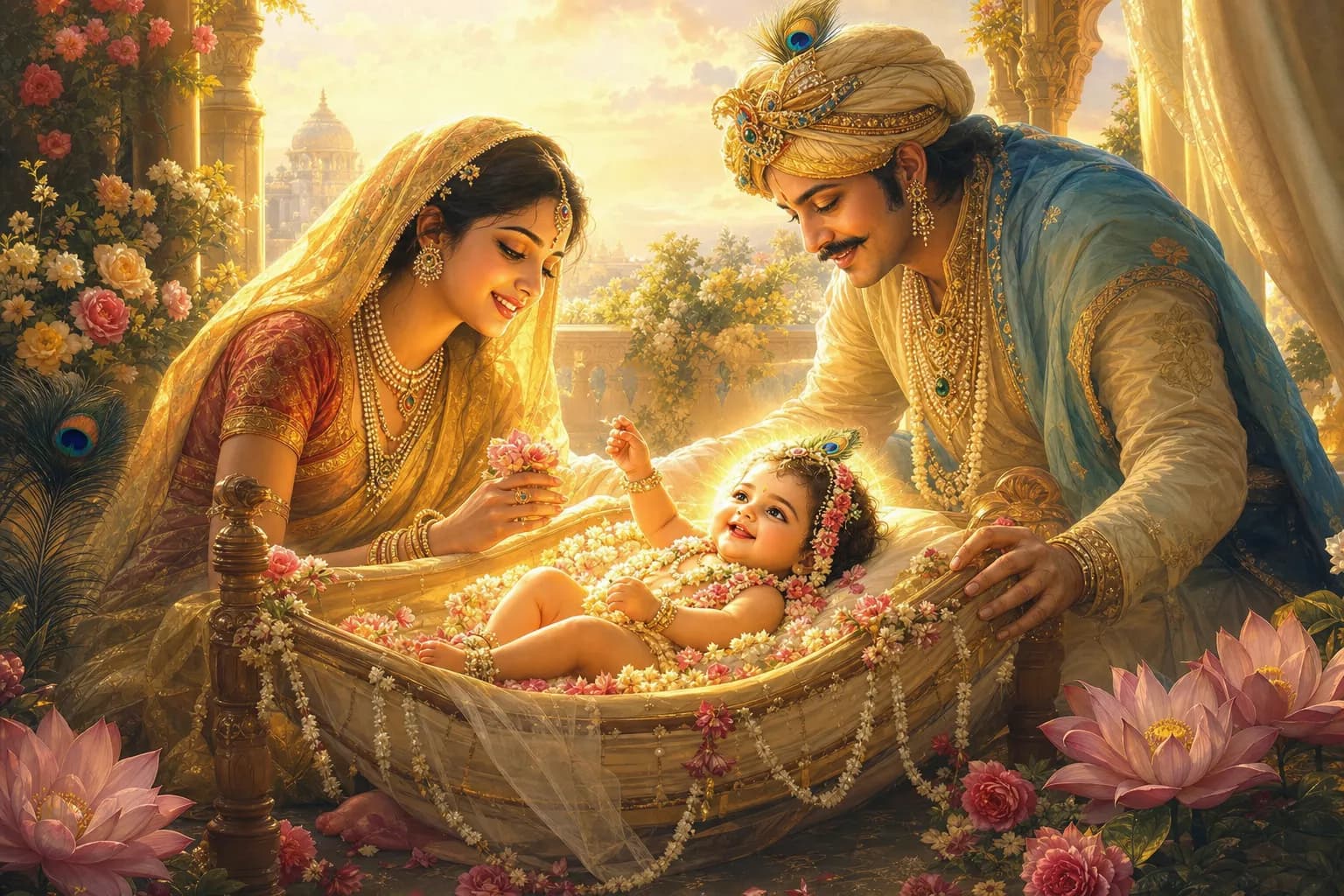
The Birth of Srimati Radharani
How Srimati Radharani was born, told scripture by scripture: the Garga Samhita, the Brahma Vaivarta Purana, her parents, the lotus, and Radhashtami.
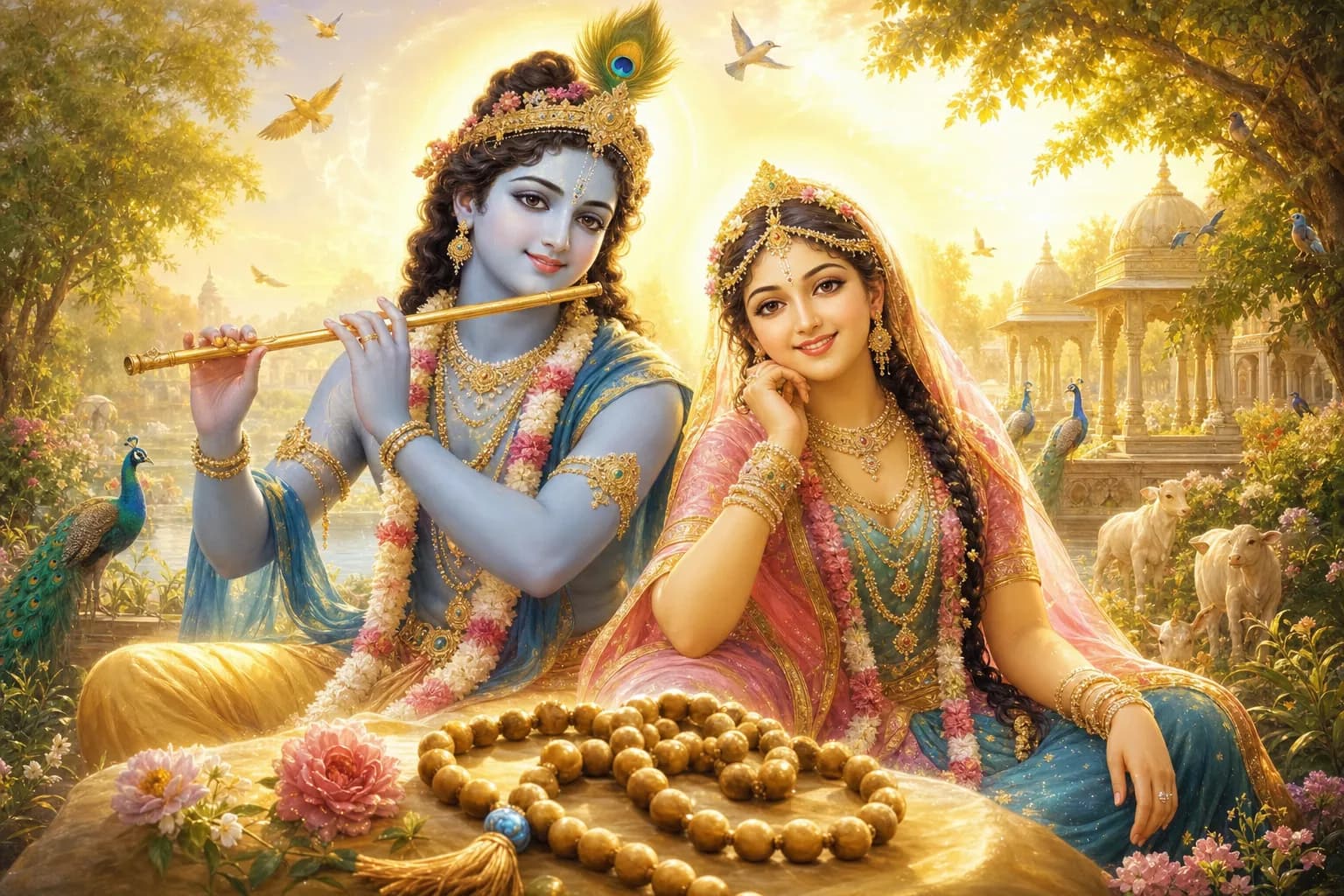
The Hare Krishna Maha Mantra
The Hare Krishna maha mantra explained: its 16 words, meaning, scriptural source in the Kali-Santarana Upanishad, and how to chant it.