
Festivals
Jhulan Yatra
Last updated 26 July 2026
The short answer
Jhulan Yatra is the swing festival of Shravana, when Radha and Krishna are seated on decorated swings and gently swung by their devotees through the monsoon. In 2026 the ISKCON and temple observance runs from 23 to 28 August, closing on Jhulan Purnima, while Vrindavan town keeps a longer thirteen days from Hariyali Teej on 15 August. The swing is offered as seva, not watched as a spectacle.
When Jhulan Yatra falls
Next: Friday, 28 August 2026
Key takeaways
- Jhulan Yatra is the monsoon swing festival of Radha and Krishna, kept through the month of Shravana.
- In 2026 the five day temple observance runs 23 to 28 August, ending on Jhulan Purnima.
- Vrindavan town keeps the longer form, thirteen days from Hariyali Teej on 15 August to Purnima.
- At Banke Bihari the deity leaves the sanctum once a year to sit on the gold and silver Swarna Hindola.
- Devotees do not only watch. Each person pulls the swing themselves, which is the whole point of the festival.
For one month of the year the monsoon turns Braj green, and the deities come down off their altars to be swung. Jhulan Yatra is the swing festival of Shravana, when Radha and Krishna are seated on a jhula hung with flowers and gently pushed by everyone who comes. It is among the sweetest festivals in the Radha Krishna year, and among the least demanding: there is no fast to keep and nothing to get right. There is a rope, and you pull it.
When Jhulan Yatra falls in 2026
Three different lengths are kept, and all three are genuine. It is worth knowing which one a temple follows before you plan around it.
| Observance | 2026 dates | Kept by |
|---|---|---|
| Five days, Pavitropana Ekadashi to Purnima | 23 to 28 August | ISKCON and most temples |
| Thirteen days, Hariyali Teej to Purnima | 15 to 28 August | Vrindavan town, the Braj custom |
| Seven days, Dashami to Pratipada | Shravana | Puri Jagannath |
All of them close on Jhulan Purnima, Friday 28 August 2026, the full moon of Shravana. In 2026 the general and Vaishnava reckonings agree on that day, so there is no split to navigate this year.
One small thing that confuses people: the five-day form begins on Ekadashi, 23 August, but the Ekadashi fast itself is kept the next day, on dwadashi. The festival and the fast are not on the same day, and neither source is wrong.
The same Purnima is also Balarama Jayanti, the appearance day of Lord Balarama, so the last night of Jhulan carries a second joy with it.
Why a swing, and why the rains
The reason is the season. After the long heat, the forests of Vrindavan bloom, the Yamuna runs full, the air turns soft and heavy with the smell of wet earth, and the cuckoos begin. In weather like that a swing moves the air over you, and the whole festival rests on that plain and tender idea: the swing is offered because it is a comfort.
That is why Jhulan is understood as seva rather than as a performance. The deities do not stay behind the altar to be looked at. They are brought down, set on the swing, and pushed by hand, by anyone who comes.
The swing pastime is described in the classical Gaudiya literature. Govinda Lilamrita of Krishnadasa Kaviraja Goswami sets a jewelled swing platform in Lalita's kunja near Radha Kund, where the branches of two bakula trees meet overhead like a canopy and a swing hangs from them, bound at four corners with silken cords. The festival is named outright in the Nectar of Devotion, where Srila Prabhupada lists among the ceremonies to be observed "the ceremony of Jhulana-yatra with the Lord sitting on a swing."
The calendar observance itself is carried by the temples of Braj rather than prescribed by a numbered verse, which is exactly how a living festival works.
The jhulan as a meditation
Our own lineage teaches jhulan lila as something you can enter rather than only attend. Swami Mukundananda gives it as a guided meditation, a form of roop dhyan in which the mind's senses all engage at once:
Visualize a grand Kadamba tree in the sacred forests of Vrindavan. A swing hangs from its branches, its silken ropes wound with fresh flowers, its seat cushioned with petals. Radha and Krishna sit together, resplendent and playful, their divine love filling the very air with sweetness. You come forward. With a heart full of seva, you take the rope and begin gently, lovingly, to pull.
Swami Mukundananda, JKYog
He puts the point of it in a line: the jhulan lila is not only a divine pastime, it is an invitation to swing the mind in loving remembrance of Radha and Krishna. Anyone can keep the festival that way, with no swing, no murti and no temple within reach. More on the teachers this site follows is on our lineage page.
What Braj does
Banke Bihari holds the darshan people travel for. Through the first half of Shravana the temple keeps the Phool Bangla, a palace of flowers rebuilt each day. Then a large hindola is raised on a platform outside the jagmohan, and on the evening of Hariyali Teej something happens that happens only once a year: Bihariji leaves the sanctum. He comes out into the courtyard with Priyaji and Swami Haridas to take the swing, dressed in green to match the season, on the Swarna Hindola of gold and silver. Ghevar and pheny are given as prasad.
Shri Radha Vallabh says of its own festival that the hindolas of Shravana are world famous in Braj, and the temple keeps the full thirteen days. The swing is redecorated every single day with fresh leaves and new curtains, and darshan runs from Sandhya Utthapan through to the end of Sandhya Aarti. Pua is offered daily, with ghevar, feni, gujhia, imarti and seasonal fruit alongside.
Radha Raman in Vrindavan, Dwarkadhish in Mathura and Ladli Lal in Barsana are among the other principal jhulan temples of Braj.
At Shri Krishna Balaram Mandir, ISKCON's temple in Vrindavan, Radha Govinda are invited into a flower-decked grove for five evenings from 23 August.
What actually happens at a jhulan
The pattern is much the same wherever it is kept, and it is worth knowing before you go, because you are meant to take part.
The small festival deities are lifted down from the altar and placed on the swing, which is often silver or gold and hung thick with flowers. The deities are dressed in green through the festival, for the season. Arati is offered. Then the congregation is invited forward, and each person offers flower petals, makes their own prayer, and pushes the swing a few times while everyone else sings. Rose water is sprayed in a fine mist toward the couple.
At Mayapur the kirtan around the swing runs close to two hours, and the queue to push it does not thin.
The parallel devotees draw is with Rath Yatra: this is the other festival where the deities come down and let themselves be moved by everybody's hands.
Jhulan in Puri and Bengal
Beyond Braj the festival is kept just as warmly. At the Jagannath temple in Puri it runs seven days, and Madanmohan, Jagannath's festival deity, is placed with Lakshmi and Vishwadhatri on a wooden swing on the Jhulan Mandap, where worshippers get their turn to swing the Lord. The decorations use forest creepers and jasmine. The full moon there is Jhulan Purnima, also called Gamha Purnima, and it is kept as the appearance day of Lord Balabhadra.
In Bengal the festival is one of the high points of the year, and at ISKCON Mayapur Radha Madhava are swung daily through it amid flowers, beads and near constant kirtan.
Keeping Jhulan Yatra at home
This is one festival that loses nothing in a small room. Asked exactly how to do it at home, Jayapataka Swami gave the whole answer in a sentence: make a small swing, put your deities or a picture of Radha and Krishna on it, decorate with flowers, and swing it.
A shape that works:
- Make the jhula. A small wooden or cane swing, or a frame with two cords. Many families keep the same one year after year.
- Decorate it fresh each day. Flowers, leaves, a little green cloth. Changing it daily is part of the seva, and it is what the temples do.
- Offer arati, then take the rope yourself and swing gently while you sing. A simple kirtan is enough.
- Offer a seasonal sweet. Pua, ghevar or feni if you can make or find them.
- If you have no murti, keep the jhulan in the mind, as Swami Mukundananda teaches. It asks nothing but attention.
Where this sits in the Radha Krishna year
Jhulan Yatra opens the great Braj season. Janmashtami follows a week after Jhulan Purnima, Radhashtami a fortnight after that, and Sharad Purnima closes the monsoon in October with the night of the maha raas. For the whole cycle, see the festivals of Radha Krishna.
Frequently asked questions
What is Jhulan Yatra?
The swing festival of the monsoon month of Shravana. Radha and Krishna are placed on a decorated swing, and devotees come forward to pull it.
It remembers the jhulan lila, where the sakhis hang a flower swing from a kadamba branch in the groves of Vrindavan and swing the divine couple through the rains.
How long does Jhulan Yatra last?
Three lengths are kept, and all three are authentic. Most temples, including ISKCON, keep five days from Pavitropana Ekadashi to Shravana Purnima. Vrindavan town keeps thirteen days, from Hariyali Teej to Purnima.
Puri keeps seven days for Jagannath. The differences are of local tradition rather than of correctness.
When is Jhulan Yatra in 2026?
The five day observance runs from Sunday 23 August to Friday 28 August 2026, ending on Jhulan Purnima. Vrindavan's longer form begins earlier, on Hariyali Teej, Saturday 15 August.
In 2026 the general and Vaishnava reckonings agree on the closing day, so there is no split this year.
What is Hindola Utsav?
The same festival under its Braj name. Hindola means the swing itself, and the great hindolas of Shravana are among the most loved darshans in Vrindavan.
At Banke Bihari a large hindola is erected in the courtyard, and at Radha Vallabh the swing is redecorated with fresh leaves each day of the festival.
Why is Jhulan Yatra celebrated in the monsoon?
Because the season itself is the reason. After the heat of summer the forests of Braj turn green, the Yamuna fills, the air carries the scent of wet earth, and the cuckoos call.
A swing in that air is a kindness, and the tradition understands the festival as offering that comfort to Radha and Krishna rather than as staging a spectacle.
How do you celebrate Jhulan Yatra at home?
Make a small swing and place your murti or a picture of Radha and Krishna on it, decorate it with flowers, and swing it gently. That is the whole of it, and it is the instruction devotees are given.
Refresh the flowers each day, offer arati and a seasonal sweet, and sing while you pull the rope. Nothing elaborate is required.
Sources
- Radha Govinda Jhulana Yatra 2026, Drik Panchang ISKCON calendar
- Shravana Purnima 2026 date and tithi, Drik Panchang
- Jhulan Utsav 23 to 28 August 2026, ISKCON Bangalore
- Radha Govinda Jhulana Yatra, ISKCON Vrindavan
- Hariyali Teej and the Hindola, Shri Banke Bihari Mandir official site
- Hindola Utsav, Shri Radhavallabh Mandir official site
- Jhulana-yatra named in the Nectar of Devotion, chapter 9
- Jhulan Yatra, the festival of swings, Gauranga Darshan Das
- How to celebrate Jhulan Yatra at home, Jayapataka Swami
- The Jhulan Leela meditation, Swami Mukundananda, JKYog
Continue reading
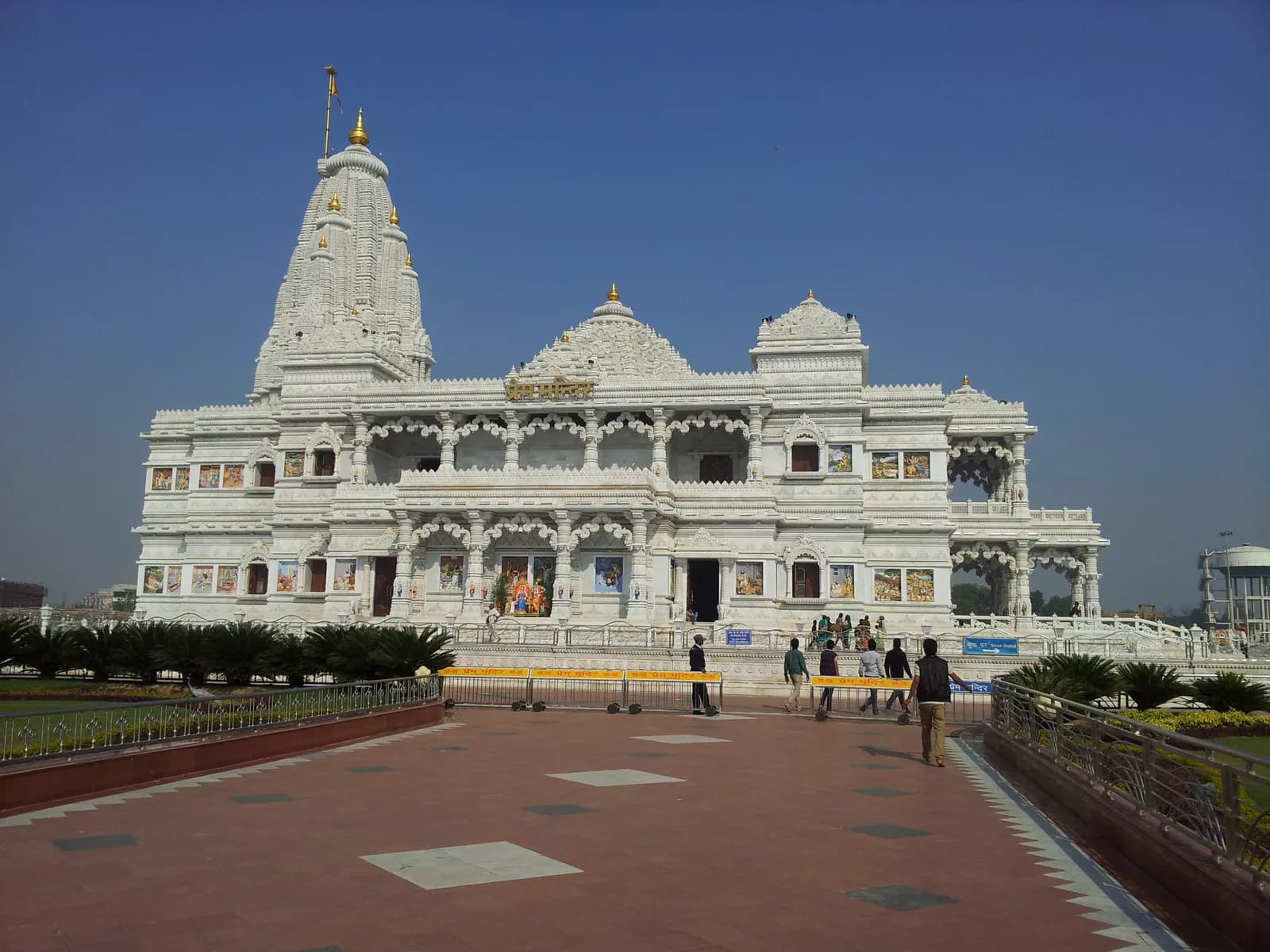
Vrindavan
Vrindavan, the town of Krishna's childhood: its temples, the Yamuna ghats, the 10 km parikrama, when to go, and what first-time visitors get wrong.
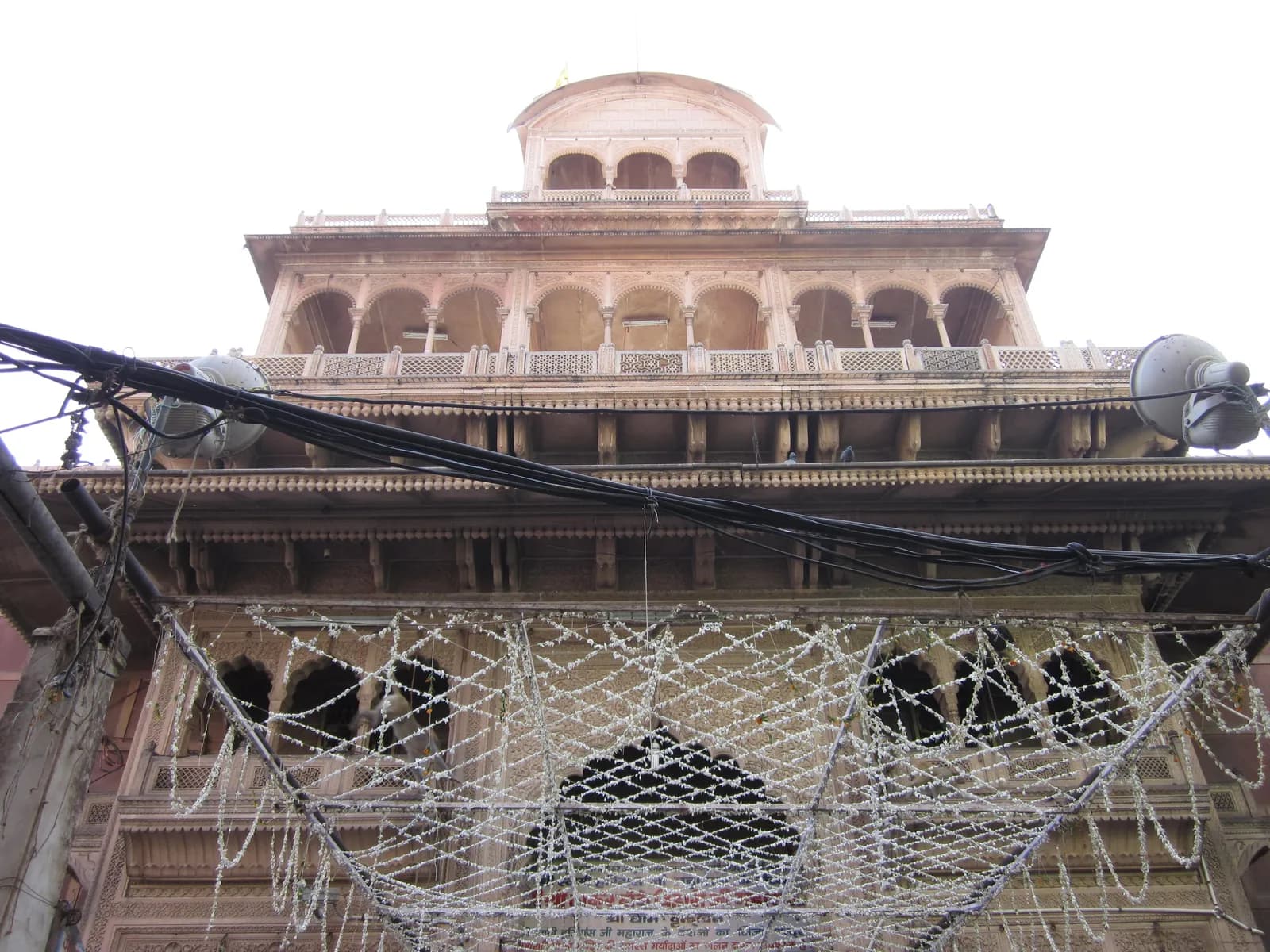
Banke Bihari Temple, Vrindavan
Banke Bihari Temple, Vrindavan: the deity Swami Haridas found at Nidhivan, why the curtain keeps closing, plus timings, festivals and how to plan a visit.
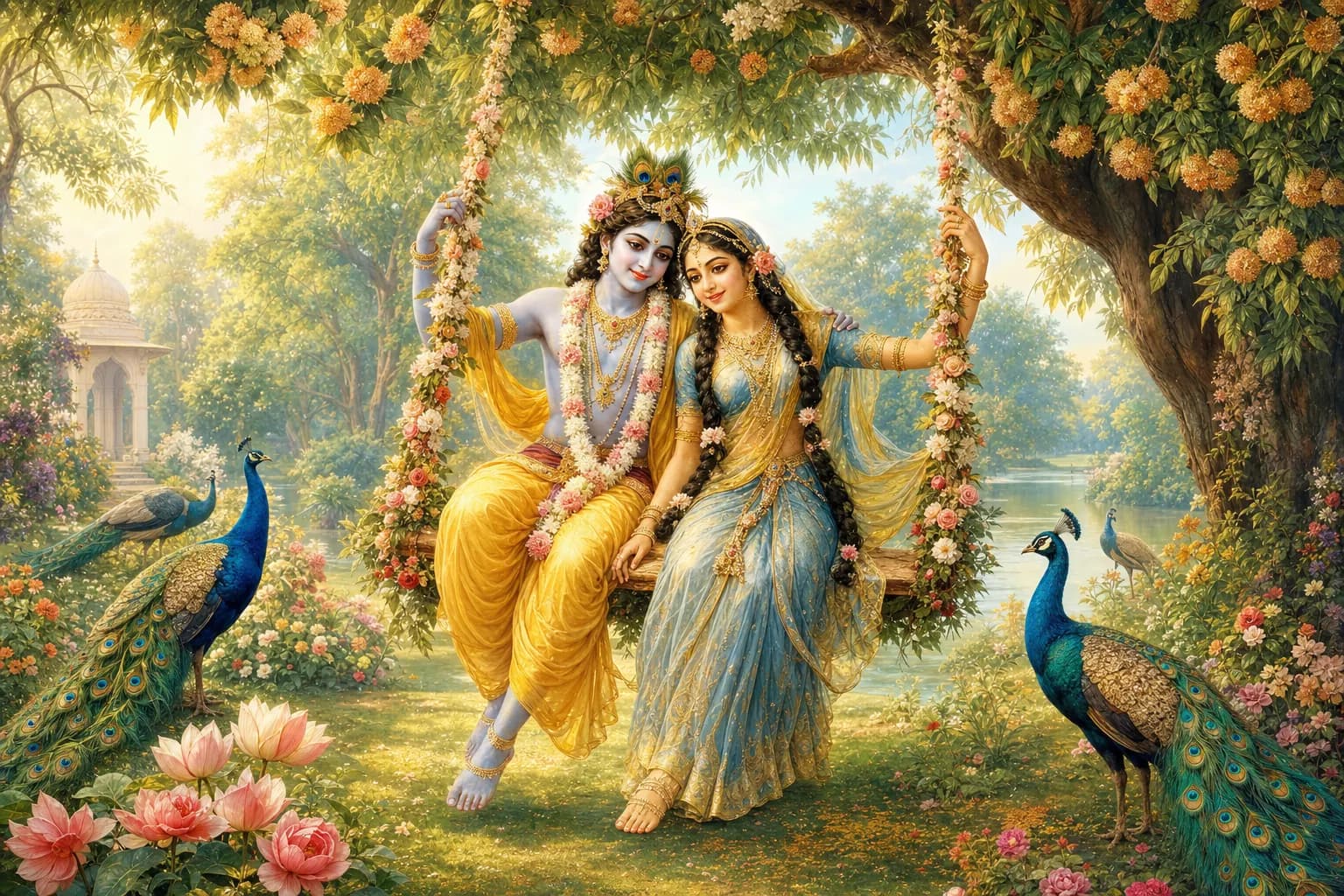
What Does Radha Krishna's Love Symbolize?
Radha Krishna's love symbolizes the union of the soul and God, the bhakti ideal of pure devotion. Here is what each scripture and tradition actually says.